Martin Austermuhle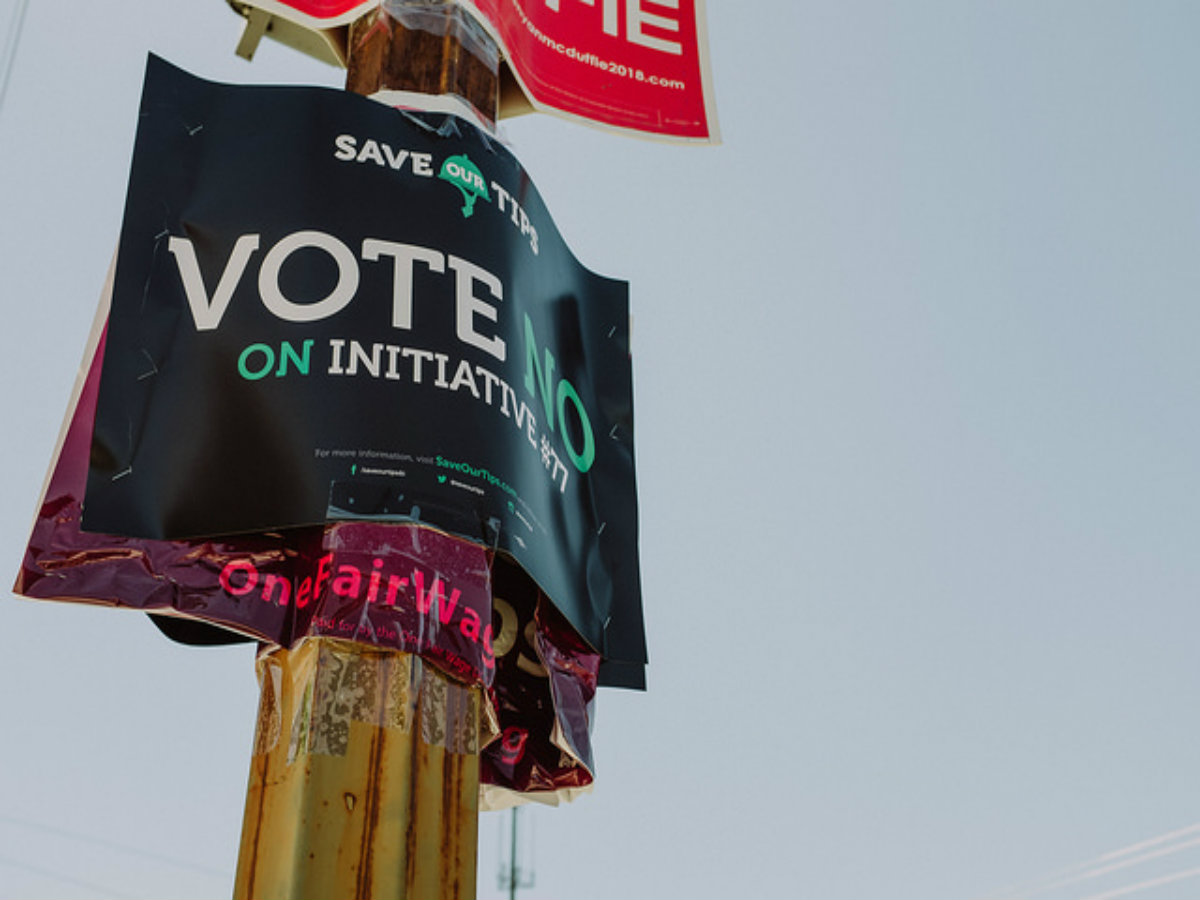
If you thought the debate over the tipped minimum wage in D.C. is over, you may have another thing coming.
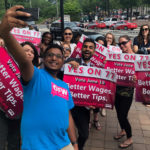
A group of activists is organizing an effort to call a public referendum on the D.C. Council bill passed this month that repealed Initiative 77, a voter-approved measure that gradually phases out the city’s tipped wage. In effect, the group — which is calling itself “Save Our Vote, No Repeal of I77” — wants voters to reject the Council bill that repealed the initiative.
The nascent effort relies on the very law that allows residents to collect signatures to put initiatives on the ballot — as they did with Initiative 77, which was approved by 56 percent of voters in June — or to call a referendum on any measure passed by the Council, including the repeal of the tipped-wage initiative.
“Even though they can legally do that, they overstepped their bounds in terms of the morality and ethics of the issue,” said Rev. Graylan Hagler, a senior pastor of Plymouth United Church of Christ and a spokesperson for the effort, which includes the Restaurant Opportunities Center United, the driving force behind Initiative 77.
“We’re fighting voter suppression all across the country in this era of Trump, and here we are in Washington, D.C. not only doing voter suppression, but voter nullification. Enough is enough, and we need to draw a line in the sand and say to the Council that you can’t keep doing this,” he added.
If successful, the effort would escalate a decades-long feud over ballot initiatives that D.C. voters approve but the Council deems unwise or unworkable. In the last 40 years, the council has overturned the will of the voters four times — on ballot initiatives that would have imposed term-limits on elected officials, set strict limits on how much money candidates for office can raise, impose mandatory minimum sentences for certain crimes, and guarantee anyone who is homeless a right to shelter.
“The things they’ve overturned have been very self-serving,” said Hagler. “All those types of things are things the voters should not be disrespected on. Public officials need to do better public education if they’re not satisfied with the votes.”
On Initiative 77, a majority of the Council’s members said that they worried phasing out the tipped wage would negatively impact businesses that rely on tipped workers, like bars, restaurants, nail salons, and parking lots. Under the current system, those businesses pay employees $3.89 an hour, and allow them to collect tips on top of that. If those tips don’t bring employees up to the prevailing minimum wage — now $13.25 an hour — the business owner has to make up the difference.
Proponents say the tipped wage system allows workers to make more than the minimum wage, and helps keep operating costs low for owners of businesses like bars and restaurants that operate on thin profit margins. But critics say doing away with the tipped wage and instead paying all workers the minimum wage would be more fair and help cut down on wage theft and sexual harassment.
A number of Council members who initially opposed Initiative 77 said they were uncomfortable voting to repeal it. A compromise measure introduced by Council member Elissa Silverman (I-At Large) to phase out the tipped wage for some workers and maintain it for others failed to gather traction.
Lots of signatures, not a lot of time
Actually getting the referendum on the ballot to repeal the repeal will be challenging. Hagler says the group will have to wait until the Council sends the bill to Congress for the usual 30-day review period, likely in early January. Once that happens, the group will fan out and try to collect signatures from roughly 25,000 voters, the number needed to get an initiative on the ballot or call a referendum.
The 30-day congressional review period only counts legislative days, or days when either the House or the Senate is in session. That means the group could have as long as two months to gather the necessary signatures. The signature-gathering process will be spearheaded by Adam Eidinger, a local activist best known for Initiative 71, which legalized the possession and personal use of marijuana in 2014.
“We’re going to try and field an army of folks to be able to collect those signatures in the record time that we need to,” said Hagler. “It is clear that the system is set up against people having a voice in it, but we’re going to rise to the occasion and we’re going to meet the obligation of getting enough signatures and putting the referendum on the ballot.”
If the group gets the required signatures, the Council’s repeal bill would be put on hold pending a special election that would have to be held within 114 days, putting a possible vote early in the summer.
This story was originally published on WAMU.