Rachel Kurzius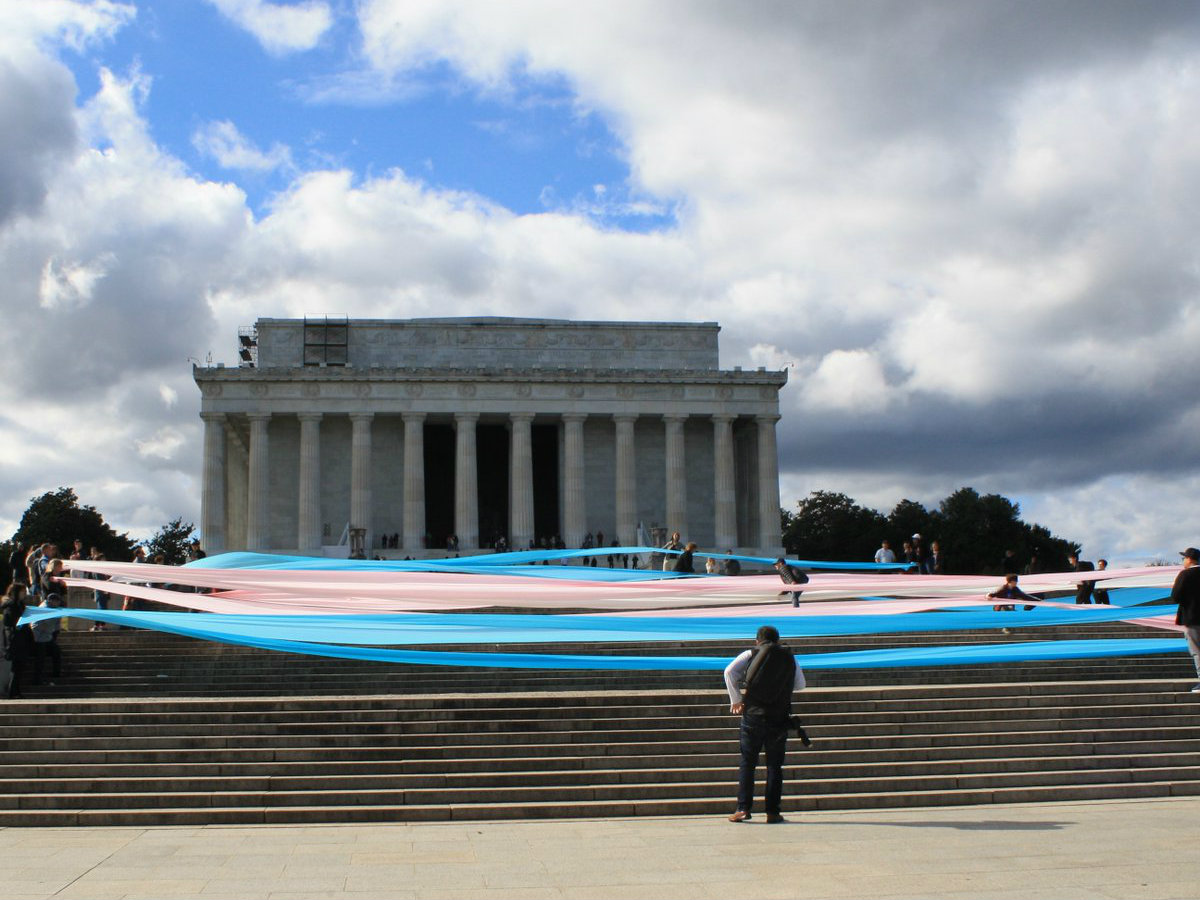
As the Trump administration moves to limit civil rights protections for transgender people, the D.C. government is working to assure its citizens that local laws will continue to cover them.
“Gender identity and expression are explicitly stated in the D.C. Human Rights Act,” says Mónica Palacio, the director of D.C.’s Office of Human Rights. “These are not just words on paper—we care about you, we’re thinking about you, and we understand that you feel unsafe.”
In the past week, the Department of Justice has filed a brief to the Supreme Court arguing that the Civil Rights Act of 1964 does not cover gender identity, meaning it is legal to discriminate against transgender workers. This followed news that the Department of Health and Human Services was trying to establish a legal definition of sex “as either male or female, unchangeable, and determined by the genitals that a person is born with,” according to The New York Times.
After the Department of Justice filed its brief, the D.C. Office of Human Rights released a statement confirming that the federal agency’s “position on the rights of transgender employees has no bearing on the District’s commitment to not only ensure equal protection in employments but to promote inclusive and safe work environments for all.” The office does not have jurisdiction over federal workers, but instead oversees non-federal employers and contractors in the District.
The D.C. Human Rights Act makes it illegal to discriminate based on 20 protected traits. “Gender identity or expression” was added to the law via amendment in 2006. In addition to D.C., 19 states explicitly protect gender identity from discrimination.
“Strong state protections are one of the best bulwarks against these federal moves,” says Gillian Branstetter, the media relations manager for the National Center for Transgender Equality.
But despite the laws being on the books in D.C., a 2015 report commissioned by the D.C. Office of Human Rights found staggering rates of discrimination against job applicants that were perceived as transgender, with nearly half of District employers preferring a less-qualified candidate they perceived as cisgender, with the restaurant industry discriminating against more-qualified transgender candidates at a rate of 67 percent.
Palacio says that the study was part of OHR’s broader efforts to enforce the Human Rights Act and help employers avoid violating it. “There are these unaware tendencies or biases people have that can really shut the trans community out of the workplace,” she says. She adds that the study prompted some employers to ask how they could be more inclusive, so the office released a guidebook with best practices.
Palacio says she “couldn’t say yes or no” as to whether anti-transgender policies from the Trump administration have increased instances of discrimination against the community in D.C. “Trends take time to really develop,” she says.
Of the 706 complaints docketed by OHR in fiscal year 2017, a total of 14 cited gender identity.
Still, she says the recent actions by the administration are “having ripple effects across the District … It makes an already vulnerable member of a community feel that much more under attack.”
Branstetter says she has been heartened by the work of transgender advocates across the country to make “sure people understand that trans people aren’t going anywhere and that our rights do matter and that we do matter.” As part of that effort, the National Center for Transgender Equality draped a 21,000 square foot transgender pride flag on the Lincoln Memorial’s steps on Monday afternoon.
Palacio wants to make sure that transgender folks are aware of her office. “We have these local protections,” she says. “We want people to know that when they go to work every day, if they are facing discrimination or a hostile work environment, they have a place to come and file that claim, and they can have a voice and fight back.”