When The Imperial finally opens this December at the corner of Florida Ave NW and 18th Street NW, it’ll be the culmination of more than three and half years of construction headaches. After navigating permitting, building commissions, and foundational repairs thanks to the flooding that comes from being at the bottom of the Adams Morgan hill, owner Bill Thomas, who also owns Jack Rose Dining Saloon just down the street, can’t wait.
Jack Rose is a reflection of Thomas’ deepest passion, whiskey, and the bar is well known for having one of the most impressive and extensive collections of vintage and modern whiskeys, scotches, and bourbons anywhere—in fact, it’s the largest in the Western Hemisphere. The much anticipated—and oft delayed—Imperial aims to take on a similar role for a variety of other spirits.
According to Thomas, the inspiration for the new bar is to create a more holistic drinking experience.
“Maybe you start out with an aperitif while you wait for friends to arrive, then a glass of sparkling with some oysters, then you move onto a craft cocktail with some handmade pasta or an interesting glass of red with a dry-aged steak, and then end your night with a digestif of vintage amaro or port,” says Thomas. His vision is the right drink for the right mood and the right activity.
Thomas’ first item of business will be relocating Dram & Grain, his speakeasy under Jack Rose, to the new digs, where it’ll have about twice as many seats. The Imperial will also boast a main dining room with a seafood- and vegetable-inspired menu and a rooftop, both of which will open early next year. Bartenders and patrons will work together to pick a spirit, cocktail, or aperitif to match a customer’s mood and palate. The Imperial will put bartenders to the test, offering an educational experience for the server and the drinker alike.
Vodkas, gins, chartreuses, rums, brandys, exotic liquors, vermouths, Madeiras, sherries, and other fortified wines will all be available, including hundreds of vintage bottles that Thomas has spent years collecting from crawlspaces, long-forgotten wine cellars, backroads liquor stores, and old private collections. Unlike old whiskeys, which have appreciated dramatically in price as demand has skyrocketed, many vintage spirits can still be enjoyed at a reasonable price, and that means that tasting an 1863 port or a hundred-year-old bottle of Amer Picon, a spirit only distributed in France, can still be accessible for those who aren’t jetsetters. Keeping prices down is important to Thomas and key to the educational mission of The Imperial.
To Thomas, “it’s important that a bar not be a museum,” and so he’s spent a lot of time working with different distillers to make sure that The Imperial always has a fresh stock of new and interesting spirits. But, you’ll also find some vintage bottles with fascinating backstories and truly unique flavors. Here’s just a taste of what to expect on your first visit.
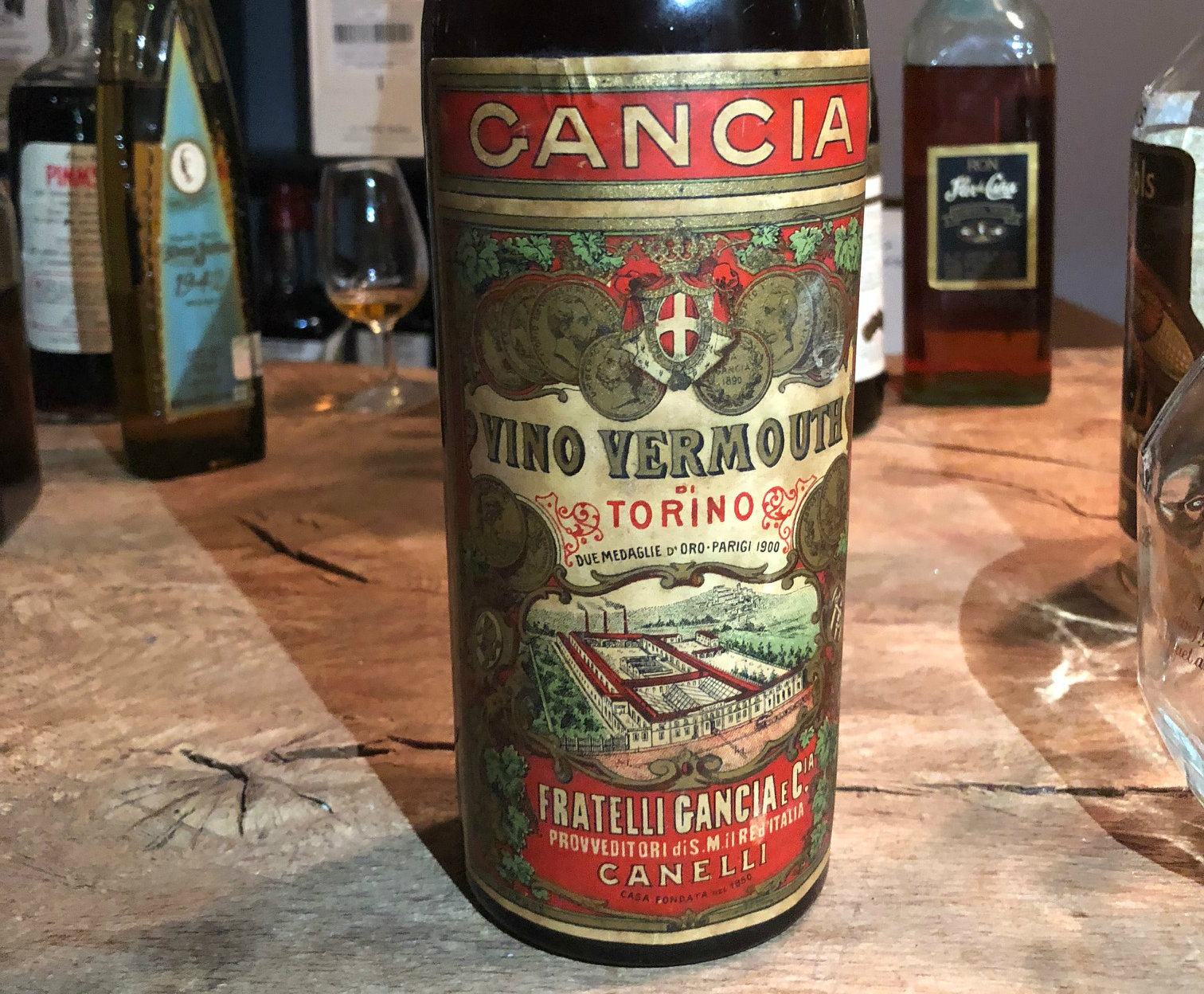
Cancia Red Vermouth
Late 1880s/early 1900s
Bill spends a lot of time in Kentucky hunting for rare whiskeys, but on a recent trip he stumbled into an old whiskey cellar in a mansion built during prohibition and now hidden behind a trick wall.
“[The cellar] was behind an old wooden door that said something like ‘High Voltage. Stay Out.’ which was used back during Prohibition,” he says. “It was super inaccessible, and you could only get to it from one door in the house.”
One of the most exciting finds was this old vermouth, which Thomas says likely dates to the turn of the 20th century because of the lead slug sealing the bottle and the imperfections in the glass. You’ll be able to try this vermouth in a few different vintage cocktails that’ll all be priced around $20. Not cheap, but pretty reasonable for a vermouth that’s 120 years old.
California Grape Brandy
1922
Though distilled in Kentucky, this pre-Prohibition brandy was a local find. Through a friend of a friend, Bill met an elderly widow who lived in a house in Georgetown. At the time, the woman was trying to clean out a wine cellar that was mostly full when her family purchased the home in the early 1950s. Between her summers in Martha’s Vineyard and winters in South America, Thomas says, the cellar hadn’t gotten much use, and remained nearly fully stocked since. Bill bought all 300 bottles inside, though only about 20 of them were still drinkable, including this brandy made by A. PH. Stitzel, one of the two largest and most prominent pre-Prohibition distillers. According to Thomas, Stitzel used to be sold door to door by traveling brandy salesmen before Prohibition, and was considered the common man’s brandy thanks to its reasonable prices.
Chartreuse
1920
Sometimes you luck into a cheap find in an old cellar, but sometimes you just have to pony up at an auction for an unmissable bottle of old Chartreuse. That’s how Thomas acquired one of the more unique—and expensive—bottles that will be showcased at The Imperial. A few years ago, it set him back $3,000 at one of the many auctions he frequents, but according to Thomas, it was worth it.
“It was one of the earliest expressions of Chartreuse that I had ever seen, and the bottle was in exceptional condition with a high fill-level,” Thomas says. “I believe this specific bottle will offer accentuated complexity and herbal notes and a less sugary sweetness than the bottles of today.”
Given the auction price, this Chartreuse will be more of a splurge at The Imperial—$400-$500 an ounce. But a sip that’s the price of a new Apple Watch will be the exception rather than the rule at The Imperial, Thomas says.
“If you think of spirits and wine and how they pair with food as you transition through courses of a meal… we want to have something for every mood and occasion,” he says. “We don’t want to limit the diner to tradition, we want to offer anything that might strike the mood.”