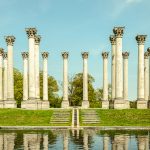
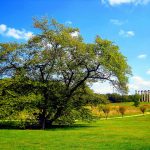
A neighborhood movement to reopen the National Arboretum’s original gate has gained a new momentum.
D.C. Delegate Eleanor Holmes Norton voiced her support for the initiative last week, mediating a panel discussion at the Arboretum after hours on Thursday. She was joined by local ANC commissioners and directors of the federal research facility.
“Whoever heard of having a natural wonder in the middle of the city that’s closed off to the public?” Norton asked the room. The National Arboretum has been “too much of a mystery” for the vast majority of area residents, she said.
The federal institution, she believes, has a responsibility to help make the Arboretum more accessible to the public. For Norton, as for local community members, that effort includes reopening the Arboretum’s original gate, which sits at the intersection of M Street and Maryland Ave NE. The entrance has now been closed for more than 25 years.
“A facile way to get here has not been available,” Norton said. The M Street gate was shuttered in 1992 amid rising crime rates, leaving only two access points to the Arboretum: R Street and New York Avenue, both of which must be reached by roads that see heavy, sometimes dangerous, car traffic. Many attendees had turned to Uber or Lyft to reach the event that night in the absence of better options.
Voices across the panel chimed in agreement. A bike-friendly, pedestrian entrance where the original gate once stood could make a real difference in the lives of D.C. residents by offering greater access to the Arboretum’s peaceful, sprawling grounds.
“It’s too beautiful of a gem to keep hidden,” says Sydelle Moore, president of the Langston Civic Association. Needing a car to access the National Arboretum is prohibitive to many of her low-income constituents, she notes.
Bernice Blacknell, ANC Commissioner 5D04, represents the segment of Ward 5 that includes the closed M Street entrance. Over the past year, she’s gathered 139 signatures on a petition and secured support from William Fitzgerald, commander of the Metropolitan Police Department’s fifth district, to provide added security if the gate were reopened.
Senior citizens in her district love the Arboretum, Blacknell said but can’t access it easily while the original gate remains closed.
The commissioners described the many ways their neighbors have come to know and love the Arboretum. Walking groups circle the four-mile loop each morning, families arrive for weekend picnics on the lawn, and nearby residents turn out in spades for April’s cherry blossoms and the summer jazz concerts. Many students in the neighboring public schools grow up volunteering with their classmates in the Arboretum’s youth gardens.
The National Arboretum is practically in residents’ backyards, yet for those without car access it still hovers out of reach. “They can see it, but they can’t access it,” said Robert Coomber, ANC Commissioner 7D01.
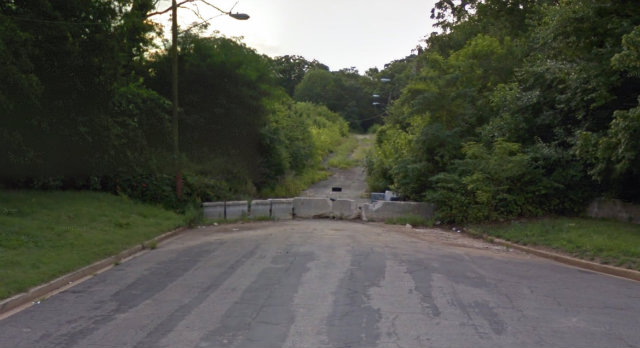
With her public statement of support, Norton’s voice joins a growing chorus—but the decision to reopen the original gate rests in the hands of the Arboretum’s leadership, who face financial constraints. “We want to be accessible, but we have to remind the city that these things impart a cost,” Richard Olsen, director of the National Arboretum, said on Thursday.
The Arboretum has historically been tasked with striking a balance between the research focus of the institution and the community’s recreational interests. It’s a challenge that occasionally results in a gruff outward demeanor, as when a group of first graders were asked to leave while playing in part of the ground’s protected areas in May 2017.
But on Thursday, Olsen’s statements had an optimistic tone. “I think we’re on the same page,” he said to Norton, and affirmed his commitment to making the Arboretum “a vital member of the larger local community.”
Tom McGuire, executive director of the Friends of the National Arboretum, referred back to the congressional wording that established the National Arboretum in 1927. “This place is for two purposes, equally weighted,” he said. “Research, and also education.” Community engagement is intrinsic to the Arboretum’s educational goals.
Despite the group’s apparent consensus, a number of unresolved budgetary and design concerns may make the reopening of the M Street gate a lengthy process.
One potential source of delay is simply that the Arboretum has slated resources toward the construction of a different gate—on Bladensburg Road. The project comes out of a year-long review of the National Arboretum’s master plan, Olsen said. The new gate would create an additional access point from the Arboretum’s western edge, near Gallaudet University, and help divert traffic from the R Street entrance.
According to Olsen, the idea stems back to 2002, when a Bladensburg entrance point gained widespread support but never secured the proper funding. Now, some 15 years later, the project is at least partially underway, with Friends of the National Arboretum pledging the money for the design process. “Our priority is the Bladensburg Gate,” Olsen confirmed in an email.
But Olsen still counts the reopening of the Arboretum’s original gate as a top goal. Right now, the M Street gate is “a placeholder on a plan, pending funding and involvement from the city,” he said.
Another force might be pushing the reopening along: plans for a new bicycle path that will connect the Anacostia River Trail with the Arboretum. According to Olsen, the city’s current designs show the proposed trail running right through the M Street gate.
Even if the Arboretum agrees to reopen the former entrance, it will take a unique combination of federal and city support to make the project a reality. According to McGuire, the M Street reopening is a multimillion dollar proposal, and the Arboretum has limited expendable funds. Of its annual budget of $14 million, roughly $9 million goes toward funding research.
Apart from constructing a new gate where the old gate once stood, the Arboretum would need to provide additional security and account for increased pedestrian traffic. The city roads leading up to the Arboretum’s M Street entryway will need to be cleared of debris and made safe with lighting and security. And if a bicycle path is to cut through the Arboretum’s grounds, which agencies will step in to oversee the funding and maintenance of the trail?
The Arboretum’s recent update to its master plan could lend clarity to these questions. The project involved a sweeping review of the facility’s property lines, which will be helpful for the Arboretum’s leadership in deciding where their responsibility ends and the city’s begins.
Norton sees these details as essential to informing her work moving forward, particularly if she is to lobby Congress for additional support. Olsen assured her it’s only a matter of weeks before she can review the plan in full. “You have my promise to give the Arboretum a top priority,” she said, and thanked the neighborhood commissioners beside her for advancing the project this far.
“The National Arboretum is very dear to me,” said Jacqueline Manning, Chair of ANC 5C, who was born on R Street and grew up with the Arboretum next door. “You all have to stop calling M Street the back gate,” she said. “Call it the main entrance, and give it the history that it has, the integrity that it has.”
Norton has pledged to hold a hearing with Ward 5 Councilmember Kenyan McDuffie to discuss how the city can help make the M Street reopening possible.
“Let’s not leave this up in the air,” Norton said. “I think we can get what we need for the Arboretum.”