Despite living in its watershed for the past 15 years, nature photographer and writer Krista Schlyer had never thought much about the Anacostia River until a fellowship with the International League of Conservation Photographers prompted her to do a project documenting it.
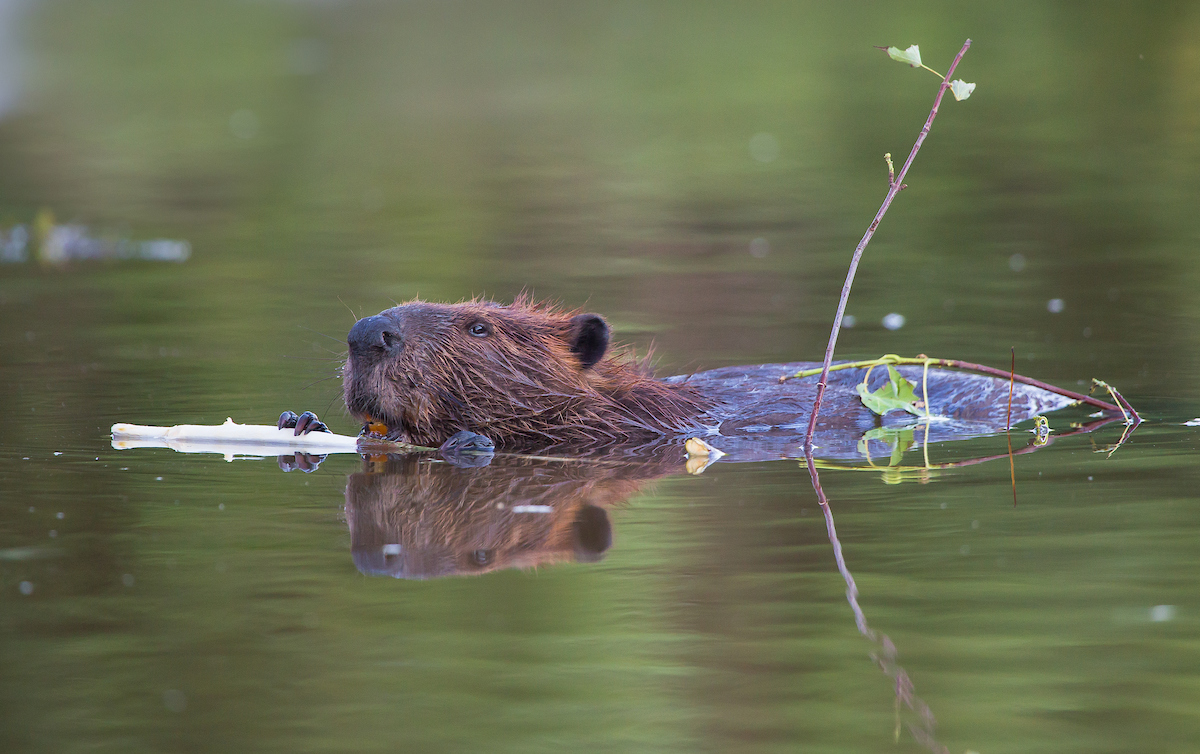
“I went out on the Anacostia for the first time in a kayak in 2010 and I was just kind of blown away,” Schlyer says. “I had only heard that it was despoiled and filthy and kind of beyond redemption, but I went out and saw so much incredible wildlife. I almost flipped my kayak due to a beaver that smacked his tail on the water and swam away angrily. It was really a wake-up moment for me that I had spent time documenting landscapes far away and was missing my own backyard.”
So Schlyer spent eight years documenting that backyard with her camera, researching the Anacostia’s history and recording the stories of its local residents—both human and non-human. The result is the newly-released multimedia book, River of Redemption: Almanac of Life on the Anacostia, a digital journey down the river done in collaboration with mapping company ESRI, and traveling exhibits.
DCist caught up with Schlyer about the most surprising, heartbreaking, inspiring, and weird things she learned while exploring all 21 miles of the Anacostia.
There used to be wolves, bears, bison, wolverines, and cougars roaming the Anacostia’s banks.
In 1608, Captain John Smith sailed up the Potomac and reached the confluence with the Anacostia on a journey that would mark the first English account of the river—as well as the beginning of its shift from pristine paradise to one of the dirtiest rivers in the nation. But 400 years ago, the Anacostia “was like another planet,” says Schlyer. Aside from the megafauna, there river hosted “tremendous bird life” and “the fish were so numerous that Smith said you could put a frying pan in the river and scoop it up and have your dinner.”
…And way before that, there were dinosaurs. You can hang out with their bones in Laurel, Maryland.
Slightly hidden behind some strip malls and warehouses in Laurel on a small tract of forest near the meeting point of the Anacostia and Patuxent watersheds, there is an archaeological site full of dinosaur bones. A miner discovered the first ones in 1858, and the search continues to this day. Around 110 million years ago, the Astrodon, a massive plant-eating dinosaur, was probably just minding its business in the shade of the redwood forest when its predator Arcrocanthosaurus caught it off guard. Eventually, an asteroid spelled doom for the Arcrocanthosaurus too. “All that remains is an earthen memory—bits of bone, prints of an enormous foot—buried deep within this Anacostia landscape,” Schlyer writes in her book.
Before Europeans, the river used to be clean enough to wash your newborn baby.
When Smith voyaged up the Anacostia, he found native Nacotchtank and other Algonquin communities living off the land—gathering walnuts, acorns, and chestnuts from the forests and growing corn, beans, peas, and squash in the fields. “There’s a story about the Algonquin people in the area” Schlyer says. “When babies were born, the first thing they would do is dip them in the river—a cleansing thing, but also to create an immediate connection to the river. Most people wouldn’t even dip their toes in these days.”
The tobacco industry caused the Anacostia to turn from deep to shallow in Bladensburg.
In the first few decades of the 1800s, Europe’s insatiable demand for tobacco and America’s willingness to build the industry on the backs of slaves made Bladensburg, Maryland one of the busiest shipping ports in teenaged America. But beyond the human exploitation, tobacco also caused deforestation, which in turn led to the river’s undoing. “Tobacco pulls nutrients from the soil and exhausts it within a couple of years,” Schlyer explains. “People would then cut down more trees. Trees—they hold the soil in place.” Without the forests, the land around the Anacostia washed into it over the course of just a couple of decades. The last large ship departed Bladensburg in 1835. What was once a 40-foot-deep river ideal for shipping is now so shallow around Bladensburg that you can easily walk across the river at low tide.
Men fought to the death at Dueling Creek, a tributary of the Anacostia right across D.C.’s border.
Because dueling was illegal in D.C in the 19th century, disgruntled gentlemen of the day used to cross the border into Maryland to settle their disputes. About 50 duels were fought at Dueling Creek between 1808 and 1850. In 1820, Stephen Decatur, a famous Navy commodore, died at the quick shot of James Barron, another commodore. He was 41. Congress passed an anti-dueling law in 1839, but the practice didn’t really end in Maryland until just before the Civil War.
Rachel Carson was probably listening for Anacostia birds when she wrote Silent Spring.
In 1958, a biologist named Rachel Carson became alarmed that the widely used chemical DDT was causing the forests to fall silent of birdsong. Her book Silent Spring was instrumental in banning DDT in the United States. Carson’s little home is tucked within the Northwest Branch of the Anacostia watershed, where she probably listened for the phoebes, wrens, wood thrushes, woodpeckers, and cardinals that still populate the woods. Schlyer visited Carson’s home while writing her own book.
The National Park Service has a dark chapter in its history in Kenilworth Park.
“I’m a huge fan of national parks,” says Schlyer. But in doing the research for River of Redemption, she “came to feel a little bit more tension.” Starting in 1942, much of the NPS land now known as Kenilworth Park along the banks of the Anacostia was used as D.C.’s landfill. “Almost every day they would burn the trash to reduce the volume of it,” Schlyer said. “Schools would have black smoke pouring in their classrooms. Clothes hanging out to dry would be covered in soot.” Most of the residents inhaling the toxic smoke were black and poor. In 1968, four boys were playing at the dump when the afternoon fires were set. Seven-year-old Kelvin Tyrone Mock did not get out in time. The then-mayor stopped the fires and closed the landfill following Mock’s death, but its toxins and environmental justice challenges still linger.
The cleanup efforts are in the works
A tunnel boring machine nicknamed Chris is currently chewing through about 50 feet of D.C.’s underworld every day, making its way from RFK Stadium to Bloomingdale. Once complete (projected for late 2022), the tunnel will divert 98 percent of sewage overflows into the Anacostia River. The first, completed phase of the tunnel project has already prevented billions of gallons of human waste from entering the river. Schlyer also sees some momentum on cleaning up legacy toxins such as PCBs and heavy metals from the PEPCO electric plant, a Washington Gas manufacturing site, Navy Yard, and other industry hubs.
“There is good indication that we can hope for a better future,” says Schlyer. “But this kind of remembering of the forgotten river shouldn’t lead to the displacement of the people and the wildlife that have lived along its shores as it was broken.”
Krista Schlyer will discuss her book, River of Redemption, at Politics and Prose at Union Market on November 16 at 7 p.m. Copies of the book will be available for purchase.