If you’ve seen the meandering music video for Radiohead’s “Daydreaming,” you might already have a feel for finding your way to Reverie.
Georgetown’s newest gem is nestled between the canal and the Potomac, tucked away in the sleepy alley known as Cherry Hill Lane. There are a number of ways to get to the restaurant, including winding cobblestone paths and a narrow stone staircase nearly obscured by ivy, and they all involve wandering off the main drag of M Street.
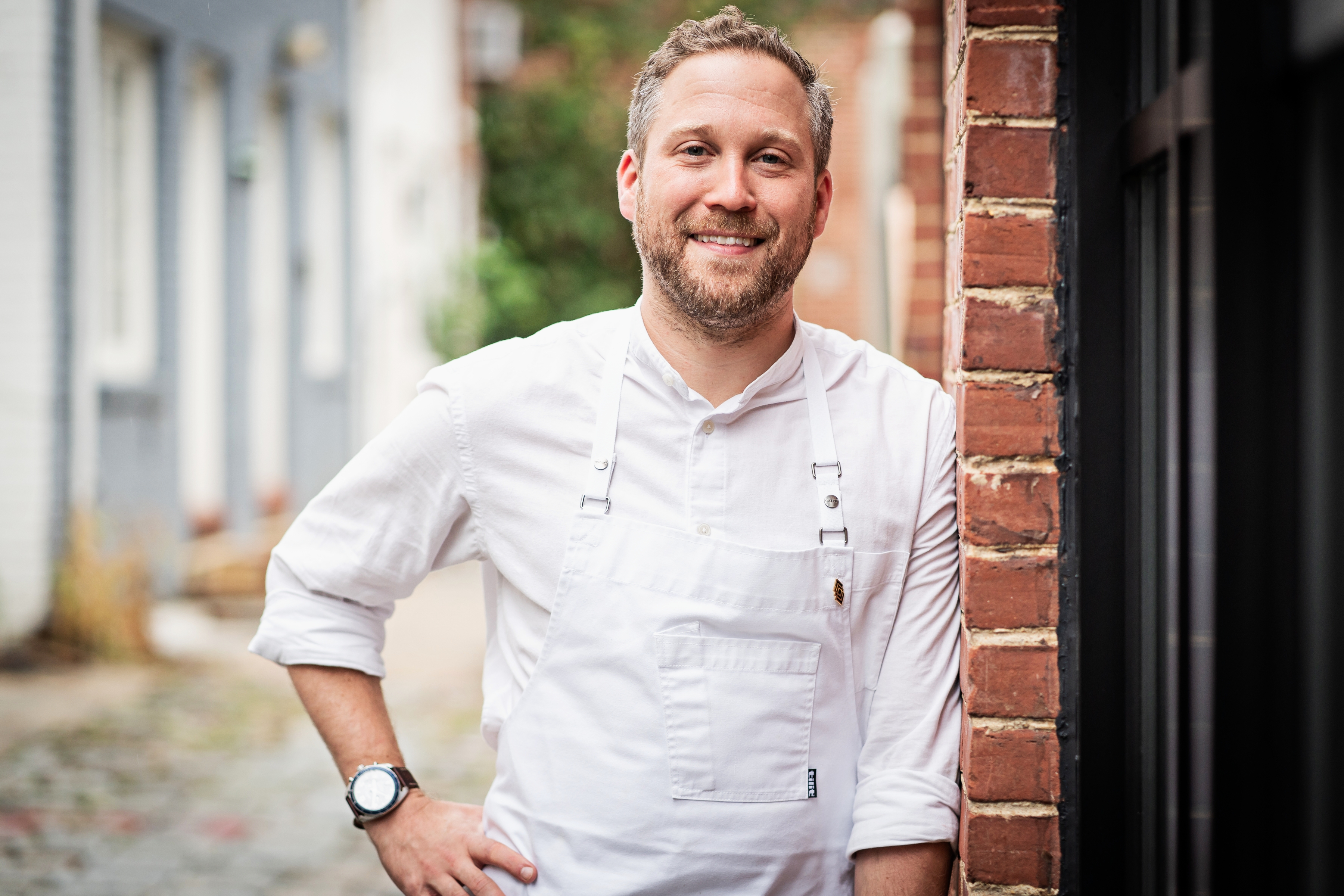
But Johnny Spero, Reverie’s owner and executive chef, has never been about the beaten path.
“I’m from Baltimore County. I don’t come from this long lineage of chefs. I wasn’t brought up on classic French food,” he says. “I was just kind of a blank slate and it ended up being to my advantage—I could soak up everything like a sponge and turn it back out with my own voice.”
With the high-end restaurant opening under his belt, he’s prepared to make a much more public debut on Netflix’s new show The Final Table, where he joins with 24 of the best chefs in the world in a Chopped-like international culinary competition. On the show, filmed last fall, Spero and other food heavyweights from around the world prepare national dishes from nine different countries before a panel of chef-judges.
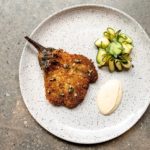
Washingtonians are already acquainted with the quality of Spero’s cooking—he was the executive sous chef at Minibar and chef de partie at Komi in D.C., as well as Noma in Copenhagen and Mugaritz in Spain—and Reverie’s style is New American, but global. Dishes draw inspiration from Japan (maitake with an egg yolk fudge), Denmark (Rugbrød rye bread with miso and leek ash), and Spain (Iberico ham).
Yet this restaurant isn’t just about the food, says Spero: “If it were just about food, I could’ve opened a folding table anywhere.”
It’s about the space—a fusion of Japanese, Danish, and Nordic designs—and in many ways, it’s the culmination of a journey that went as far as those countries but began just about fifty miles north of Reverie.
Spero is Baltimore born, raised, and educated—despite his best efforts against that last one.
“The first high school I went to was John Carroll and I got kicked out,” Spero recalls. “I didn’t want to be there, so I did as much as I could to make sure I would not be welcome back. It’s easy to do when you fail all your classes and don’t do any work or participate in anything at all.”
That’s where Anthony Bourdain came in.
Not long after graduation, Spero was in culinary school searching for the direction that his siblings (he’s a triplet) seemed to find naturally.
“I had literally just turned on the TV. I missed the first introduction, so I wasn’t sure what was happening,” he says. “Anthony Bourdain was still very new and it wasn’t something that I tuned into all the time, it was just on.”
On his show No Reservations, Bourdain was exploring Spain, not only ditching the roads-most-traveled, but abandoning streets entirely. After the dangerously winding pavement he traversed gave way to a rough dirt track, Bourdain joined chef José Andrés (the very same of Minibar) and a local fisherman on a raft that bounced along the coast of Roses, Catalonia. The trio grilled monkfish on an open fire on the beach for a traditional stew, using seawater as a stock and adding deepwater prawns, garlic, saffron, parsley, seared liver, salt, and toasted bread.
Spero was hooked.
“It was the one thing that grabbed my attention for more than 30 seconds and inspired me,” he says. “I had no idea that art could be so present in food. It was the point where I realized food could be an experience.”
The kitchens of Spain like the now-shuttered El Bulli that Bourdain took Spero to were nothing like anything he’d seen before.
“I didn’t really understand. The majority of my kitchen experiences were American, very casual,” Spero says. “This was a pristine, beautiful stainless steel kitchen with thirty people in it, not a traditional hot line with guys in sweaty T-shirts sweating and throwing out food. I had never been exposed to that kind of style—six people working on one course, where I was used to sauteeing something in a pan and throwing it out for service. [Bourdain] going through the prep, the different types of ingredients, sitting down at the table and eating juiced carrots that had been foamed up in this beautiful glass dish … It was wild. It was an art.”

He finished culinary school in Florida, then turned his gaze back towards home. Already familiar with D.C. from road trips he took as a teenager, Spero looked up a list of the city’s top restaurants and started sending out his resume. He entered his first kitchen with a feverish passion.
“I went home every night and just read and read,” he says. “I bought books and did research on avant garde meats. I experimented.” Watching Anthony Bourdain create a fragile hazelnut churro from scratch, he thought, “Holy shit, I don’t understand what any of this is. Let’s see what else the world has.”
In between kitchens he traveled—Denmark, Vietnam, Singapore, Cambodia, Japan, Spain. It was a lot of globetrotting for just some “nuisance” kid from Baltimore.
“It’s crazy. If I went to any of my friends in high school who knew me as just this kid who ran around and skated, I don’t think anybody would have imagined I could be here now,” Spero says. “Not because they didn’t think I could do it, but because I never gave anybody any reason to believe that I had the aspirations to do this kind of stuff.”
Spero remembered that he’d missed the beginning of that episode of No Reservations the first time around. But if he’d tuned in earlier, he’d have heard Bourdain describe the hometown of José Andrés, world-famous chef and son of a house painter, as an ordinary place—“conservative, Catholic. Hardly a cauldron or ferment of creativity.” Bourdain wonders aloud as to how such talent could come from a town like this. “Maybe it’s all about escaping,” Bourdain decides. “This is the sort of area that creates Bruce Springsteens. This is the sort of area you run away from.”
Johnny Spero hasn’t run from anything, though, and certainly not Baltimore. Rather, he wandered. And the winding, off-the-beaten path that Anthony Bourdain first inspired Spero to take has led to Georgetown and to Reverie.
“With all the places I’ve been and the chefs I’ve worked for, I think my food is still—I know it’s a weird thing to say, but it’s still 100 percent me. It is defined by all the places I’ve been,” he says.
Reverie is Japan. It’s Spain. It’s Copenhagen. It’s Baltimore. It’s the 65 lb halibut his local fish purveyor brought him that Spero decided had to go on the menu.
And with the recent birth of his first child (because opening your first restaurant isn’t hard enough as it is), if there’s one thing he wants his daughter to understand, it’s a lesson he first learned from Bourdain.
“It wasn’t easy being in Baltimore County,” Spero says. “I want to share my mistakes with my child. The world is a much bigger place than whatever small town you’re from.”
Reverie is located at 3201 Cherry Hill Lane NW. The Final Table begins streaming on Netflix on Nov. 20.