Ally Schweitzer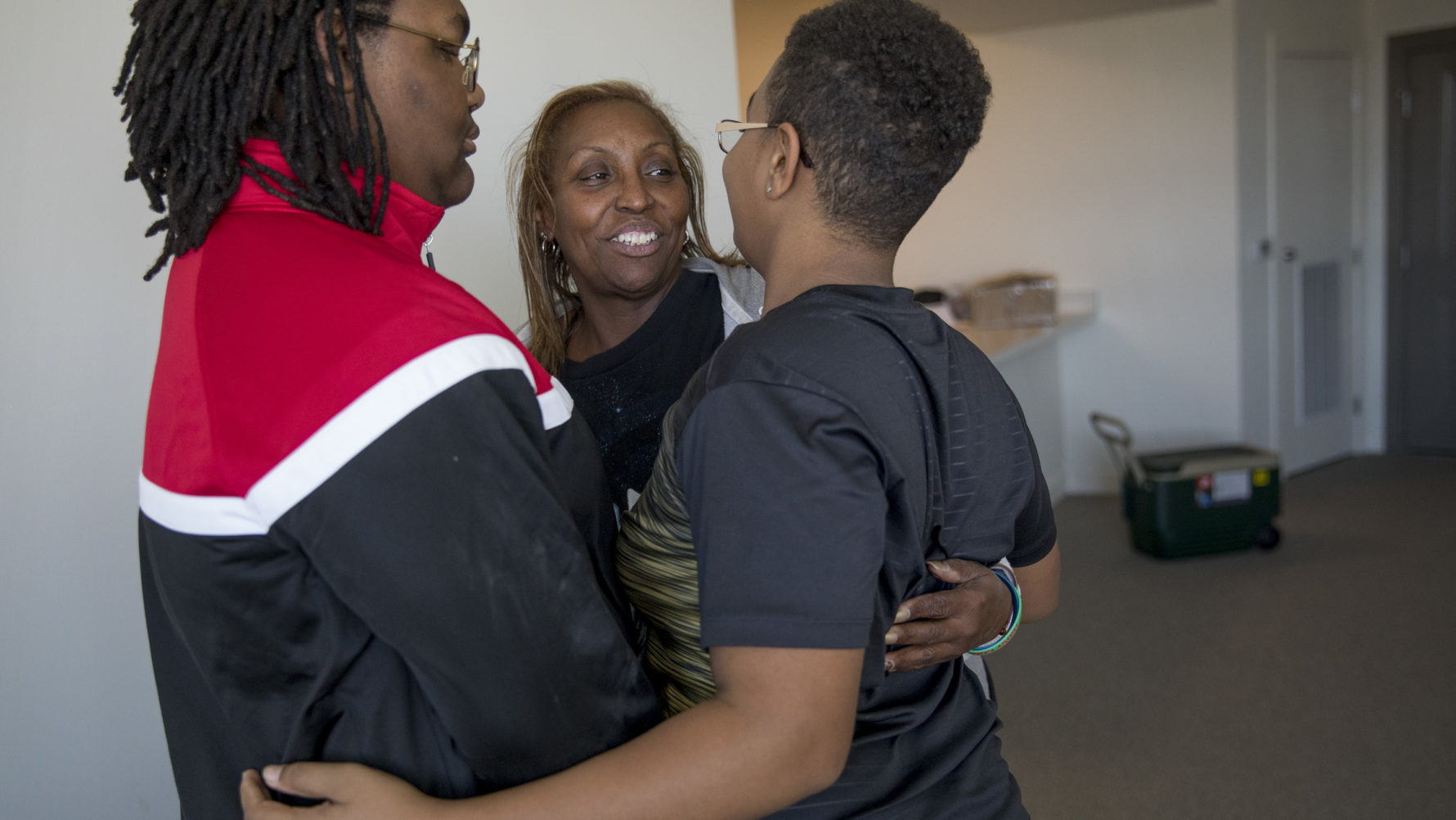
At age 60, Deborah Johnson thought her child-rearing days were behind her. But when hardship struck her family, she found herself raising her grandsons in a cramped, two-bedroom apartment in southeast D.C.
Johnson needed help — and a bigger place. She found both at Plaza West.
The building looks like any other new but unremarkable apartment complex in downtown Washington, but inside, it’s a safe haven for people in vastly different stages of life. Children run the halls, followed slowly, dutifully, by their grandparents. The kids’ moms and dads don’t live here; they’re on the streets, or in shelters, prisons, abusive homes, rehab facilities, graveyards, the wind.
Plaza West is where the families they left behind pick up the pieces and arrange them into something new: grandfamilies.
Deborah Johnson is one of 4,300 grandparents raising grandchildren in the District, according to Generations United, a nonprofit that tracks multigenerational households. For two years, she’s had legal custody of Michael, 12, and Joshua, 15.
“My daughter has been in a domestic abuse situation since the boys were little,” says Johnson, who’s now 61. “I kept trying to give her the time to get it together, and try to figure out why she felt like she was somebody’s punching bag, because she never saw that in my home.”
Time ran out when the family got a call from Joshua’s school. He’d left a note on his desk that said life in his mother’s home was so unbearable, he was contemplating suicide.
“The next day I was at the court, doing what I had to do,” Johnson says.
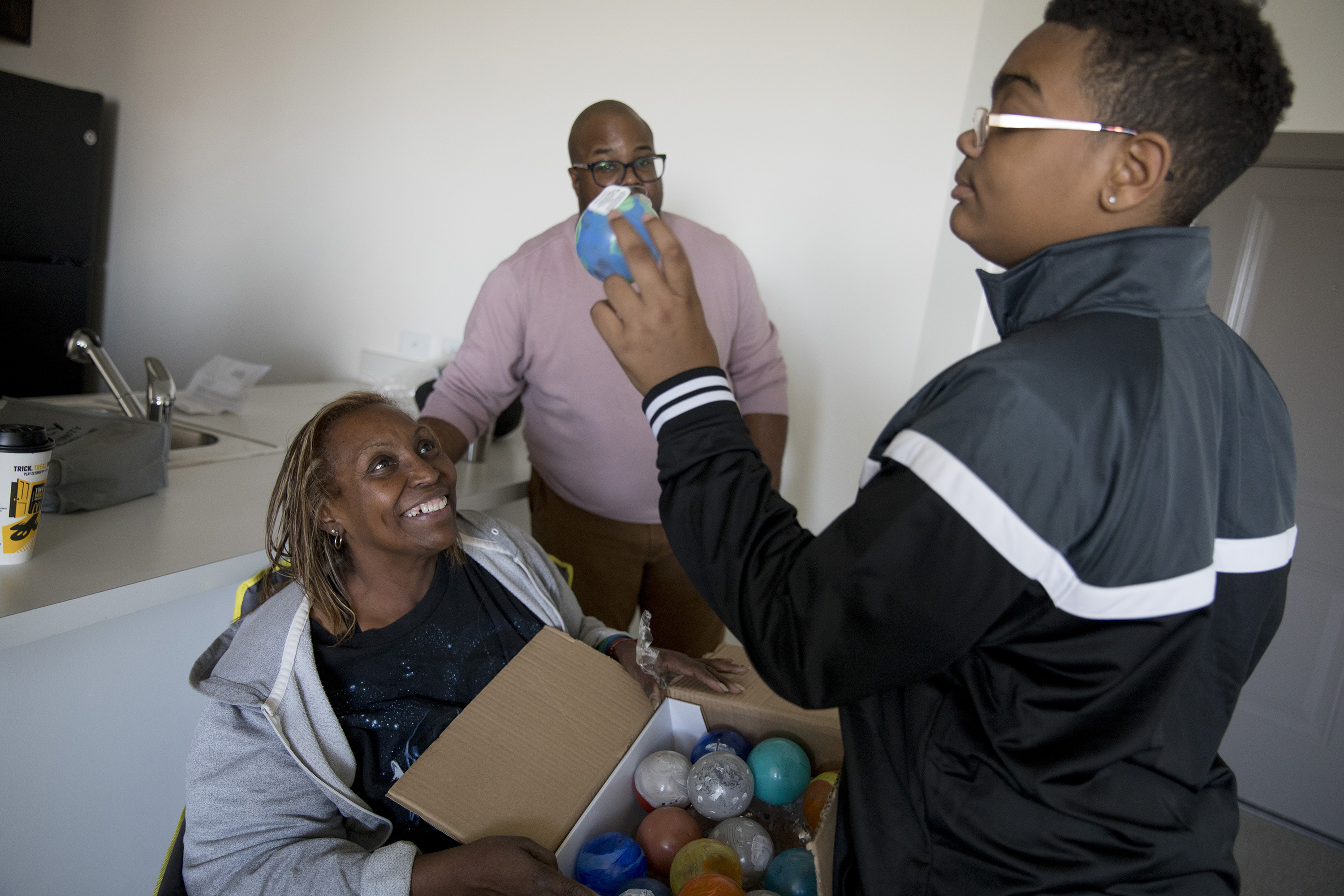
Michael, age 12, shows off one of his family’s hand-painted Christmas ornaments.Tyrone Turner / WAMU
‘I’ve seen a lot of tears’
Now, Johnson and her grandboys live in this light-filled, three-bedroom apartment at Plaza West, just blocks from D.C.’s Chinatown.
Plaza West opened in September, the city’s first housing development just for grandfamilies. It’s one of fewer than 20 in the country, according to Generations United. Johnson heard about it through D.C.’s Grandparent Caregiver Program.
“As soon as I saw the flyer, I was immediately excited, because we are really a group of people that are forgotten,” she says.

Plaza West is located at 4th and K streets in Northwest D.C., not far from Chinatown.Mission First Housing Group
To be eligible to live here, grandparents must be at least 55 years old, and their grandkids — or great-grandkids — must be no older than 17. The building is also targeted at low-income residents. Despite those restrictions, Plaza West has the potential to help families with a very particular set of needs, says Jamarl Clark, who oversees the building’s grandfamilies program.
“A lot of grandparents that are 55 and up, it’s hard to find senior housing that [allows] them to be able to bring children with them,” says Clark. “It helps to have specific, targeted housing for this particular demographic that is growing rapidly.”
The families moving into Plaza West often formed in the wake of tragedy, Clark says. There’s the child whose father committed murder and was sent to prison, and the 80-year-old woman who was living in homeless shelters while caring for her teenage granddaughter. Another resident had to take in her great-granddaughter after the girl’s father was killed and her mother abandoned her.
“I’ve seen a lot of tears,” Clark says.

Deborah Johnson in her new apartment at Plaza West. At right is Jamarl Clark, who oversees Mission First’s grandfamilies program at the building.Tyrone Turner / WAMU
But he’s also seen laughter, hugs and smiling faces. He says the building has already begun to feel like a village, with children now calling him “uncle,” and grandparents inviting him to binge-watch Netflix with them.
“I’m never going to be home,” says Clark, laughing.
In a way, this was the goal of Plaza West, which began as an idea from the late Bishop Smallwood Williams, founder of D.C.’s influential Bible Way Church. The bishop’s daughter, Yvonne Williams, says the church’s members were pained to see so many Washington families falling apart amid the city’s crack cocaine epidemic in the 1980s and 1990s.
“There were so many situations in which adult children became addicted to drugs, ended up either in jail or unable to keep a job,” Williams says. “[That raised] a whole set of practical issues … that had to be addressed on an emergency basis.”
Grandparents who suddenly found themselves thrust back into parenthood needed legal custody, financial assistance, coaching and a suitably sized home, Williams says. So Bible Way’s affiliated housing nonprofit, Golden Rule Apartments, Inc., began working with affordable housing developer Mission First to conceptualize a residence for families with those needs. Once the housing was built, they determined, they could also offer tenants social services and a feeling of community.
“We thought, what can we do to increase the likelihood that, one, they survive this tragedy, and two, that we can kind of hang with them and see if we can turn this train around?” Williams says. “That’s the guts of the vision.”
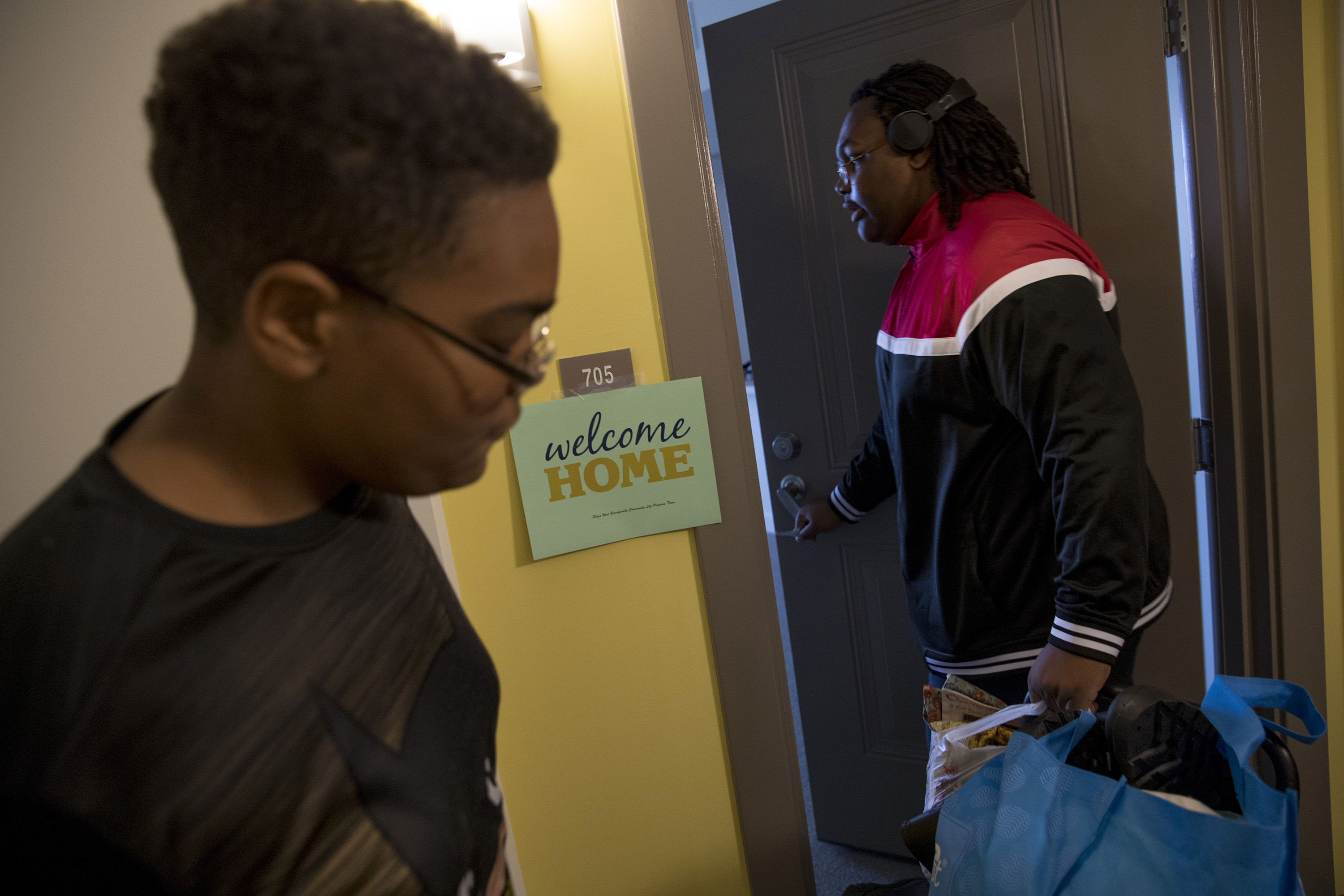
On moving day, Deborah Johnson’s grandsons Michael (left) and Joshua (right) bring up a few items from her car.Tyrone Turner / WAMU
‘They only have each other’
Deborah Johnson’s grandsons are just happy to have their own rooms.
Walking through his new bedroom, Joshua points out where he’s going to hang his anime posters. His brother Michael has the room next to his, and he’s already plotting elaborate decorations. With their own spaces, they say, maybe they’ll argue less often.
“It’s very important to have your own room,” Michael says. “We always have arguments, and then our grandma gets into the arguments.”
Sitting in a camping chair in her empty living room, Johnson says she’s looking forward to meeting her new neighbors. Soon, Plaza West will be occupied by 49 other families like hers.
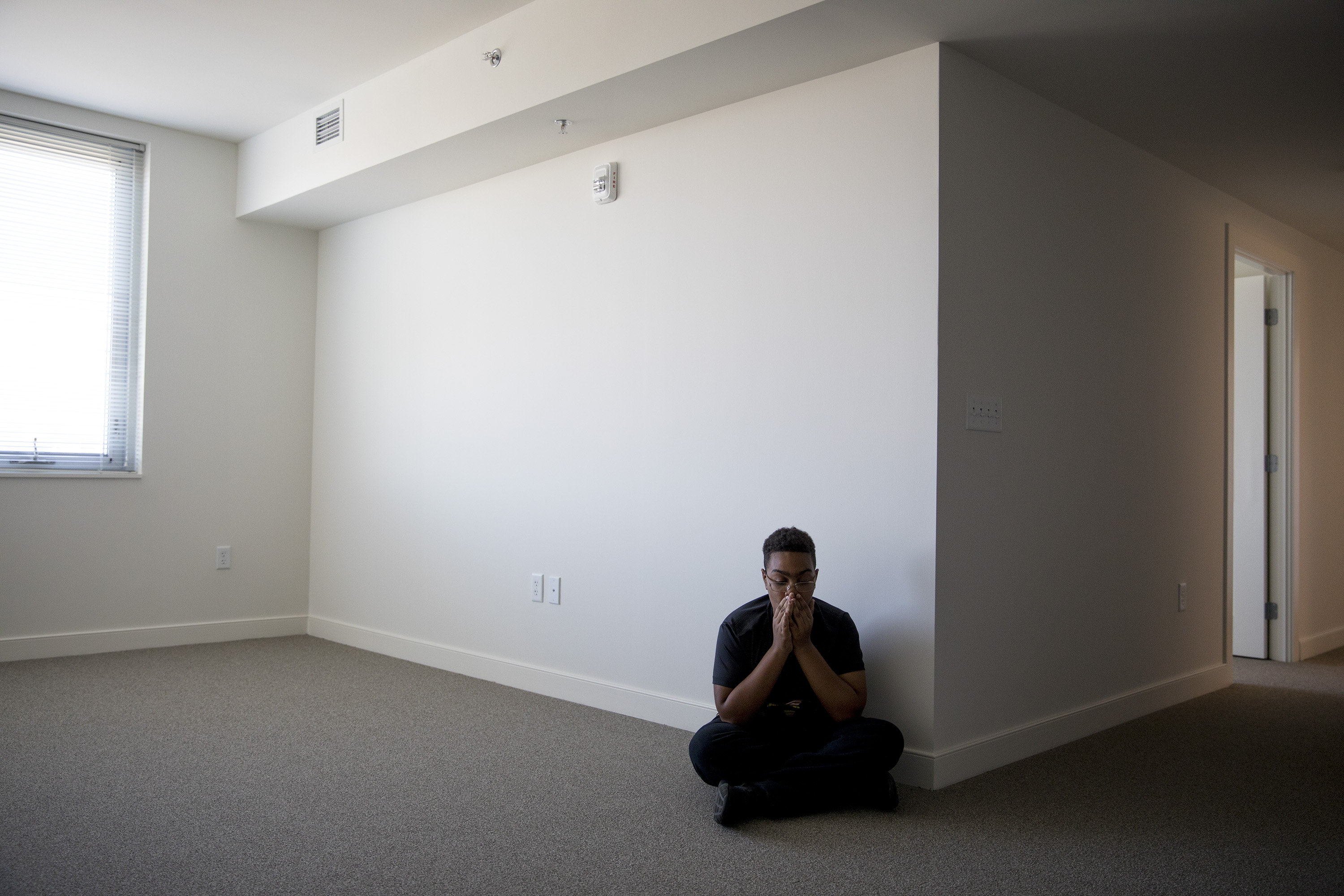
Michael enjoying a moment of peace in his new home.Tyrone Turner / WAMU
“I like the idea that there’s going be other grandparents, so you have someone that can relate to the situation that you’re in,” Johnson says. “You can kind of bounce ideas off each other, and you just have some camaraderie.”
The grandmother says she had been enjoying the single, kid-free life. Now, she fields quizzical looks from her friends, who don’t understand why she’s chosen to leap back into parenthood.
“They pretty much ask me why. They’re like, ‘That’s not your responsibility. If you didn’t do it, somebody else would have done it.’ But I refuse to see my grandkids in foster care. And more importantly, I did not want to see them separated because they only have each other.”
Except that’s not true. The boys also have their grandmother.
This story was originally published on WAMU.