 Mikaela Lefrak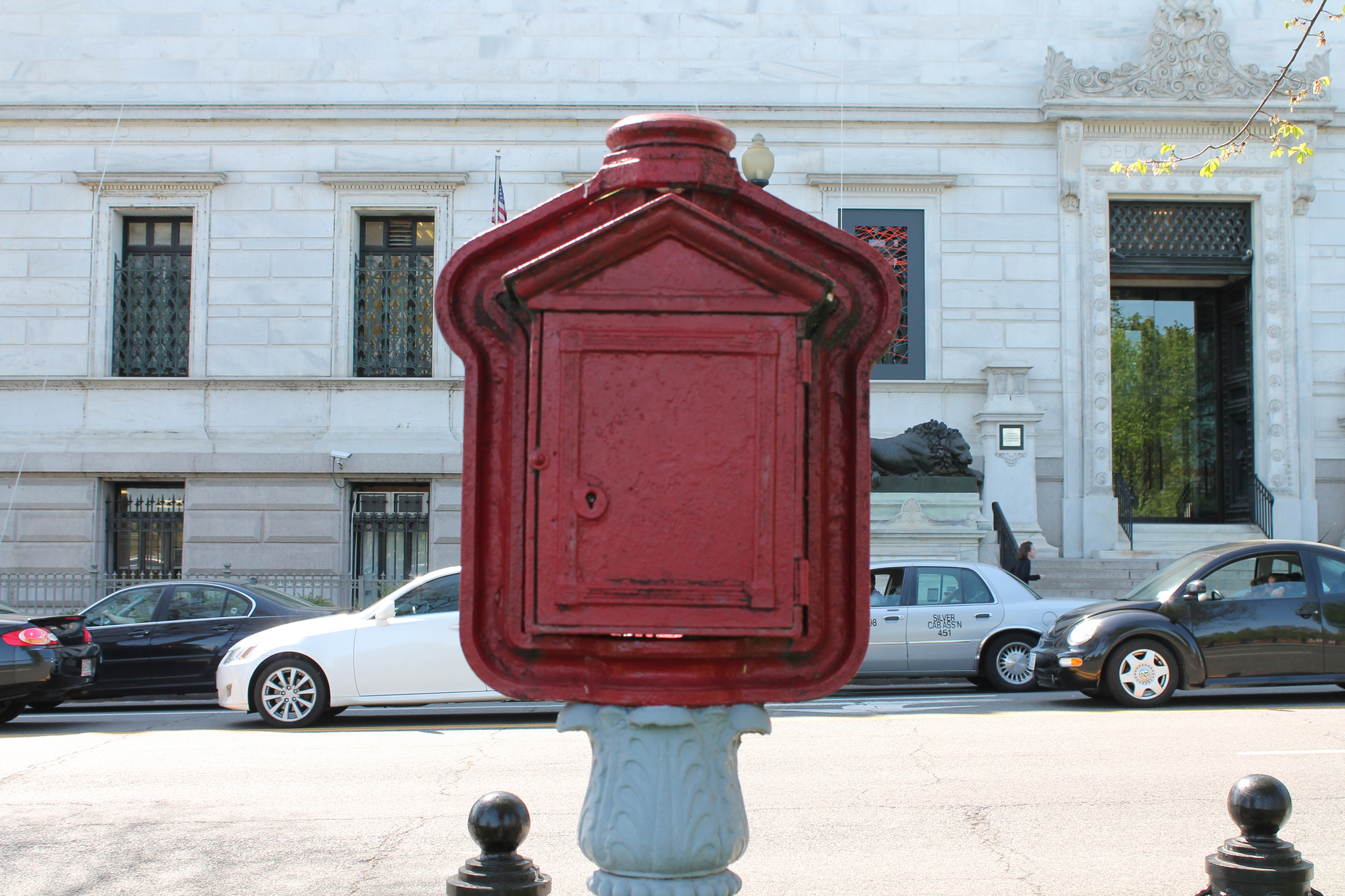
Nine long-defunct call boxes in downtown D.C. are about to get a second life as public art.
Local artist Charles Bergen will refurbish each of them in honor of nine different women who made history in the area. The $176,000 project is funded by the DowntownDC Business Improvement District and the D.C. Commission on Arts and Humanities.
“I hope to touch people and teach them a little about history,” Bergen said of the project. “If they’re just walking by on the way to work, they’ll be like, ‘Why is that painted funny colors?’”
Bergen worked with urban historian Mara Cherkasky of Prologue DC to select women to profile. They include: Josephine Butler, D.C. Statehood Party activist; Katharine Graham, publisher of the Washington Post; Julia Ward Howe, author of “The Battle Hymn of the Republic”; Elizabeth Keckley, Mary Todd Lincoln’s confidante; Flora Molton, Gospel street musician; Cissy Patterson, publisher of the Washington Times-Herald; Alice Paul, National Woman’s Party leader; Mary Church Terrell, civil rights activist; and Alma Thomas, expressionist painter.
“In D.C., while there are lots of sculptures of men and allegorical sculptures of women, there are not many sculptures of actual, real women that you can put a name to,” Bergen said — a fact he learned from Cherkasky. “I hope to start correcting the imbalance of the lack of female sculptures downtown,” he said.
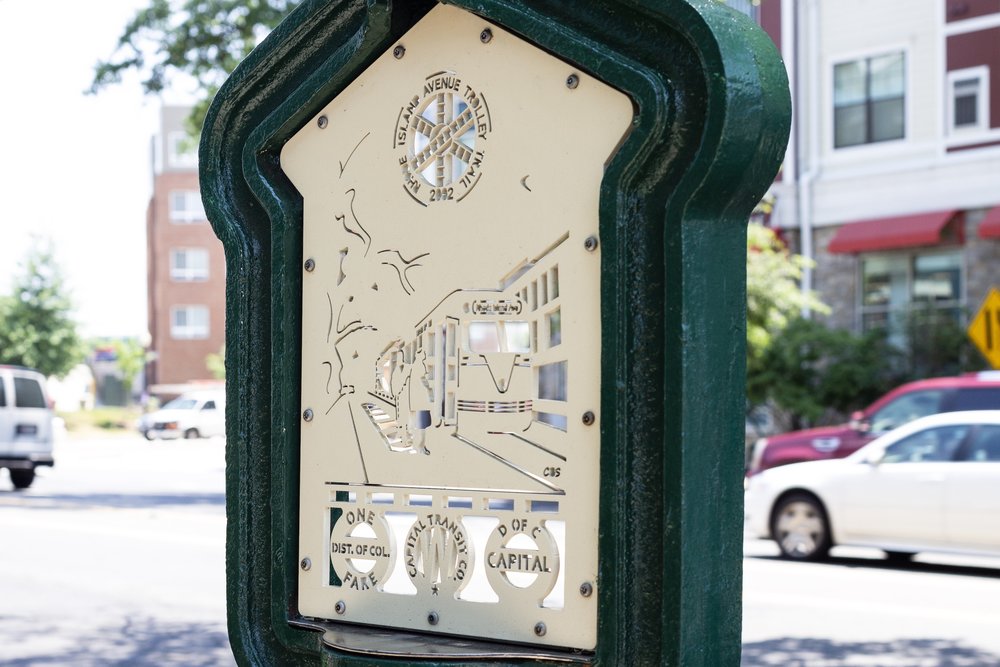
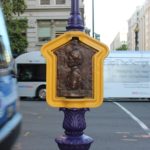
A Bergen-designed call box on Rhode Island Avenue, part of a 2017 project to refurbish the neighborhood’s callboxes.Courtesy of Charles Bergen
Each call box will have a sculpture inside and a painted metal element on top that symbolizes the subject (a musical note for Molton, for example). Bergen worked with four interns from the city’s Marion Barry youth employment program over the summer to develop the designs.
Call boxes are cast-iron devices that pre-date both telephones and two-way radio systems. They’re all over the District, even though they haven’t been used in their official capacity since the 1970s.
The D.C. fire department started installing red call boxes in the 1860s. They were connected to a central alarm center. If a person saw a fire nearby, she could break the closest call box’s glass, open the door, and pull a fire alarm lever. Then, a series of underground wires would transmit the alarm to a central office, where a telegraph system would tap out the box number and operators could dispatch fire trucks to the right location.
District police installed their own set of blue call boxes in the 1880s. Police officers used them to check in with their precincts.
Lots of the city’s call boxes have been transformed into art or historical markers. Artists working with a Cultural Tourism DC project called Art on Call refurbished 145 call boxes between 2000 and 2009. Bergen transformed six call boxes on Rhode Island Avenue with art themed to the neighborhood.
“The call boxes place the art in the middle of the everyday,” Bergen said. “They’re never closed. You can see them 24/7.”
According to the DowntownBID, the call boxes will be unveiled in early spring of next year. The locations are: 15th & L streets, Vermont & K streets, 14th & H streets, 14th & G streets, 14th & F streets, 14th Street & Pennsylvania Avenue, and two at 13th & G streets.