Jacob Fenston
Planting native trees and shrubs in your yard is good for the environment. But just how many native plants do you need? A new study examined yards all over the D.C. region and came up with a specific proportion required to support native wildlife: 70 percent.
The study, published in The Proceedings of the National Academy of Sciences, focused on chickadees, looking at how well they are able to reproduce and thrive, depending on the presence or lack of native vegetation. Researchers say the findings have implications not just for these small birds, but other wild animals too.
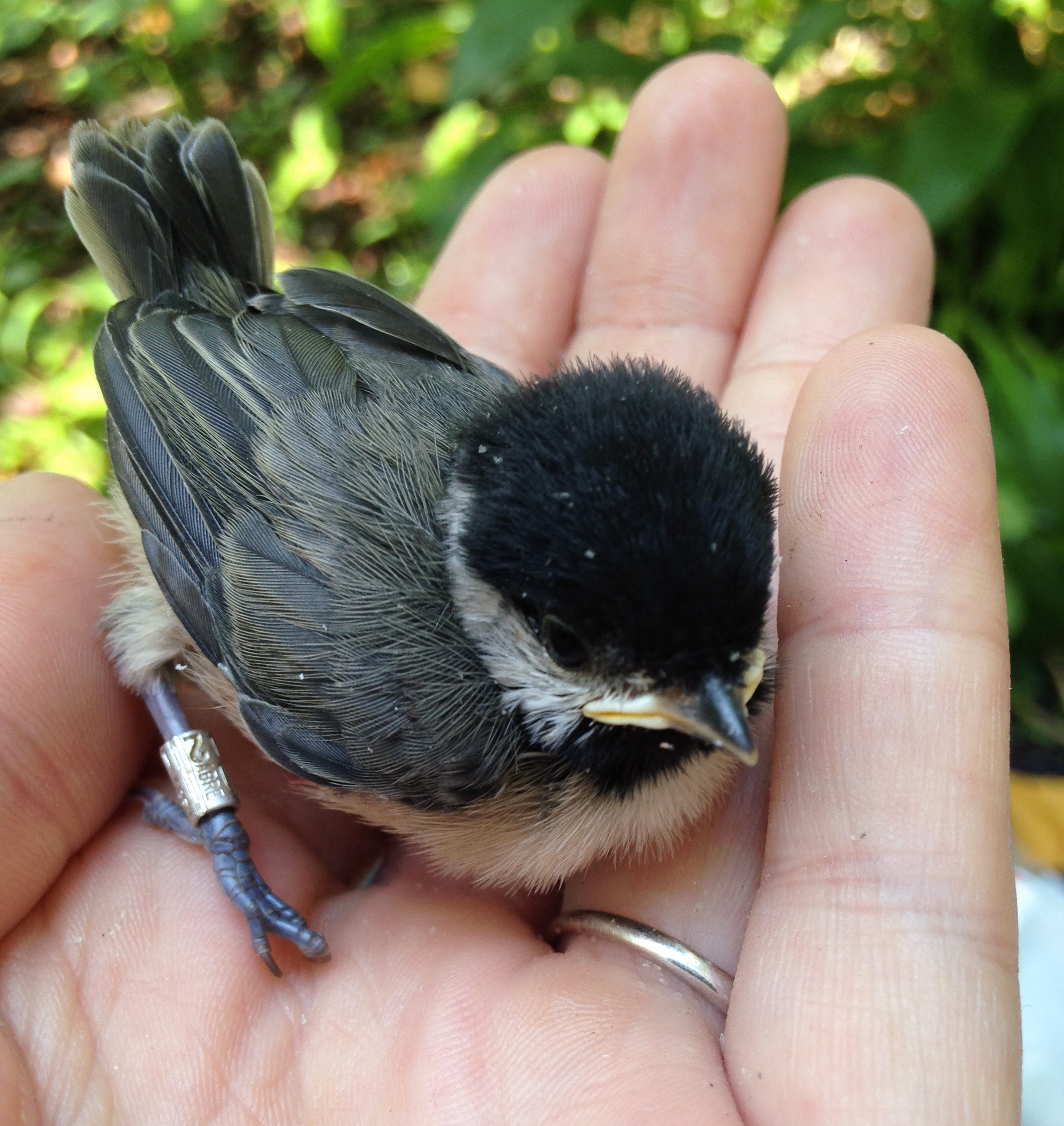
A chickadee in the hand is worth two in the bush. Researchers tagged birds so they can be tracked year after year.Doug Tallamy / University of Delaware
Researchers placed empty nest boxes in the yards of residents who volunteered for the project. Those residents then watched the boxes, reporting if and when chickadees started making nests in them, and tracking their progress. Did they lay eggs? Did the eggs hatch? Did the chickadee chicks survive?
Researchers also counted and catalogued all the plants in the yards in question.
“I joke that the majority of my PhD was actually me just being a plant nerd,” says Desiree Narango, the lead author of the study, which was part of her PhD. She spent many, many hours snooping through people’s yards identifying plants. She also spent a fair amount of time in D.C. traffic: the study covered 159 yards all over the region, in Virginia, Maryland, and the District.
“Every time we would go into a new neighborhood we would find new plants that we needed to learn,” says Narango.
Many of those species are non-natives from Asia or Europe. They may look pretty, but Narango found they are terrible for chickadees. She found that chickadees can’t reproduce enough to survive in yards made up of more than 30 percent non-native plants.
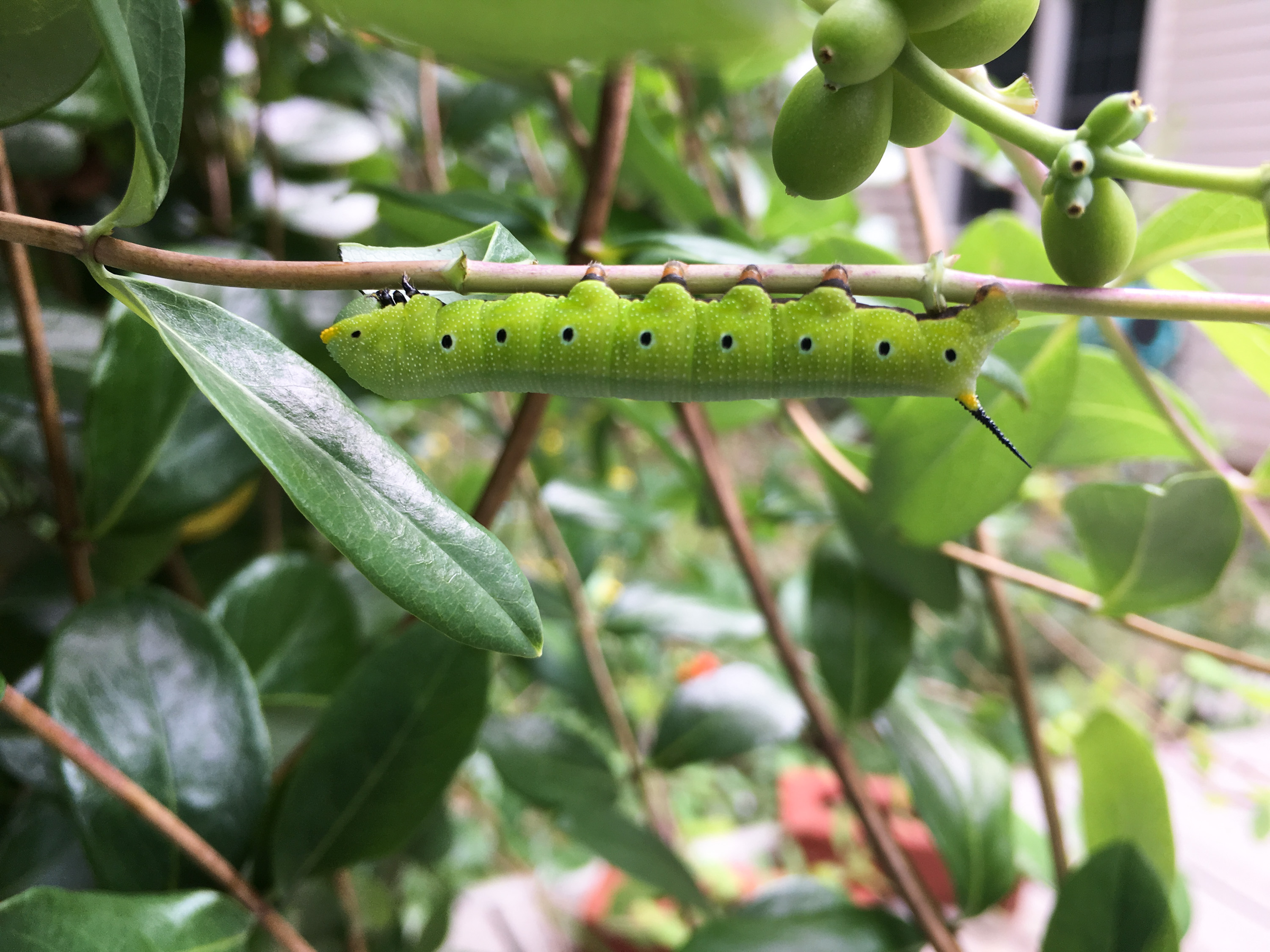
Is it a pest or is it dinner?Doug Tallamy / University of Delaware
All about the bugs
Chickadees and many other birds can’t thrive among non-native plants because those plants don’t support the insects chickadees love. In fact, non-native landscaping is a “food desert” for these insects, according to the study.
“When you plant a Japanese maple, or you plant a crepe myrtle, or you plant a pear tree, or whatever it happens to be, those species didn’t evolve here, so they don’t have these insects that are also specialized on them and are produced there,” explains Pete Marra, director of the Smithsonian Migratory Bird Center, is a co-author of the study.
To a homeowner or landscaper, those insects can be pests—caterpillars chewing holes in your leaves! But to chickadees and other insectivorous birds they are a scrumptious buffet.

Pete Marra, director of the Smithsonian Migratory Bird Center.Jacob Fenston / WAMU
Marra says while the study only looked specifically at chickadees, the results apply to other species. As we humans expand our territory, all sorts of birds have been suffering. “We’re seeing 50 percent of our species that are experiencing significant declines just in the last 40 or 50 years.”
The link between birds and bugs and native plants is clear: 90 percent of plant-eating insects only eat one or a few species of plants, so non-native landscapes have few bugs and less bug diversity. Bugs are the primary source of food for most terrestrial birds.
This study shows a small way individual homeowners and landscapers can help reverse birds’ decline, one yard at a time. Desiree Narango says that magic number—70 percent native plants—gives gardeners a goal to shoot for.
“It’s one thing to say, ‘Oh, well, urban areas are terrible and they are poor habitat for wildlife.’ And it’s another thing to ask a question, ‘What can we do to actually make them better?’” says Narango.
Chicka-dee-dee-dee-dee
Fernanda Fisher stands outside her house in Arlington, watching for chickadees, and listening for their distinctive call.
“Chicka-dee-dee-dee-dee,” she says, mimicking their call. Fisher is one of the 159 local residents who volunteered their yards and bird-watching time to the project.
Chickadees are one of her favorite birds. “I mean, they’re black and white, and they’re easy to identify,” she says. “I think chickadees are very personable birds.”

“Chickadees are very personable birds,” says Fernanda Fisher.Jacob Fenston / WAMU
She shows off some of the native plants outside her house — a huge American holly, a towering black walnut, a witch hazel bush. The chickadees seemed to like the plants: when she was participating in the study, her yard had five chickadee nests in one year. Fisher says she likes the idea that her little plot of land can be good habitat for more than just humans.
“We weren’t here first, these animals and birds were here first,” she says. “We can have a beautiful yard and a lovely place to live, as humans. But we can also provide the flora for the birds and the animals to allow them to also live happily.”
But I don’t know what to plant!
Luckily there are lots of plants native to the mid-Atlantic that look great in landscaping, and there are many resources online to find them. For many common landscaping plants that are non-native or invasive, there are native cousins that are an easy substitution. For example, rather than Japanese wisteria, you could plant the very similar American wisteria. Here are some resources, if you want to learn more.
- A list of native alternatives to many popular perennials, shrubs, vines and trees.
- An interactive database of native plants, based on your zipcode. You can even filter by birds that like the plants!
- A list of nurseries in the region that sell native plants.
- A useful guide to Virginia native plants.
- Another guide from the U.S. Botanic Garden.
This story was originally published on WAMU.