Rachel Kurzius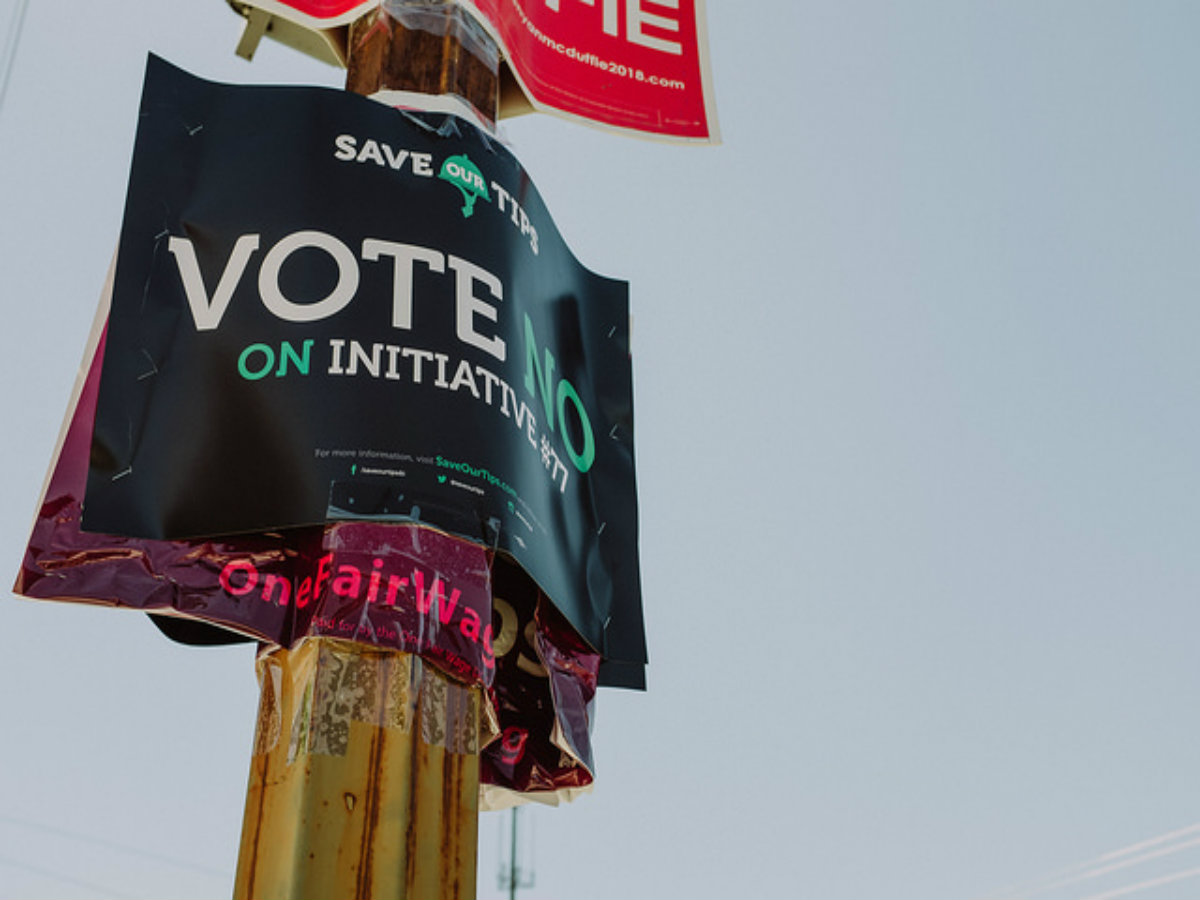
The debate about Initiative 77, the ballot measure in June’s primary to eliminate the two-tiered wage system, played out with special acrimony on social media. Perhaps you’d like to return to those simpler times of online debate, back before the D.C. Council repealed the voter-approved measure, prompting activists to attempt to repeal that repeal.
Now, you can! The D.C. Public Library has archived more than 10,000 tweets related to Initiative 77 from June 19 through July 12, as Bloomingdame spotted.
As DCPL’s Archival Collections Coordinator Mark Greek explains, this digital collection isn’t intended for people in the present day to revisit their best zingers and burns (though they certainly can, if they so choose). Instead, it’s an experiment for the library to see if its staff can effectively collect a slew of connected tweets and deliver that data to patrons. They chose Initiative 77 because it represented an interesting local issue.
“We’re looking 50, 100 years down the road,” says Greek. “We can’t simply document everything, but we can get a good selection of what types of things are being said, so a historian or even a reporter could get a good feel for what people thought about this at the time.”
He compared the process to the current state of affairs at the Library of Congress, which archived every message on Twitter from the site’s first 12 years, until it announced in late 2017 that it would “acquire tweets on a selective basis.”
Greek says that the tweet collection is “a way of gathering voices. There were political issues like this 20 years ago, 50 years ago, 100 years ago, thousands of years ago,” he says, but few records remain that show the way most people felt about them. “Unless they wrote it down in a letter, we don’t have the individual voices.”
This is part of a larger archival project for DCPL, which has grabbed digital copies of websites for years (including DCist!) and saved them both on cloud-based storage and on local servers. The campaign sites of local political candidates, especially because people who lose often take down the sites after the election, and local blogs are of particular interest to library archivists, Greek says.
“We’re really interested in neighborhood stuff—any neighborhood in the city that has a blog or a website or some sort of presences we want to start grabbing that,” says Greek. “A lot of neighborhoods are documented very well, but for every one that’s documented really well, there are two that aren’t.”
He says that his team doesn’t “necessarily try to anticipate how it will be used, our goal is simply to document it in some way. We get calls from Hollywood production companies that want to see photographs of police cars from the 1960s. They may want to look at a website from 2018 to figure out what it looked like.”
Similarly, DCPL’s Memory Lab helps D.C. residents digitize their floppy disks, VHS tapes, and other now-obsolete formats, with an eye toward stewardship and preservation.
The archival team at DCPL is looking at ways to preserve debates on other social media sites, like Facebook and Instagram, though the image-heavy nature of those sites makes it a little trickier.
“The more we can make available, the better,” says Greek. “That’s what libraries do: we make stuff available.”