 Lori McCue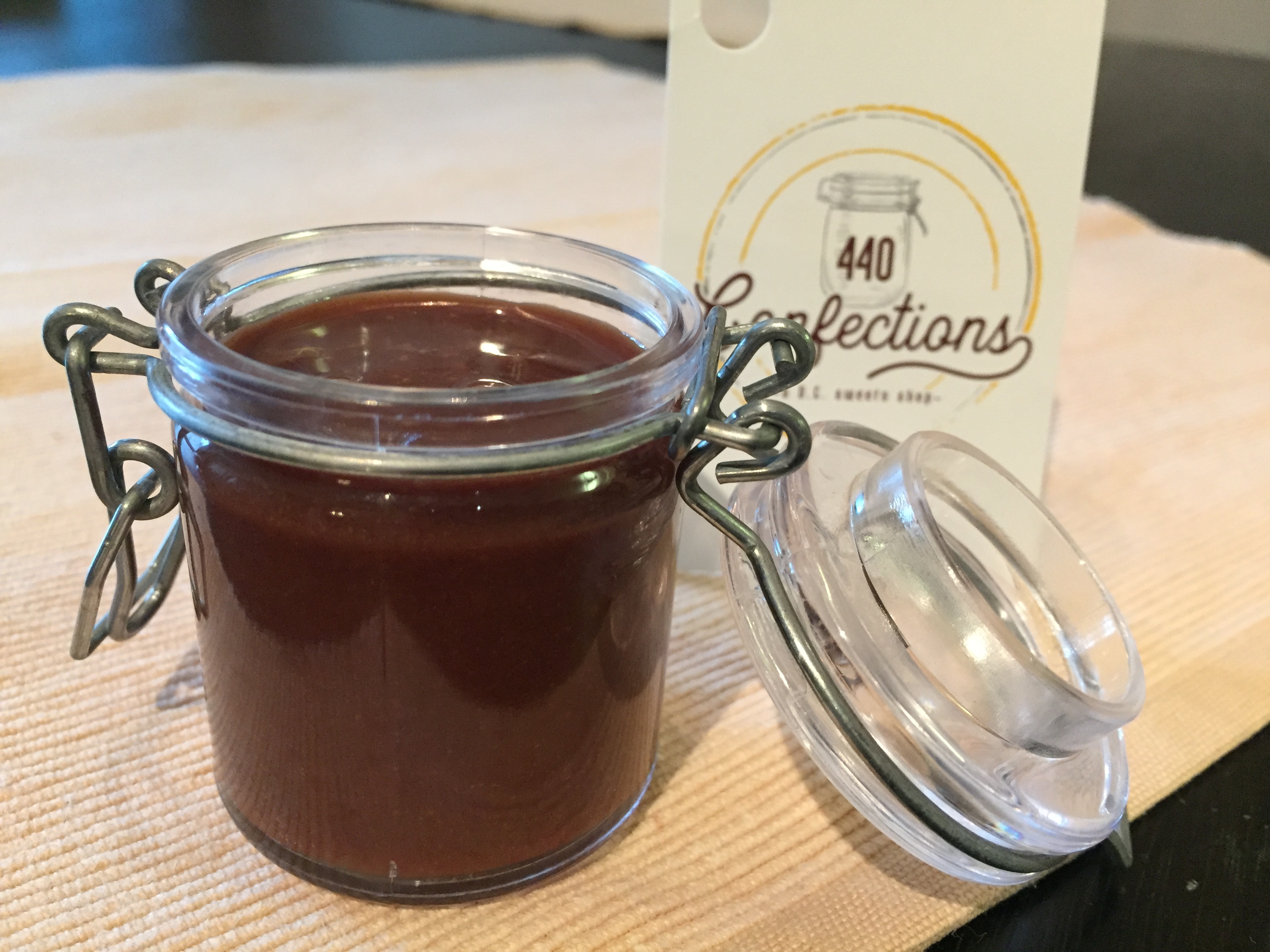
Emily Annick named her sweets company, 440 Confections, after her home address in D.C. It’s not just that she really loves her condo: Annick runs her business entirely out of her home, and is the first food company to do so under D.C.’s Cottage Food Act.
First introduced to the D.C. Council in 2013 and passed the following year, the law allows purveyors of certain shelf-stable foods to whip up their creations at home, rather than in a commercial culinary space. These cottage food businesses are then allowed to sell their goods at farmers markets or other public events only.
While the 200 or so small food businesses in D.C. that make their goods in incubator kitchens have a great deal of flexibility regarding what and how much they make, cottage food businesses are subject to a few stipulations. They can only produce foodstuffs that don’t need to be refrigerated (that means most meat and dairy is off the table) and can only make a maximum of $25,000 a year in revenue. They also need to indicate on their labeling that the products aren’t subject to D.C. food safety regulations.
It’s a good fit for someone like Annick, who’s just starting her business. She’s keeping her full-time job as an accountant—for now, 440 Confections will be a side project. “It’s something that I do in my off hours because it’s something I love,” she says.
440 Confections‘ first products are what Annick calls Jars of Goo, based on one of her favorite snacks. “I think it’s just a good treat to eat a little Nutella or peanut butter straight out of the jar,” she says. Her version of those spoonable sweets come in single-serving jars (about 1.5 fluid ounces each) and in flavors like cinnamon milk chocolate, pumpkin spice caramel, milk chocolate peanut butter with crispy flakes, and passion fruit white chocolate. You can dunk pretzels in it, slather it on graham crackers, or, if you’re like Annick, “just eat it straight out of the jar.”
Annick has been dreaming up this business for a few years now, and knew she’d have to get organized to get her cottage food license from the D.C. Department of Health, especially because the rules are a little complicated. First, she needed to submit all her labels with a full list of all ingredients used—it’s part of how DOH ensures that food will be shelf-stable. Applicants also need to earn their food manager’s certification and obtain their home occupancy permit from the Department of Consumer and Regulatory Affairs. Any company growth has to be reviewed by DOH: If Annick wants to add new flavors, for example, they have to be approved.
The D.C. Department of Health also comes by to conduct kitchen inspections. “We’d go to someone making cookies, [for example,] … and observe part of the process,” says Laura Wildey, program manager for food safety and hygiene inspection at the DOH Regulation and Licensing Administration. “During that time we make sure their hands are clean, their kitchen is clean, and chemicals are clean and sanitized. Just because your food is prepared in a home kitchen doesn’t mean it shouldn’t be handled safely.”
Annick has only nice things to say about working with DOH (“They were very responsive and friendly given that it’s a new law and we’re all navigating it together”), but acknowledges that the law could be more accessible. It’s not exactly cheap, she says: To apply for the license is a $50 fee, and Annick paid about $230 in other expenses to track down other necessary permits. The city didn’t initially approve one of her flavors, fearing it might not be shelf-stable, so she had the product lab-tested—another expense.
And then there’s the $25,000 revenue limit. “You can’t survive on that living in D.C.,” Annick says. “It’s a big impediment to people who want to start their own business. You can only do it as a hobby.”
While Wildey says the revenue cap was not a DOH decision, she points out that hobbyists and curious foodies testing their products are exactly who the license is meant for.
“If you’re in a cottage food business, you can check out the market see if your fig bars do sell,” she says.
Now that Annick has her license, she’s reaching out to farmers markets to find a place to sell her goo. After all this paperwork, she says, “I’m ready to get going.”