Martin Austermuhle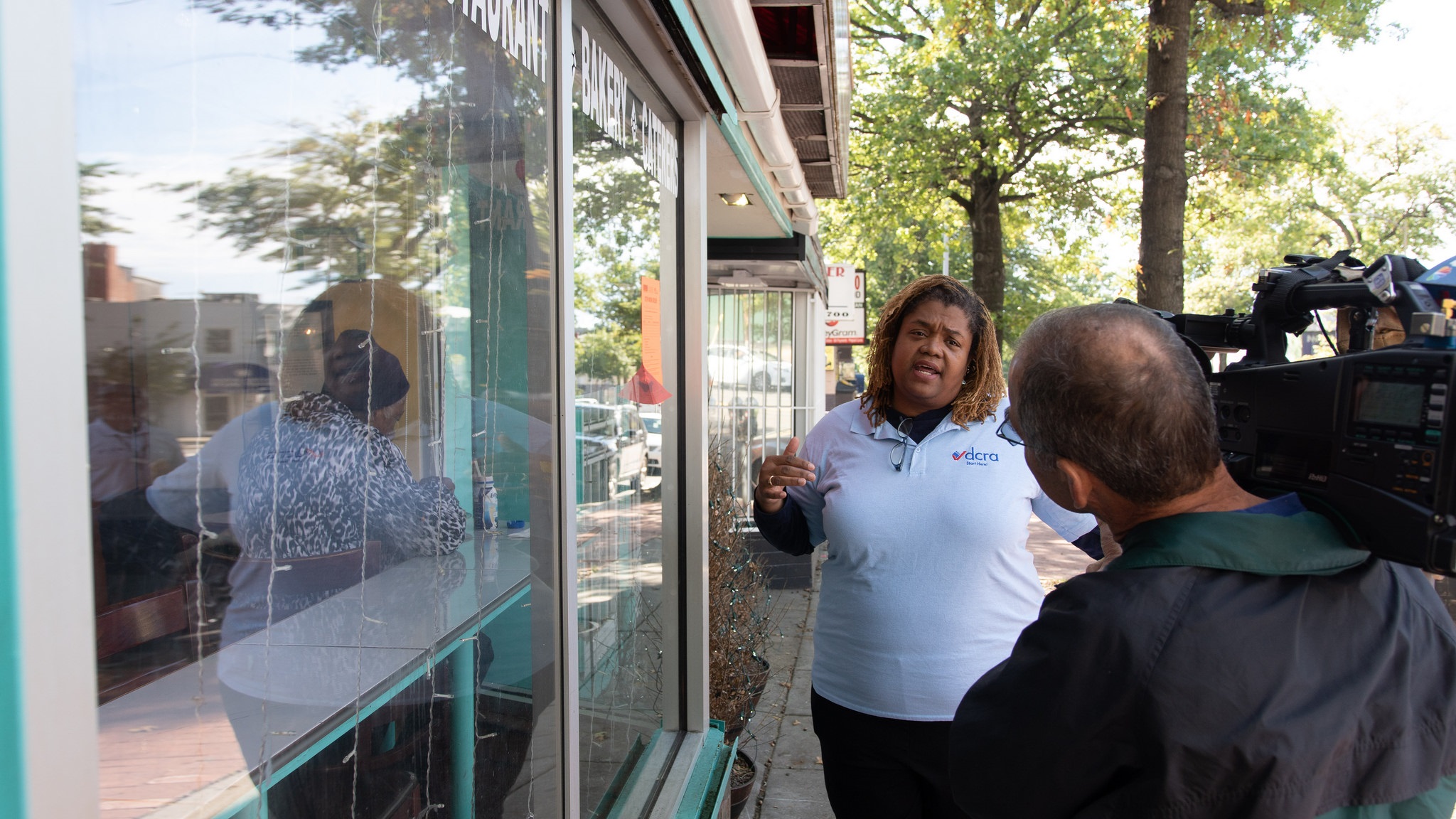
Three senior officials at the D.C. Department of Consumer and Regulatory Affairs were fired this week, less than 10 days after the agency’s director, Melinda Bolling, announced that she was leaving for another job.
D.C. officials confirm that Deputy Director Lori Parris, Chief Administrative Office Walter Crawford and Kevin Edwards, the director of information systems, left DCRA this week. The Washington City Paper was first to report the departures. Additionally, WAMU has learned that Chief Building Official Lynn Underwood recently retired, leaving another top-level vacancy.
The sudden turnover in DCRA’s highest ranks further increases turmoil at an agency charged with everything from licensing trades and handing out business licenses to issuing building permits, enforcing the construction code and policing for housing code violations. It also comes as the agency is facing a whistleblower lawsuit by a current employee who says she was retaliated against after she was told to violate the city’s open-records law and refused.
D.C. officials say a certain amount of turnover at the highest levels is to be expected, especially as Mayor Muriel Bowser prepares to start her second term in office. And, they say, it offers an opportunity for the city to take stock of what’s working and what needs to be worked on.
“We’re proud of the work that DCRA has done, and we know there is more work to be done,” said Bowser’s office in a written statement.
But the number of people out of top jobs at DCRA in such rapid succession has others saying that it will only increase the feeling that the agency — which has a $60 million annual budget and 437 employees — is adrift.
“They need to just be settled, they need a director that’s going to let them do their job, let them function how they’re supposed to function, and keep politics out of it,” said Delaine Englebert, a former DCRA inspector who left the agency in 2016.
A Troubled Agency
Bolling took the top spot at DCRA in July 2015; before that, she had served as the agency’s general counsel. Parris arrived as deputy director two months later, coming from the D.C. Housing Authority, where she had spent six years as deputy general counsel.
They took over a sprawling agency that touches on many facets of residents’ daily life and had been the focus of reform efforts by past mayors. “It’s managed that poorly. We have to really turn it around,” said Mayor Adrian Fenty in 2007. Bowser took a similar interest in improving DCRA. In mid-2016, she and her senior aides spent an entire week there with Bolling and Parris addressing pent up problems — a level of granular attention paid to few other city agencies.
Improvements were slowly made, but criticisms of DCRA were numerous. The agency was said to respond too slowly to complaints of illegal construction and vacant properties, and housing advocates said it failed to police housing code violations. D.C. Auditor Kathy Patterson released a number of critical reports on DCRA. One focused on failures in identifying vacant and blighted properties, another on the significant shortcomings by the agency to enforce the housing code at one particular building in Northeast.
“One of the things we’ve seen has been even with longstanding programs and services, there’s a lack of clear standard operating procedures,” Patterson said. “Whether it’s vacant and blighted property or housing code, you may have one person handling things one way and another, another way.”
Englebert says part of the problem with Bolling’s leadership at DCRA started with Bowser’s visit to the agency, which left Bolling feeling like she had been reined in.
“I do remember the week she came in there,” Englebert said of Bowser’s visit to DCRA. “I do remember being told that was the day Melinda was reminded who she worked for, and that was the day things changed.”
One former D.C. government official who asked not to be identified by name said Bolling did as good a job as she could with the budget and staff she was provided, which the official said were not sufficient. Additionally, the official said DCRA’s purpose and goals were often muddled.
“I do think it’s fair to ask what success at the agency is going to look like. There seem to be a number of complaints and competing visions with how to address them, but there doesn’t seem to be an agreed upon set of goals for the agency,” said the official.
One proposal from the D.C. Council would split up DCRA into two distinct agencies: one to handle business licensing and regulation, another to manage building and housing permits, inspections and enforcement. Although the bill did not make it through the Council this year, Chairman Phil Mendelson says he intends to reintroduce it next year.
“There’s no question that three decades of existence proves the agency is unwieldy,” Mendelson said.
A Whistleblower Lawsuit
Another concern with DCRA was laid bare in an August 2018 whistleblower lawsuit filed by agency employee Genet Amare. She was hired in 2017 as a FOIA officer, charged with fulfilling requests from the press and public for documents under the city’s Freedom of Information Act.
Upon taking the job, Amare said she encountered a “significant FOIA backlog” at DCRA. And when the backlog was raised with Bolling, Amare says the director expressed little concern: “Bolling made it known that she was not concerned with strict adherence to the FOIA deadlines or any lawsuits or appeals which may be filed as a result of FOIA violations.”
Amare took the issue to the Mayor’s Office of Legal Counsel, which adjudicates FOIA appeals. Betsy Cavendish, the mayor’s general counsel, wrote an email to Bolling insisting that she comply with FOIA. Amare says after that, she faced retaliation by DCRA’s leadership and was denied a promotion. The lawsuit claims that DCRA violated the city’s whistleblower law, which protects employees who raise concerns with wrongdoing they observe.
Traci Hughes, who served as the director of the D.C. Office of Open Government until earlier this year, says DCRA has had longstanding problems complying with FOIA. In one case in 2016, the agency failed to make public plans for a house renovation available for a neighbor to easily review — even though the law required it.
“The agency for quite a while was just not complying with the law, and there was no one around to hold them accountable and hold their feet to the fire,” she said. “I think there were a confluence of factors that contributed to this mess, but there were many opportunities for leadership at DCRA to step up and do the right thing and they just chose not to.”
Amare’s lawsuit is still in D.C. Superior Court, and D.C. has until Dec. 7 to respond to her allegations. She remains at DCRA.
Moving Forward
In a statement, Bowser’s office says an effort is ongoing to fill the senior-level DCRA positions that are currently vacant, primarily the top job.
“While we do not discuss personnel matters, we can confirm that the search for a permanent director is underway, and we are confident that we will not miss a beat under the leadership of the interim director,” the statement said.
Bolling has been replaced on an interim basis by Ernest Chrappah, who currently heads the Department of For-Hire Vehicles, which regulates taxicabs and ride-hailing services like Uber and Lyft.
For Mendelson, DCRA is at a crossroads. It’s lost a number of top officials in a short period of time, and continues to face criticism from some residents and legislators. But it also has an opportunity to reset.
“I’m concerned as I always am when there’s this level of turnover,” said Mendelson. “On the other hand, there have been a lot of complaints about the functioning of that agency. There’s an opportunity here for substantial improvement.”