Matt Blitz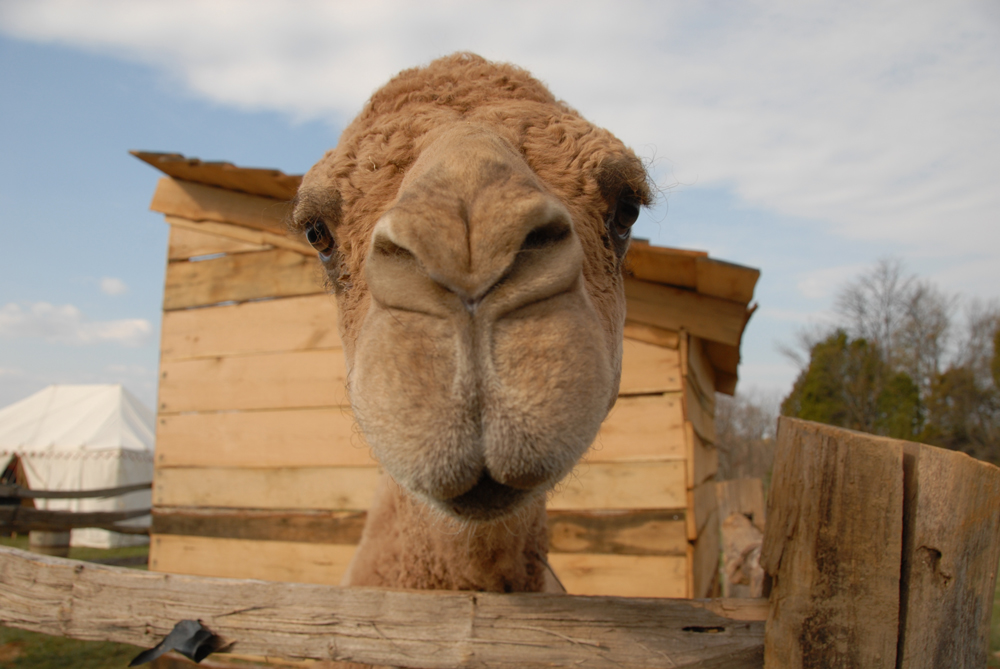

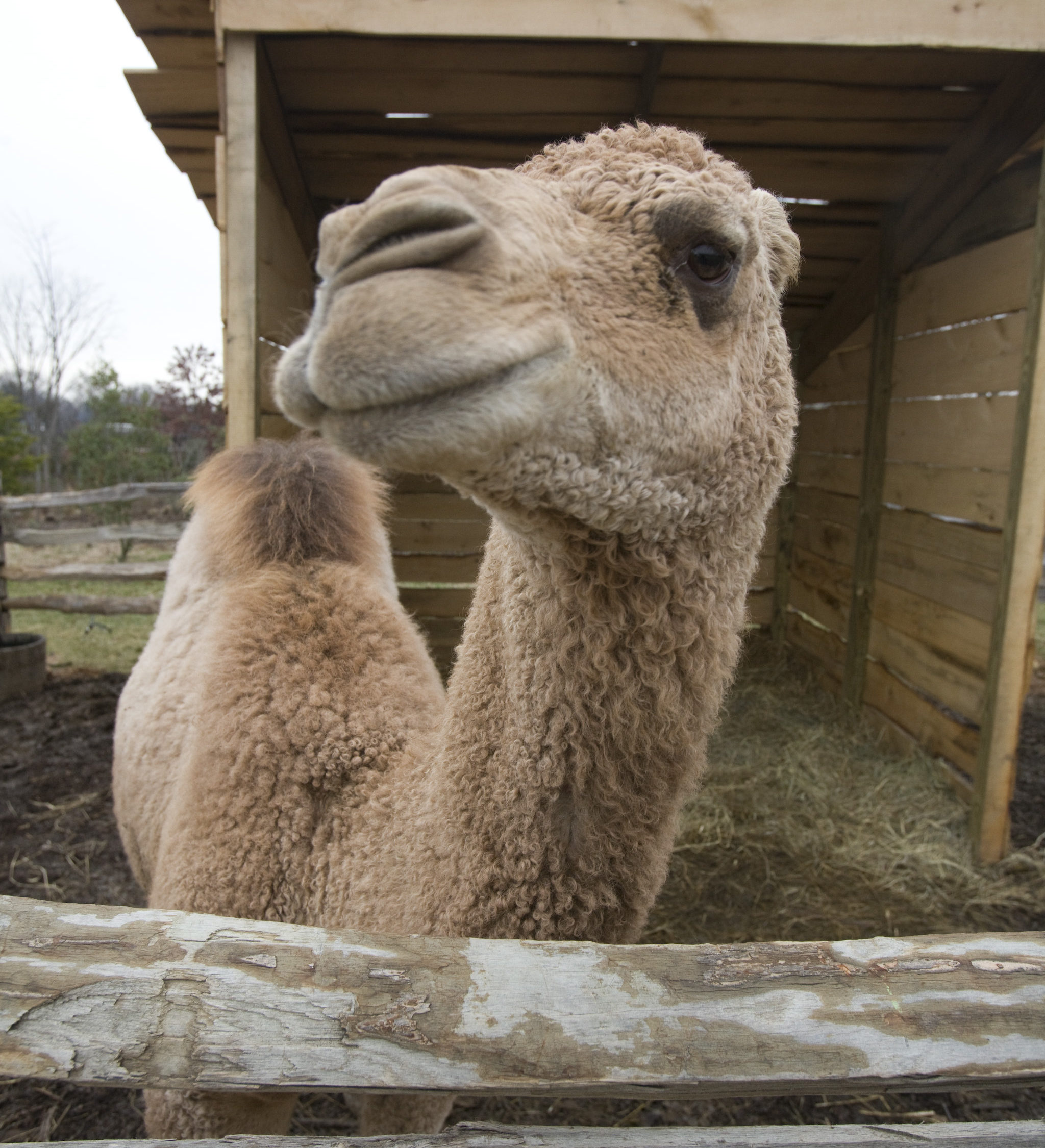

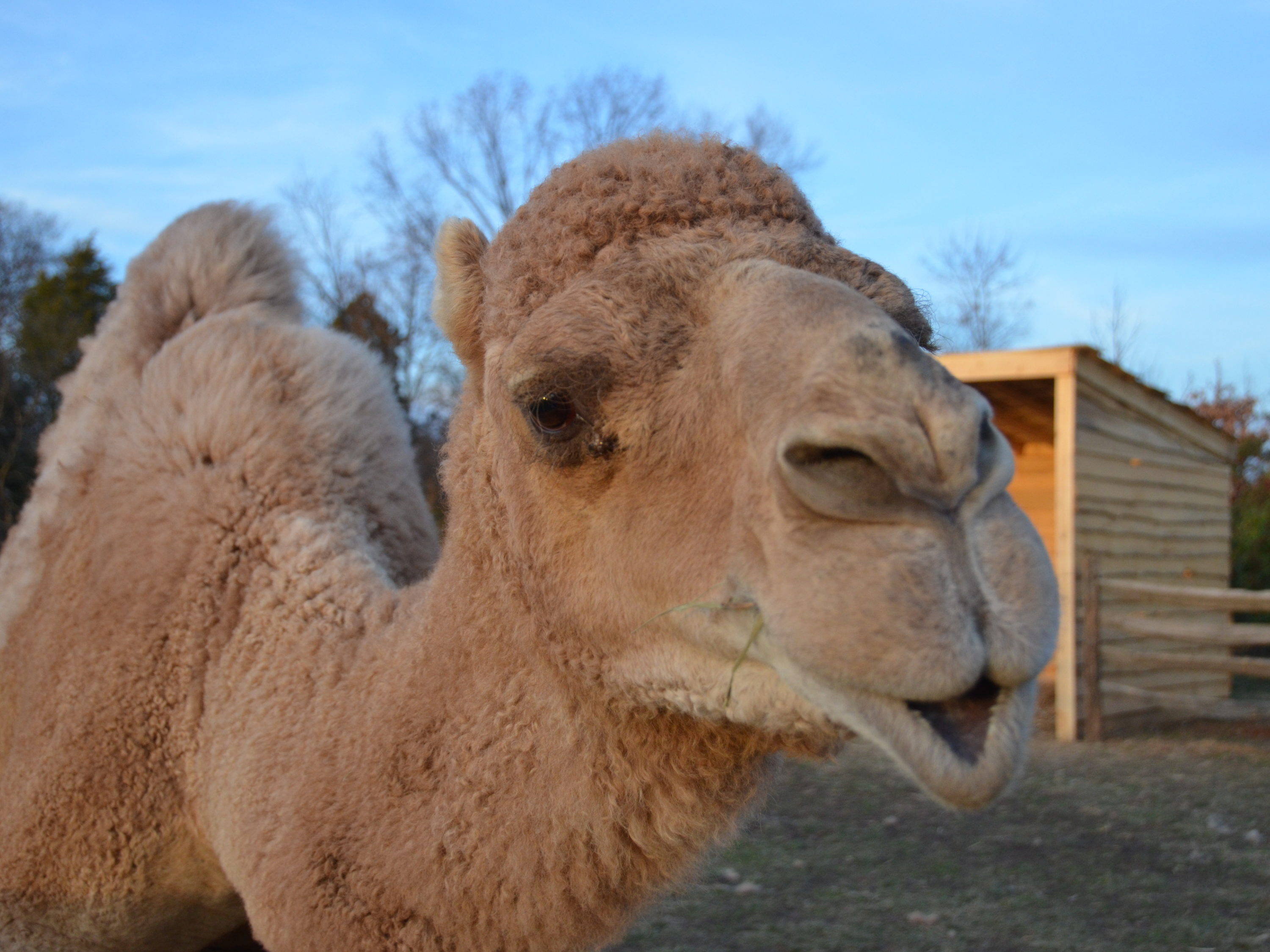
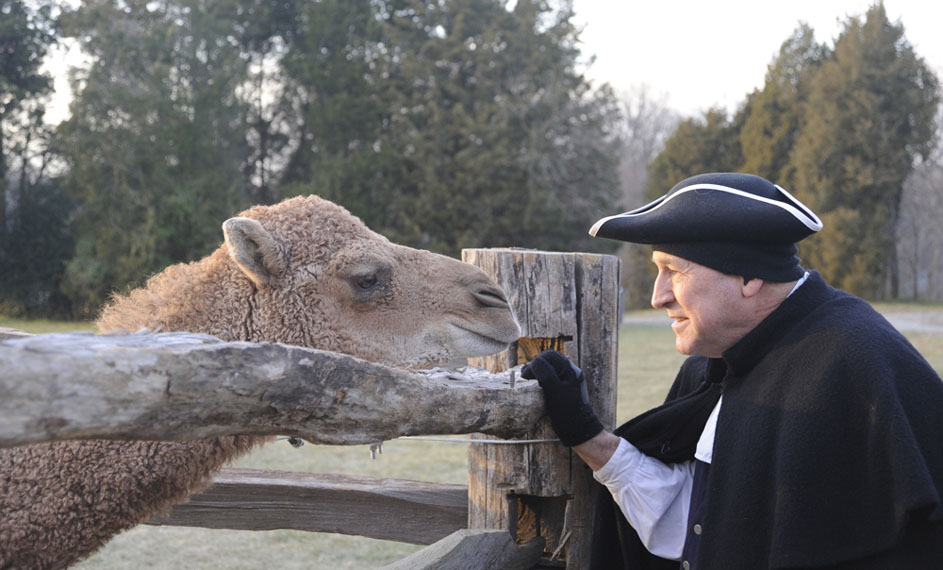

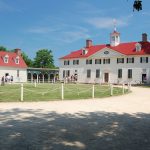
The holidays at Mount Vernon, the historic estate of the country’s first president, are celebrated with copious amounts of tinsel, pine trees, shiny ornaments … and a camel named Aladdin.
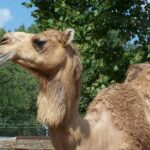
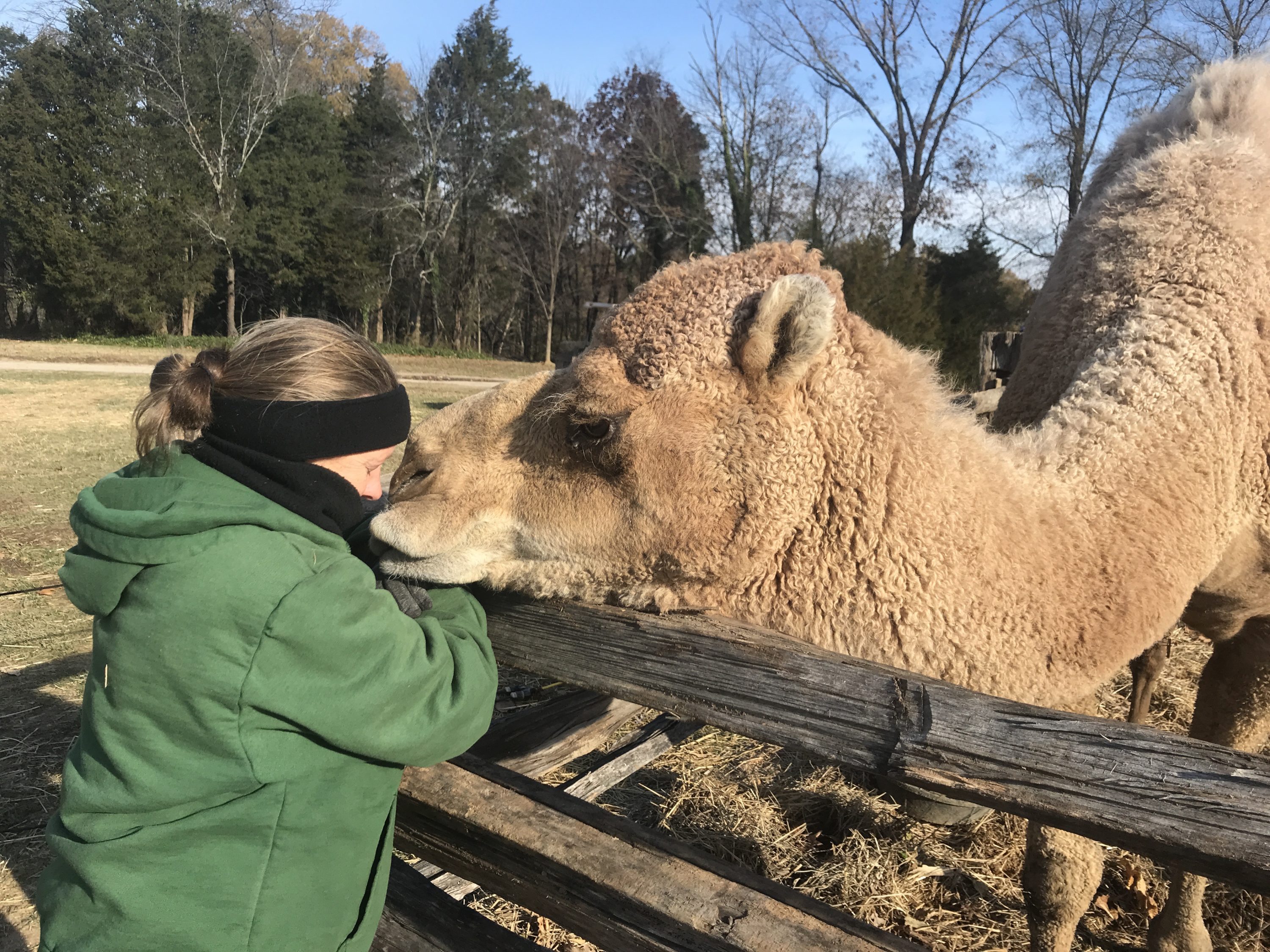
Every year since 2008, George Washington’s Mount Vernon has welcomed a friendly, curious dromedary camel who isn’t afraid to get a little too up close and personal for the holiday season. “He’s kind of a ham,” says livestock supervisor and Aladdin’s main caretaker Lisa Pregent, “and loves attention.” As she says this, the large mammal sticks his nose in her face, all sniffles and slobber. Then, moving to the next human, he licks a held iPhone leaving a wet trail.
“He’s also notorious for taking hats off of children,” Pregent says as she mimes the mischievous mammal plucking headwear off little humans. “Yeah, he’s eaten a couple of hats.” Aladdin snorts.
Historians know that, in 1787, George Washington hosted a camel on his farm as a holiday treat for his family. But little is know about how exactly the non-native mammal got there or how long it stayed. The only source for this curious bit of information is from one line in Washington’s expense ledge that reads, “By the man who brot. A Camel from Alexa. For a show…” with a mention that the general paid 18 shillings (equivalent to about $90 dollars today). The entry is dated December 29th, which means the camel was probably there as Christmas entertainment.
“Christmas was not just a one day thing in the 18th century,” says Mount Vernon research historian Mary V. Thompson, “People celebrated the whole 12 days of Christmas.” Diary entries also show that there was likely quite a crowd there that day; including family, friends, step grandchildren (Washington never had any kids of his own), nieces, nephews, neighbors, and numerous other people who both worked and were enslaved at the estate. Thompson says it’s unclear if Washington got the camel specifically to entertain all the guests or that people came when they found out the general had this foreign creature. Either way, the animal from the other side of the world likely caused quite an uproar.
According to Thompson, camels were a very rare sight in 18th century America. There are only a few newspaper references to them and all related to an enterprising person traveling city to city with the animal in tow making a buck off exhibiting them. Records show that in 1787, a pair of camels were imported from Arabia and sold to a New York businessman for sixteen hundred dollars. One of these is probably the one that Washington paid to be brought to Mount Vernon for his Christmas surprise.
For Washington, renting a camel wasn’t just about getting a few not-so-cheap thrills. “He was really interested in the world outside America,” says Thompson, “The only place he ever traveled was to Barbados when he was about 19 or 20.” This often manifested in his fascination with animals from other countries. In 1766, Washington logged that he paid 10 shillings to see a “Lyoness.” While president, he paid $1.75 to see an elephant and, a few months later, took his family to see the large animal again. There are also records of him paying to see a tiger, a “cugar,” and a “sea leopard.”
Despite the limited details about Washington’s camel, Aladdin seems to be keenly aware of his place in telling that story. “He has such a great personality,” says Pregent, “He greets you every morning and is always happy to see you.” A few moments later, a group of school children yell his name and he waltzes over to them.
Aladdin spends most of the year on a farm in Berryville, Virginia, but every November he’s brought to Mount Vernon for his annual time in the holiday spotlight. He’ll be gracing Mount Vernon with his presence through December. Aladdin doesn’t spit, says Pregent, because he hasn’t spent time with other camels where he could have learned the behavior. Aladdin is 11 now, which is still relatively young since dromedary camels’ average lifespan is 40 years. When he was younger, Pregent used to take him for walks and let him run up and down the fence. “He would chase us and make gurgling noises,” she says. He drinks about five to ten gallons of warm water a day and eats about ten pounds of grain and “sweet feed” a day, which is pellets mixed with corn and molasses. Plus, the occasional hat.
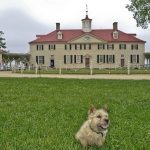
Pregent says sometimes, on slower days, she likes to come and sit with Aladdin, maybe play games with him or just keep him company. “He gets kind of lonely.” On this late November day, there isn’t much time for the single-humped camel to be lonely. There are school groups, out-of-towners, grandparents with kids, and a dog who seems to really want to roll around in the hay with Aladdin. Pregent says it probably isn’t a good idea to pair the dog with the camel, not because Aladdin would be mean but because the one-ton camel doesn’t realize how big he is.
“Everybody loves Aladdin,” says Pregent as the camel stands behind her mugging, “I don’t think he has a mean bone in his body.”
Aladdin will be at Mount Vernon through December.