 Jordan Pascale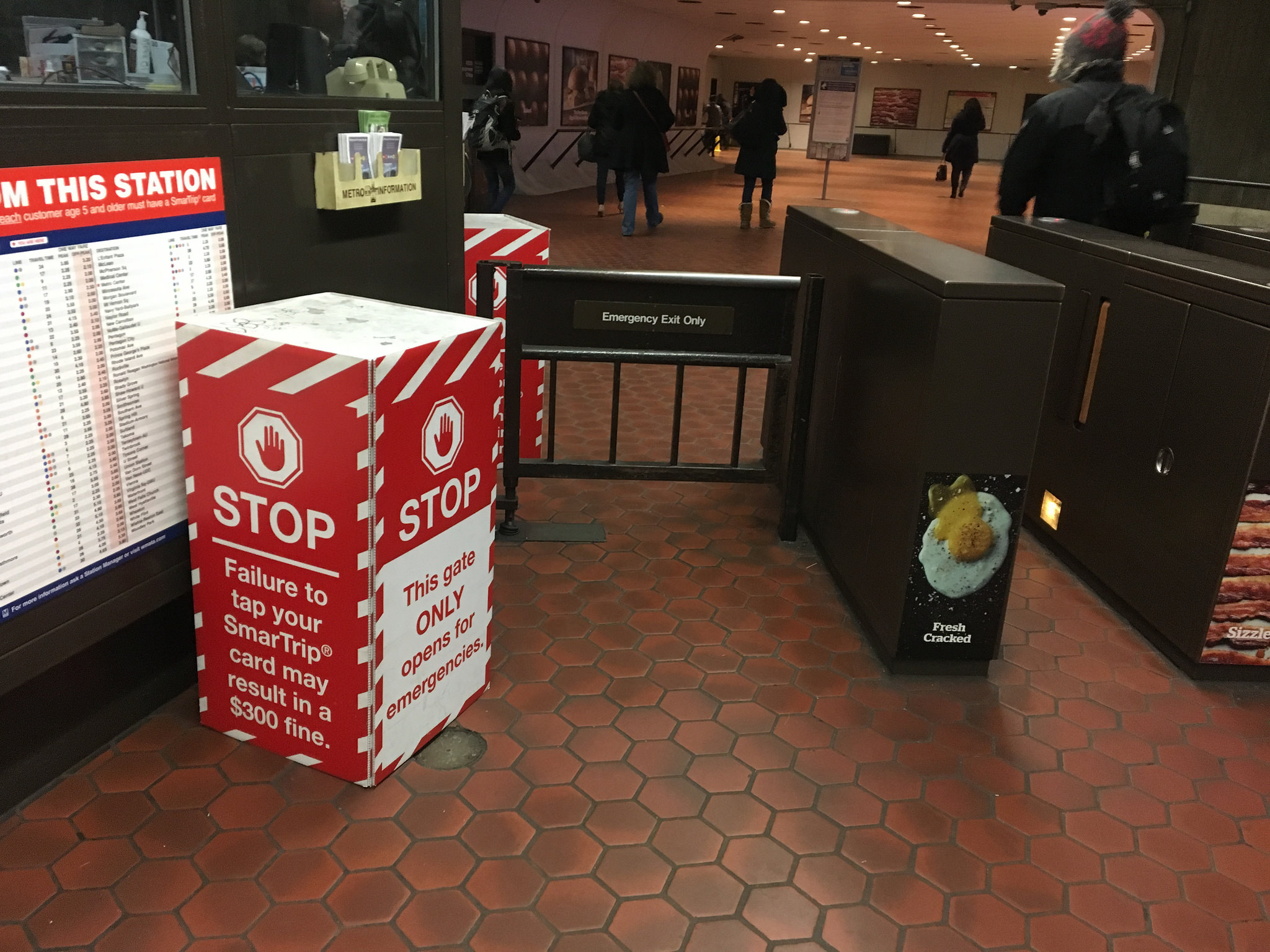
Riders who don’t pay their Metro fare would no longer be charged with a criminal offense if the D.C. Council passes the Fare Decriminalization Act during today’s council meeting.
But the proposed law is a flashpoint for Metro, which says eliminating criminal charges will essentially neuter the fare evasion enforcement and encourage even more people to dodge paying.
Now, most people who are caught not paying are given a warning or fined $50. But they could potentially get up to a $300 fine and up to 10 days in jail. Fare evasion is a criminal offense in Maryland and a civil offense in Virginia. Metro board chair Jack Evans says no one has ever been arrested for just fare evasion. That only happens when offenders try to run or are combative with police. The Superior Court Trial Lawyers Association contradicts that claim, saying it has represented people charged with only fare evasion. We’ve reached out to the Association for more information.
D.C. Council already voted to pass the law 11-2 on first reading. They’re likely to reaffirm that today. But Councilmember Jack Evans (D-Ward 2), who is also chair of Metro’s board, voted no and had his colleagues on the Metro board write a letter begging the council to reconsider.
Metro says it loses $25 million a year from the more than 9 million instances of people not paying for their bus fare. Evans said he expects fare evasion to increase dramatically and wouldn’t be surprised to be reevaluating this policy in coming years.
Does the punishment fit the crime?
Most council members say stealing a $2 fare shouldn’t put a permanent stain on your record. Council member Charles Allen (D-Ward 6) has said a civil infraction, similar to a parking ticket, is more appropriate for stealing fare.
“There’s no world in which if you don’t drop a quarter in the parking meter, you walk away in handcuffs,” Allen has said.
Supporters also point to what they say is a disproportionate enforcement on people of color. More than 90 percent of tickets were given to African Americans, according to an analysis from the Washington Lawyers’ Committee for Civil Rights and Urban Affairs.
Fare evasion has also lead to a few high profile incidents that have escalated between fare evaders and police. One woman was slammed to the ground after she refused to pay. Police pepper-sprayed teens in another incident that got attention on social media (though Metro says the incident didn’t involve turnstile jumping–officers were reportedly trying to apprehend a teenager wanted for multiple robberies around the system).
Supporters also say criminal charges for fare evasion is punishing poverty. Metro has suggested creating a low-income fare subsidy program for D.C. residents who can’t afford fares.
Metro: Decriminalization increases cost to taxpayers
Metro has really cracked down on fare enforcement in recent years, partly to keep money in the system. Officials released numbers that show more than one in ten bus rides are stolen. Bus drivers are told to push a button every time someone doesn’t pay. That’s how Metro got those figures.
If there’s no threat of legal repercussion, Evans said it will encourage more people to steal fares. He said that means more money going out the door and local governments will have to cover the difference. That local subsidy comes from tax dollars, Evans points out.
Metro also says enforcing fare evasion reduces other crime. In 2017, more than 400 people with warrants against them were arrested while evading fares. That includes suspects who had charges including murder, sex abuse and possession of illegal weapons.
WMATA has had a 20 percent decrease in violent crime in correlation with their fare enforcement blitz over the past few years, officials say. And if fare evasion is turned into a simple ticket, Metro officials say they may not be able to do a background check on those they are detaining.
This story originally appeared at WAMU. This story has been updated to reflect Metro’s account of why a group of teenagers was pepper sprayed in September.
Previously:
Metro Is Really Not Happy About Council Proposal To Decriminalize Fare Evasion