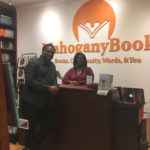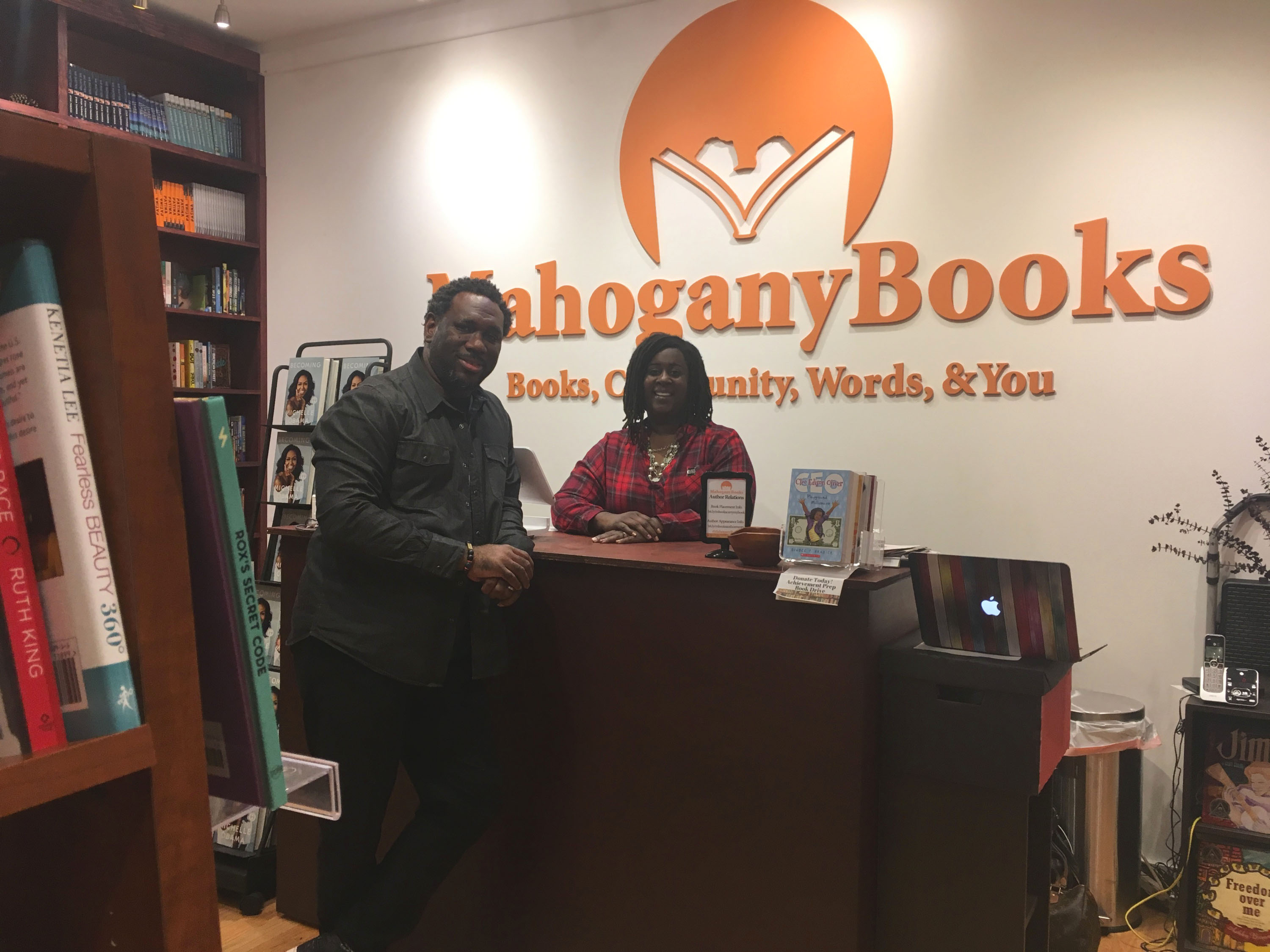
When Derrick Young and his wife Ramunda opened MahoganyBooks on Good Hope Road Southeast last year, it was the first bookstore to open in the neighborhood in decades.
“In this community, it’s been 20-plus years since a bookstore has been here,” Young says.
The bookstore, which focuses on African American literature, is one of several attempts to increase reading and literacy east of the Anacostia River.
A 2016 study published in New York University’s Urban Education Journal labels these neighborhoods as book deserts: areas where printed books and other reading material are hard to obtain, and particularly where there is limited access to transportation.
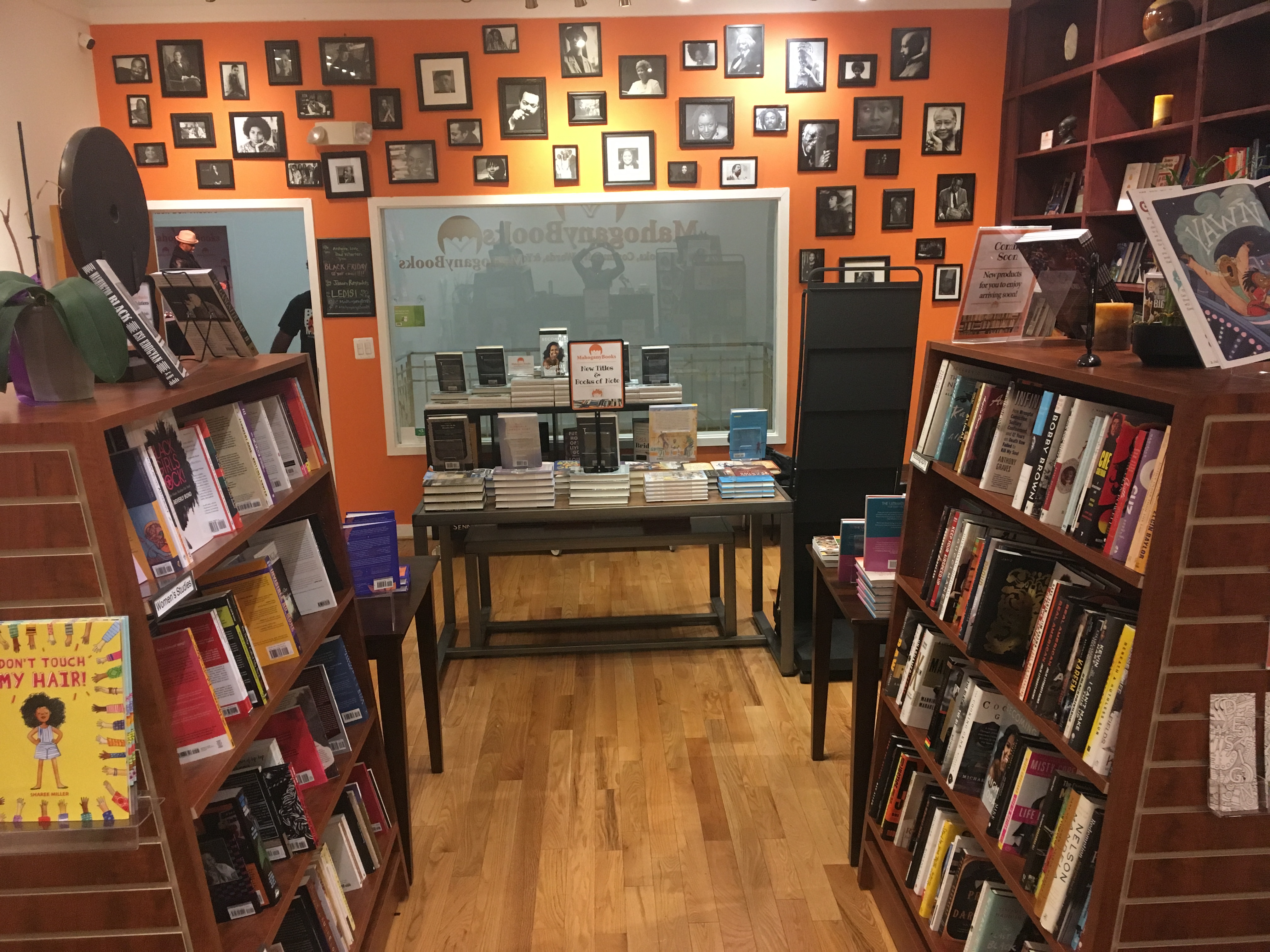
The Youngs settled on opening MahoganyBooks in D.C.’s Anacostia neighborhood because they saw a void to fill in the community.Sasha-Ann Simons / WAMU
The Role Of Libraries
Richard Reyes-Gavilan, the executive director of the D.C. Public Library system (DCPL) says that accessibility isn’t the only issue. While circulation totals for both physical and digital books in DCPL have increased to their highest level overall, participation remains poor among both adults and children in Wards 7 and 8.
“How do you go from access to being a lover of reading? That’s what the library tries to figure out every single day,” says Reyes-Gavilan.
DCPL has started some new initiatives to help foster a love of reading from early childhood.
Two years ago, DCPL launched its Books From Birth program, which mails all enrolled kids in D.C. a free book every month until they turn five. Children receive books that are appropriate for their age. There are no income restrictions to qualify for the program.
By the last quarter of 2018, nearly 10,000 children from Wards 7 and 8 combined were enrolled in the program, which serves nearly 40,000 children across the District. Reyes-Gavilan says those numbers are the direct result of a new department of outreach and inclusion in DCPL, which concentrates its efforts on underserved parts of the city.
“It includes six or seven staff members that do nothing but go out into communities, whether it’s church basements, barber shops, street fairs, and work with individuals preaching the power of libraries,” Reyes-Gavilan says.
But getting people in the door of the library is only part of the solution.
The NYU study revealed a stark disparity in the availability of children’s books in libraries in Anacostia. According to the study, on average, 830 children in Anacostia would have to share one age-appropriate book, while only two children would need to share in the nearby Capitol Hill neighborhood.
Reyes-Gavilan says that a lack of diversity in publishing directly affects what’s available at libraries, and could be keeping borrowers away.
“We would love to see more diversity in terms of the books that are written and the books that are published,” he says. “I think that the argument around the country is that it’s still underrepresenting.”
Not Just Accessibility
Philip Pannell, executive director of the Anacostia Coordinating Council and a former DCPL trustee, says that aside from representation and accessibility, money is another issue at stake.
“When you have a community that has such a high percentage of people in poverty, buying books is not going to be at the top of their budgetary priorities,” says Pannell. “People have to worry about housing, food, transportation, and books are almost considered a form of recreation.”
One innovative program, free book vending machines, hit the streets of Anacostia in 2015, aiming to combat the book desert. The initiative lasted only two summers before the machines were removed.
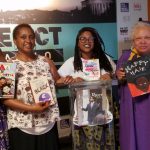
Next year, a second bookstore will open in the community. The Busboys and Poets chain will expand and partner with We Act Radio, an Anacostia-based media outlet, to launch the Charnice Milton Community Bookstore on a larger scale. The new bookstore will be named after a young journalist who was killed in a drive-by shooting in the neighborhood three years ago. Police say Milton was on her way home from covering a community meeting and wasn’t the intended target.
After some failed attempts to get the bookstore project off the ground, co-founder Kymone Freeman says the partnership with Busboys comes at a critical time.
“Most of the kids I come in contact with, they don’t have a value for books,” Freeman says. “I recently had a young lady tell me that kids don’t need books because they’ve got Google.”
Freeman is looking forward to joining Derrick and Ramunda Young as another bookstore owner east of the river. And, he says, the true payoff will come as neighborhood children gain one more way to get their hands on a good book.
This story originally appeared on WAMU, and it has been updated.