Natalie Delgadillo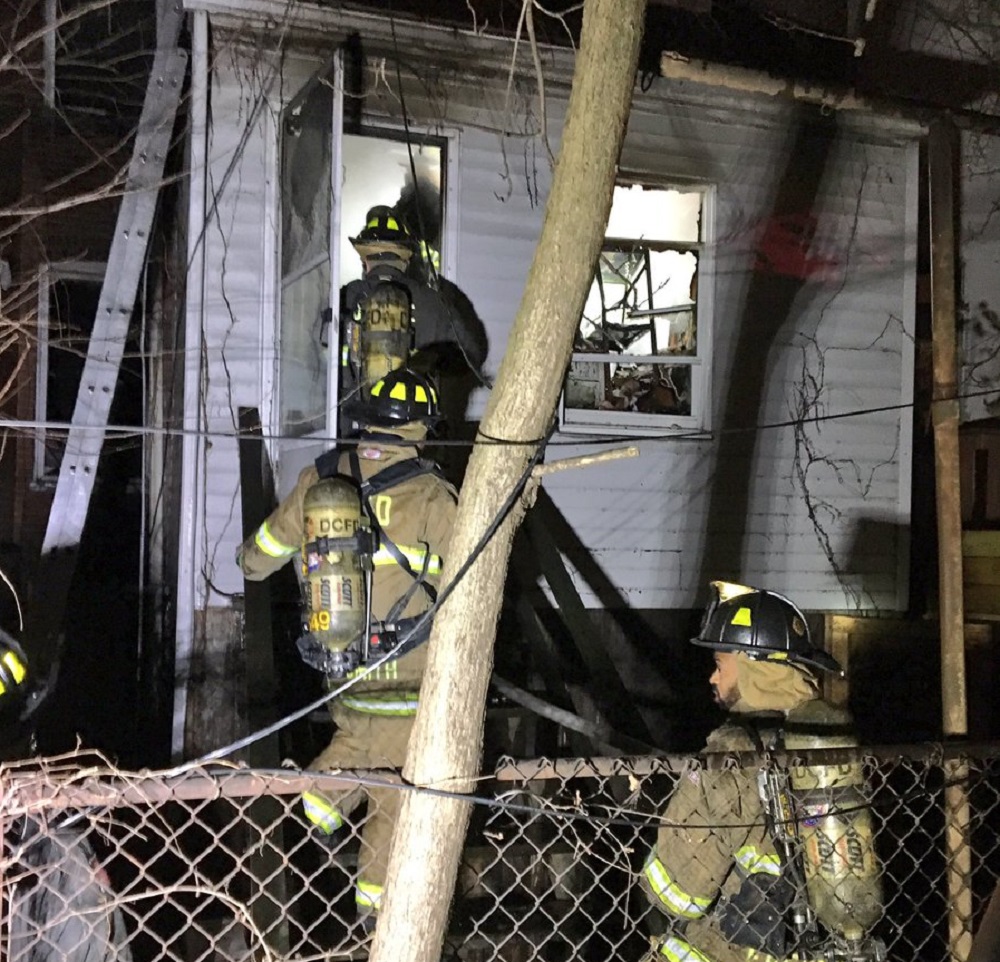
A 96-year-old woman died on Tuesday night after a fire overtook the first floor of her two-story row house in Shaw. The next day, Ward 5 Councilmember Kenyan McDuffie sent a letter to D.C.’s fire chief asking questions about the department’s response time.
After the D.C. Fire and Emergency Medical Services Department confirmed the woman’s death, reports began circulating that the fire truck assigned to her home wasn’t at its station—instead, it was all the way in Southeast, covering for another vehicle that was out of service. A truck located at a station one mile further away had to respond instead.
Washington Times reporter Julia Airey, who has reported extensively on problems with fire truck maintenance and a lack of reserve vehicles at D.C. Fire, reported that sources inside the fire department said that a lack of working trucks directly contributed to the department’s slower response time—and possibly also to the woman’s death.
“Multiple sources within @dcfireems called me tonight to say their worst fears came true about the department’s having too few working apparatus,” Airey said on Twitter. “The truck stationed closest to the fire in NW tonight was away covering for another truck.”
#Breaking: Multiple sources within @dcfireems called me tonight to say their worst fears came true about the department's having too few working apparatus.
The truck stationed closest to the fire in NW tonight was away covering for another truck.
The woman inside died. pic.twitter.com/KnDFz6t3cH
— Sloane Airey (@SloaneAirey) December 5, 2018
D.C. Fire’s chief of communications, Douglas Buchanan, tells DCist that the 911 call came in at 7:08 p.m. The first fire engines arrived on scene one minute later, Buchanan says. Not every responding engine recorded its response time, but there were likely five engines on the scene in fewer than five minutes after the 911 call, Buchanan says. The first rescue squad and the first ladder truck were on scene four minutes after the call. The second ladder truck was on scene one minute later.
Not all fire trucks are the same, and in assessing these response times, it’s important to understand the functions of each responding vehicle. Fire engines (which responded the most quickly in this case) are the vehicles that actually put out fires, equipped with hoses and other tools to pump water. Ladder trucks carry squads that perform other tasks, including rescues. In this case, the ladder truck’s slower response time has spurred speculation that D.C. Fire’s lack of available, working ladder trucks could have cost this resident her life.
One anonymous firefighter assigned to the truck that should have responded to Tuesday’s fire told the Washington Times that the ladder truck could have gotten there faster if it didn’t have to respond from further away. He said he was “100 percent” confident his team would have reached the scene quicker than four minutes.
.@dcfireems noted their quick engine response times to @vbagate, but it's important to know that engines douse fires, while trucks perform searches, rescues, & other tasks.
That's why every fire is supposed to have 2 trucks per fire which arrive quickly.https://t.co/WAkMBJEbNW
— Sloane Airey (@SloaneAirey) December 5, 2018
Councilmember Kenyan McDuffie sent a letter Wednesday to Fire Chief Gregory Dean to inquire about the response time.
“As you may know, there are allegations that [D.C. Fire’s] response was deficient. I am told that the ladder truck that was critical to addressing the fire was, unfortunately, not located at the fire house that responded to the incident. Reportedly, it was reassigned because the Fire and Emergency Medical Services Department’s (Department) fleet requires new ladder trucks and, specifically, the responding fire house’s truck was sent to backfill another fire house’s ladder truck that was out for repair,” the letter reads. “Can you provide information on whether the Department’s lack of ladder trucks had any direct impact on the Department’s response time and performance during this incident?”
D.C. fire officials have pushed back on the claim that their response was slow. There were 35 firefighters on scene in less than 5 minutes and 20 seconds, according to Buchanan.
“Just so you know, the [National Fire Protection Association] 1710 standard ONLY requires the first engine in less than 5 min 20 sec,” Buchanan says via email. “Not only did we beat the NFPA 1710 standard, ALL 8 ‘fire trucks’ beat the standard.”
One response team’s notes from that evening note that an ambulance team was “running up the block with a female on the cot” when they arrived at 7:20 p.m, Buchanan says.
“That means our crews (1) entered and searched the house, (2) removed the victim and, (3) put her on [a] cot and were ‘running up the block’ in less than 10 min and 46 sec,” Buchanan says.
A spokesperson in McDuffie’s office says they are still awaiting a response to the councilmember’s letter.