Jacob Fenston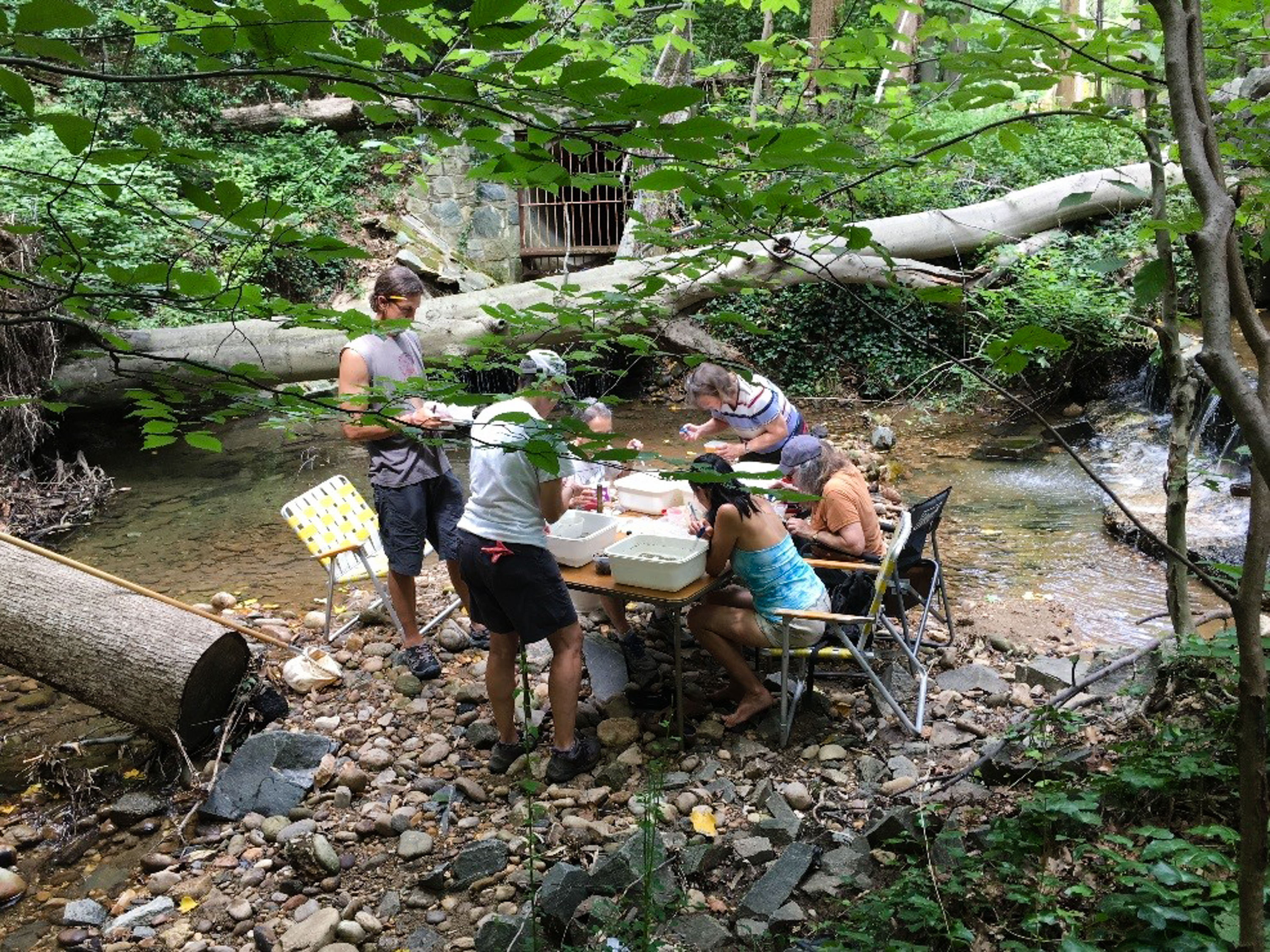
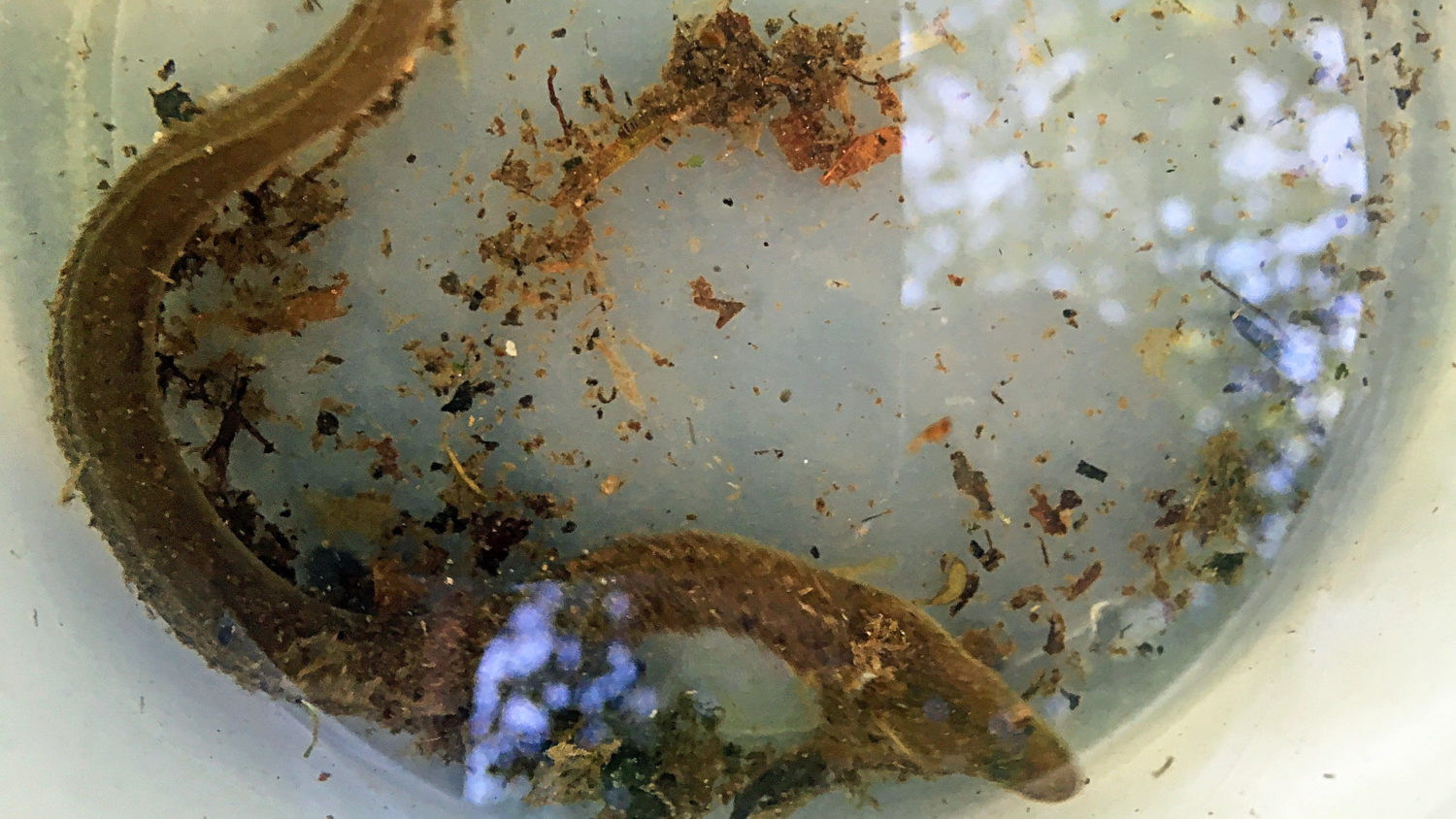
A team of citizen scientists monitoring one of Rock Creek’s tributaries found a creature they weren’t expecting earlier this year: an American eel. It wasn’t the first time an eel had been spotted in the area, but it was rare. The last sighting was in 2010, in the same creek: Melvin Hazen Run, near Connecticut Avenue Northwest.
While there are positive signs for the Rock Creek watershed, like the continued presence of at least a few eels, researchers say there are also reasons to be concerned. The Audubon Naturalist Society has been monitoring stream health since the 1990s, and in a new report finds that stream health is generally poor. Melvin Hazen has been declining in recent years, while two other tributaries have had stable levels of aquatic life.
Rock Creek and the streams that feed it are surrounded by a dense forest and one of the largest urban parks in the country, but much of the water that flows through those creeks comes from the vast urban sprawl outside the park’s boundaries.
The report, covering nine years of data, found that the three creeks studied showed “characteristics of the urban stream syndrome.” A frightening-sounding disease, urban stream syndrome produces symptoms including severely eroded stream banks and sedimentation. This is because when it rains, even a moderate amount, all the impervious surfaces nearby — roads, roofs and driveways — funnel water quickly into these streams, much, much more quickly than it would happen naturally. What should be a babbling brook becomes a roaring stormwater drain in a matter of minutes.
“The runoff from those buildings brings pollution with it,” says Eliza Cava, director of conservation with the Audubon Naturalist Society. “Road salt and car exhaust particles and all sorts of things that land on the pavement and then get in the water.”
The other big source of pollution, besides stormwater, is sewage. “These streams have had for many, many, many years, sewer lines that run right underneath them, and in some cases those are old aging sewers and have leaks.” Cava says.
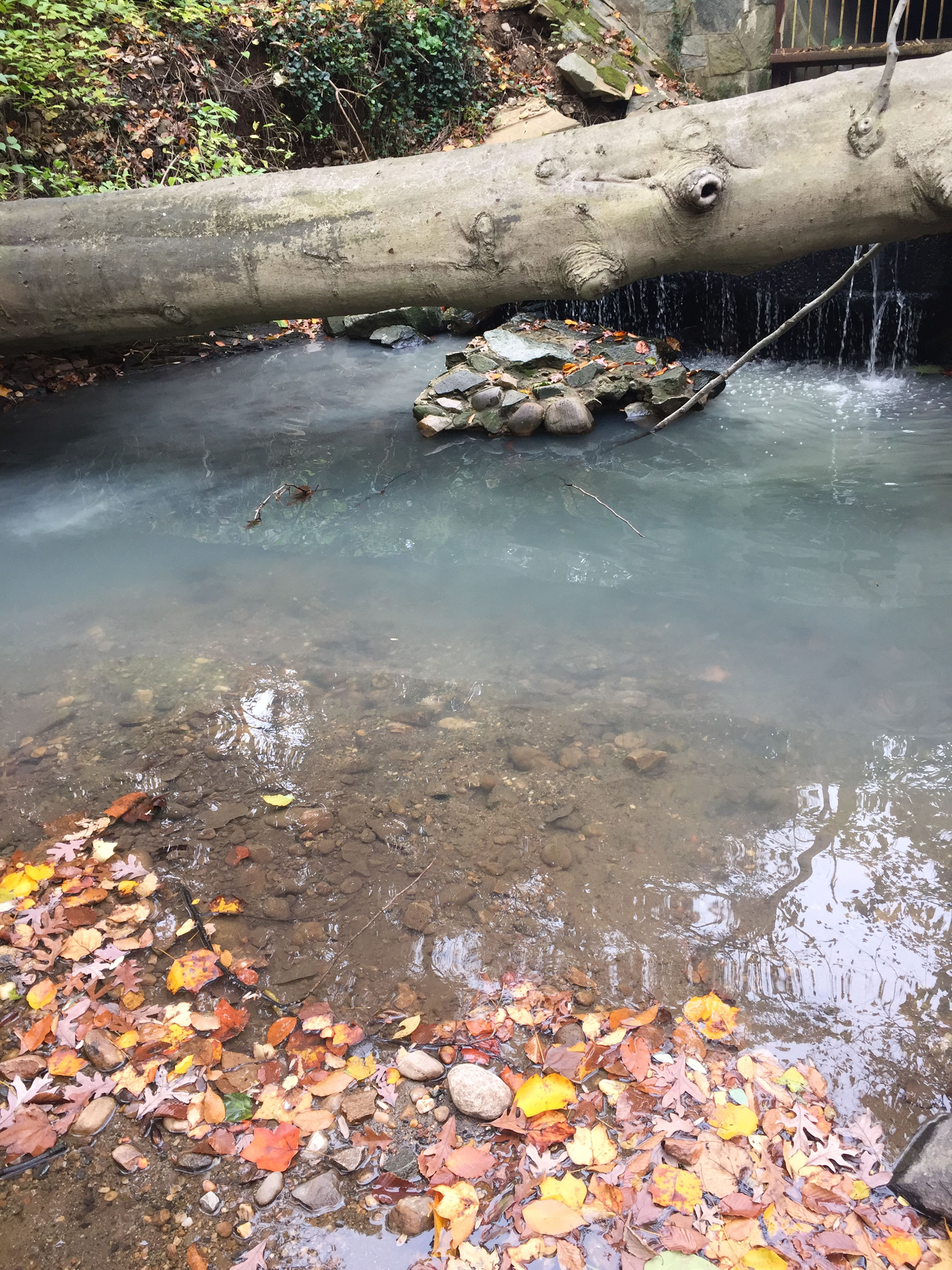
Not how it’s supposed to look (or smell). Pollution on Normanstone Run.Mike Kolian / Audubon Naturalist Society
The report documented some of those leaks. For example, volunteers spotted (and smelled) what appeared to be sewage in Normanstone Run as far back as 2010. In 2012, DC Water determined the source was a sewage overflow pipe at the Naval Observatory improperly connected to the storm drain system. The problem was fixed, but volunteers continued to find “gray, odorous dry weather discharge” as recently as last month.
The streams’ health is assessed by collecting water samples and counting tiny aquatic creatures. “What we do is we look for the little bugs that live in the water,” explains Cava. “Those are indicators of water quality.”
These little creatures aren’t technically bugs or insects — they are benthic macroinvertebrates, everything from little snails to dragonfly larvae. “These bugs have specific ranges of temperature and chemicals in the water,” says Cava. “Depending on what we find, we know overall what quality the water is that we’re looking at.”
Those eels mentioned earlier are an indicator of improving habitat, and could also eventually mean the return of mussels to the waterways. The Eastern elliptio mussel, native to the watershed, can help filter water, but they rely on eels to reproduce, and so have been absent for years.
Other positive trends include recent projects like stream restorations and green infrastructure projects, both of which slow down the flow of water, making it more possible for aquatic life to thrive.
Will this urban watershed ever be fully restored, teaming with life, as it once was? Probably not.
“We won’t ever get these urban streams to meet the ‘excellent’ scale,” says Cava. “What we want to see is an increasing and improving trend. Over time does that mean we get up to a ‘good’ quality stream? That would be really exciting.”
This story originally appeared on WAMU.