Martin Austermuhle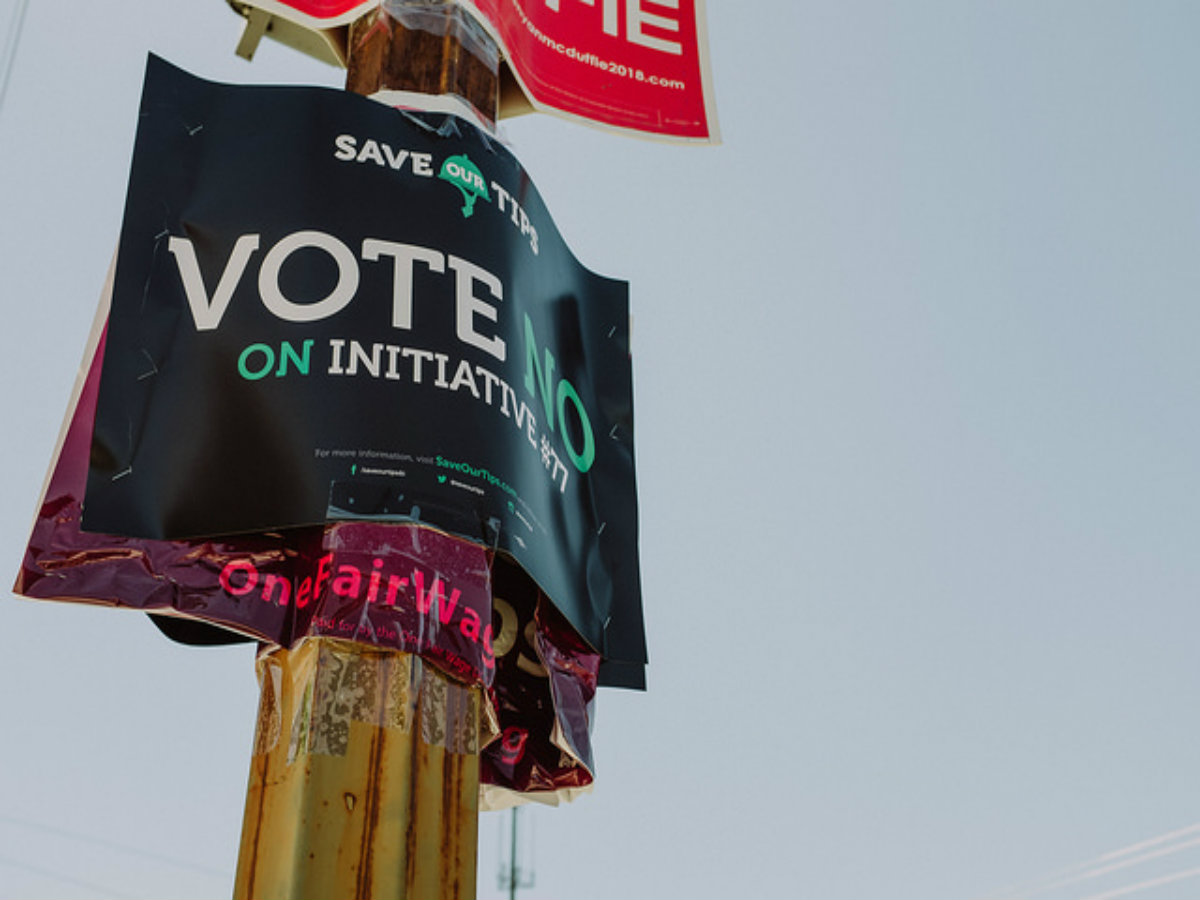
Proponents of a referendum to overturn the D.C. Council’s repeal of Initiative 77 say they are approaching the number of signatures they need to put the measure on the ballot, with two more days left to finish the task. But opponents are already mounting a fight of their own, both to keep the referendum off the ballot and, that failing, to quickly launch a campaign to urge D.C. residents to vote no on the referendum.
The Save Our Vote campaign said on Tuesday morning that it had collected just over 25,000 signatures from D.C. voters, approaching the number it needs to call a referendum early next year to revive Initiative 77, the voter-approved measure that phases out the tipped wage paid to restaurant servers, nail salon workers and parking lot attendants.
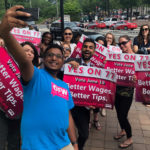
Almost 200 paid and volunteer petition circulators have been deployed across the city since last Tuesday, feverishly working to submit the necessary signatures by the deadline this Wednesday afternoon. They’ve been posted outside supermarkets and Metro stations; there have even been reports of circulators on Metro trains.
“No one has collected signatures this quickly,” said Adam Eidinger, who is leading the signature collection effort, on WAMU’s “The Politics Hour” last Friday. “You have to put an army on the street.”
That army is being paid for with a $200,000 budget from the Restaurant Opportunities Center United, a New York-based advocacy group that promoted Initiative 77 ahead of the June vote.
The campaign for the referendum still faces hurdles, though. It needs to submit valid signatures from 5 percent of registered D.C. voters — 25,600, according to Eidinger.
But signatures can be challenged and are often declared invalid over inconsistencies with how a person signed their name or if they listed a home address that matches their voter registration. That means proponents will have to gather thousands more signatures to compensate for any that are declared invalid. Additionally, the signatures have to come from all over the city — D.C. law requires that five percent of voters in at least five of the city’s eight wards sign on for a measure to make the ballot.
Eidinger said that collection had ramped up since the weekend, but would not disclose what percentage of those signatures the campaign had found to be valid.
And, just as they fought Initiative 77, business groups, restaurant owners and some tipped workers are fighting the proposed referendum. D.C. residents reported getting a robocall on Monday evening urging them not to sign petitions to get the referendum on the ballot.
“I’m calling to warn you that an out-of-state group called ROC is funding Save Our Vote’s collection of signatures this week in support of a policy that will hurt me and my industry,” said bartender Valerie Graham in the recording. “Don’t be fooled. This is not about raising the minimum wage. It’s about destroying the tipping system.”
Graham is also the lead plaintiff in a lawsuit that delayed the signature collection process by a week. (There’s a hearing related to the lawsuit Tuesday morning.) The robocall, and an associated website urging residents not to sign, were funded by the Employment Policies Institute, a non-profit research and advocacy group that takes money from industries opposing new regulations.
The city’s restaurant lobby is also preparing itself for the possibility that the referendum will make it on the ballot. Last week, it created a new campaign committee — the Protecting Restaurant Workers Committee — to raise and spend money against the referendum. The committee’s chairman is David Moran, the managing director of Clyde’s Restaurant Group, which in 2010 was sued by three employees over the group’s failure to properly pay out tips. The case was settled in 2012.
Signatures are due to the D.C. Board of Elections by Wednesday afternoon. If enough signatures are found to be valid, by law a new vote has to be called within 114 days. That would put a special election on what’s known as Referendum 8 in late March or early April.
“This is the only thing we have in D.C. that enforces the will of the people over the Council,” said Eidinger.
If voters side with Referendum 8, the Council’s repeal of Initiative 77 would be overturned. And while D.C. law allows the Council to repeal voter-approved initiatives, it requires legislators to wait at least a year before acting on a measure approved through a referendum.
This story originally appeared on WAMU.