 Jordan Pascale
By 2022, the District’s streets could look vastly different at night.
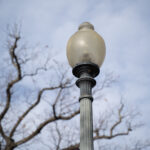
D.C. is hoping to convert all 75,000 of its warm, yellow streetlights to cheaper, more energy-efficient LED bulbs.
The conversion to the brighter streetlights would be the largest project in the region, although other localities, including Montgomery County and Takoma Park in Maryland and Fairfax County and Arlington in Virginia, have tested the technology.
The District expects to save $3-4 million and eliminate 30 tons of greenhouse gas annually from the lower energy use. LEDs are on a computerized network that alerts crews to outages — an improvement over the current system, which relies on residents to identify problems. The LEDs also last three to four times longer than the current high-pressure sodium lights. And, officials say it’s getting harder to find replacement parts for those sodium lights.
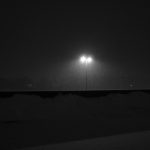
But some residents who live on blocks where LEDs have been tested for the past two years are less than happy. Neighbors on one Ward 5 street compared the harsh blue-white light to living in a prison yard.
The District Department of Transportation (DDOT) thinks it’s solved that issue as technology has evolved.
Kathryn Roos, who used to head up the streetlight team and is now interim director for public-private partnerships at DDOT, said that the test lights had a cooler color temperature of 4,000 kelvin. That’s a lot higher and harsher than the 2,100 kelvin of the current high-pressure sodium lights. The Kelvin color scale is the measure of color temperature, and ranges from 2,000 kelvin to 6,500 kelvin.
But now DDOT is recommending using newer LED technology: 3,000 kelvin bulbs on interstates and major and medium arterial roads and 2,700 kelvin bulbs in residential areas. Roos said that will likely be more pleasing to most people.
Seeing is in the eye of the beholder,” Roos said. “Some people and even camera footage will see things more sharply and clearly in LED light.But some residents really like that golden color, so we’re trying to provide the warmest level of LED possible.”
Delores Bushong, a resident on one of the early test streets who now sits on a streetlight advisory committee, said that the lower light temperature is something she and other early activists on the subject have called for.
“If it’s not done well, we will all be affected and suffer from the lights,” Bushong said. “I am excited that at least DDOT is responding to community concerns and I’m glad we didn’t move too quickly. It’s given us an opportunity to learn what others did wrong.”
But she still has some concerns that alleys and medium-sized roads will be overlit.
“It’s like using a 100-watt bulb in your house,” Bushong said. “It’s not pleasant.”
Reasons For Concern
Part of the fervor over the conversion is a 2016 warning from the American Medical Association, which said the older 4,000 kelvin-colored light could affect melatonin release and be five times more disruptive to sleep cycles than the more golden light. It could also change the habits of nocturnal animals.
“Although data are still emerging, some evidence supports a long-term increase in the risk for cancer, diabetes, cardiovascular disease and obesity from chronic sleep disruption … associated with exposure to brighter light sources in the evening or night,” the 2016 AMA report said.
Several lighting associations called the report overblown.
The AMA said 3,000 kelvin, which the District is using, is a lot easier on the eyes.
Next Steps
The District is holding its last meeting on the latest information Wednesday, Dec. 12, from 6:30-8:30 at the Anacostia Library, 1800 Good Hope Road Southeast.
Currently, the District is requesting that private companies submit qualifications and bids before a final contractor is picked in Fall 2019. The D.C. Council would have to approve the contract.
After that, design and construction could take two to three years. The private company would be in charge of installation and maintenance for up to 15 years.
Roos said the plan transfers risk to the private sector and away from the District.
Private companies can also make the change quicker, in one to two years instead of the 12 years it could take the District to do it with their funding plan.
Other parts of the region are looking at the change, too.
In 2017, the Virginia Department of Transportation and Commonwealth Transportation Board sought to change interstate lights to LED.
Mary Hughes Hynes, a CTB member and former Arlington County board member, said LED conversion in her area was the second-most controversial issue she’s dealt with behind the streetcar project.
“We had 5,000 Kelvin lights and people couldn’t sleep at night,” Hughes Hynes said at the time.
This story first appeared on WAMU.