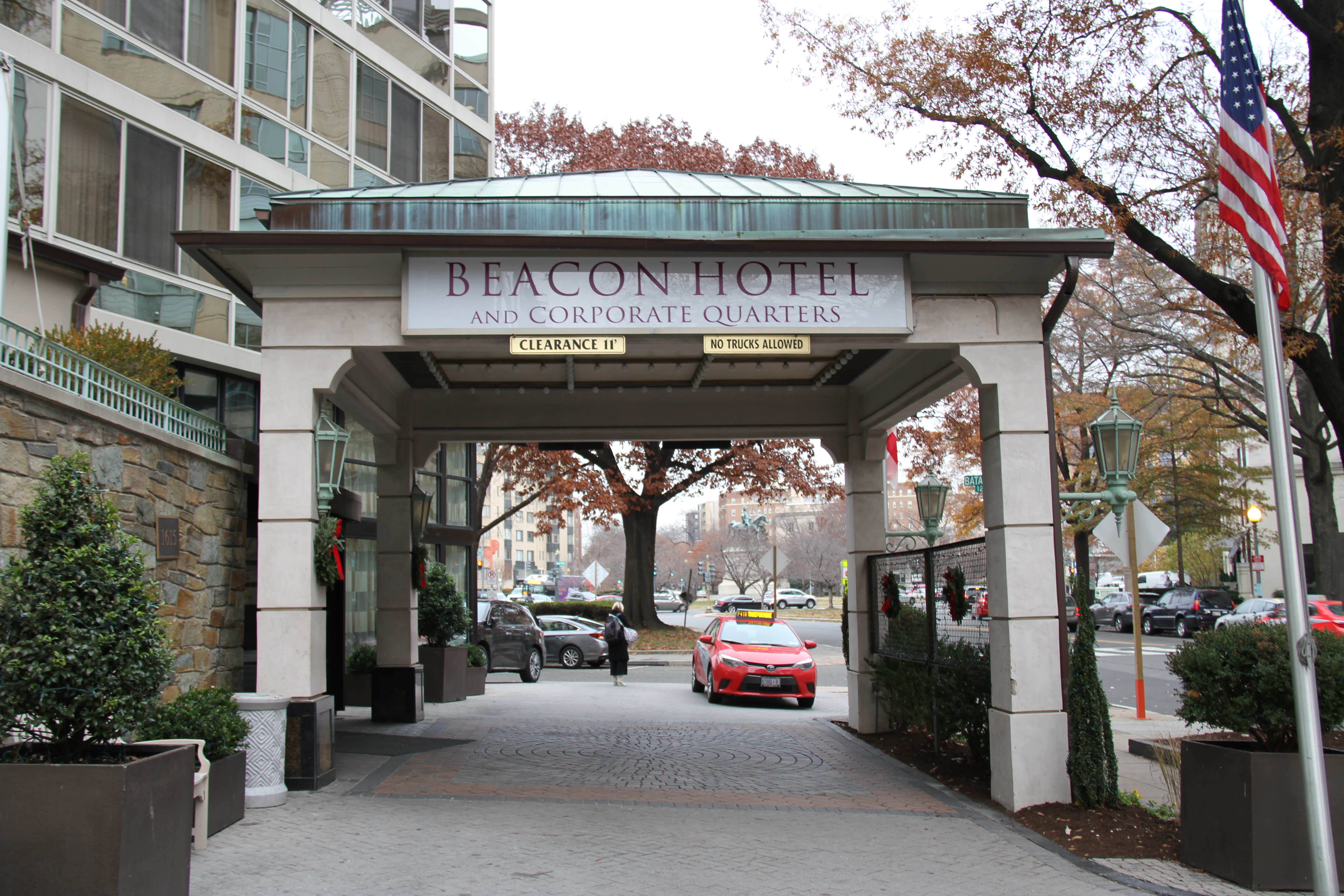
When D.C.’s Beacon Hotel books a Chinese guest, the staff springs into some specific actions.
Housekeeping fills a welcome basket with traditional Chinese tea and slippers.
The restaurant provides menus in Mandarin.
And the front desk tries not to assign them to a room with the number four, which is considered unlucky in China.
As relations between the U.S. and China remain uncertain (a trade war “truce” is only in place until March), the Asian nation continues to be the top supplier of overseas visitors to the District. It’s been that way since 2013, according to Destination DC, the tourism marketing arm for the city.
They’re also the highest-spending group of international tourists in the U.S. In 2016, Chinese visitors’ per-person spending was nearly 50 percent higher than D.C.’s average overseas visitor, says Danielle Davis, director of communications for Destination DC. Chinese visitors to D.C. spent more than $650 million here in 2017.
That’s why local officials and Destination DC, along with city hotels, restaurants, and attractions, are trying to lure more of them to visit. Mayor Muriel Bowser and her predecessor, Vincent Gray, have each taken two trips to China as mayor to improve the District’s relationship with the country. Destination DC is also training hotels, museums, and local businesses to be more welcoming to Chinese visitors, in addition to marketing the District on WeChat, a popular social media platform in China.
“We want to be able to capture at least our fair share,” says Nicolas Raoux, Beacon Hotel’s associate director of sales. “We just don’t want to be left behind.”
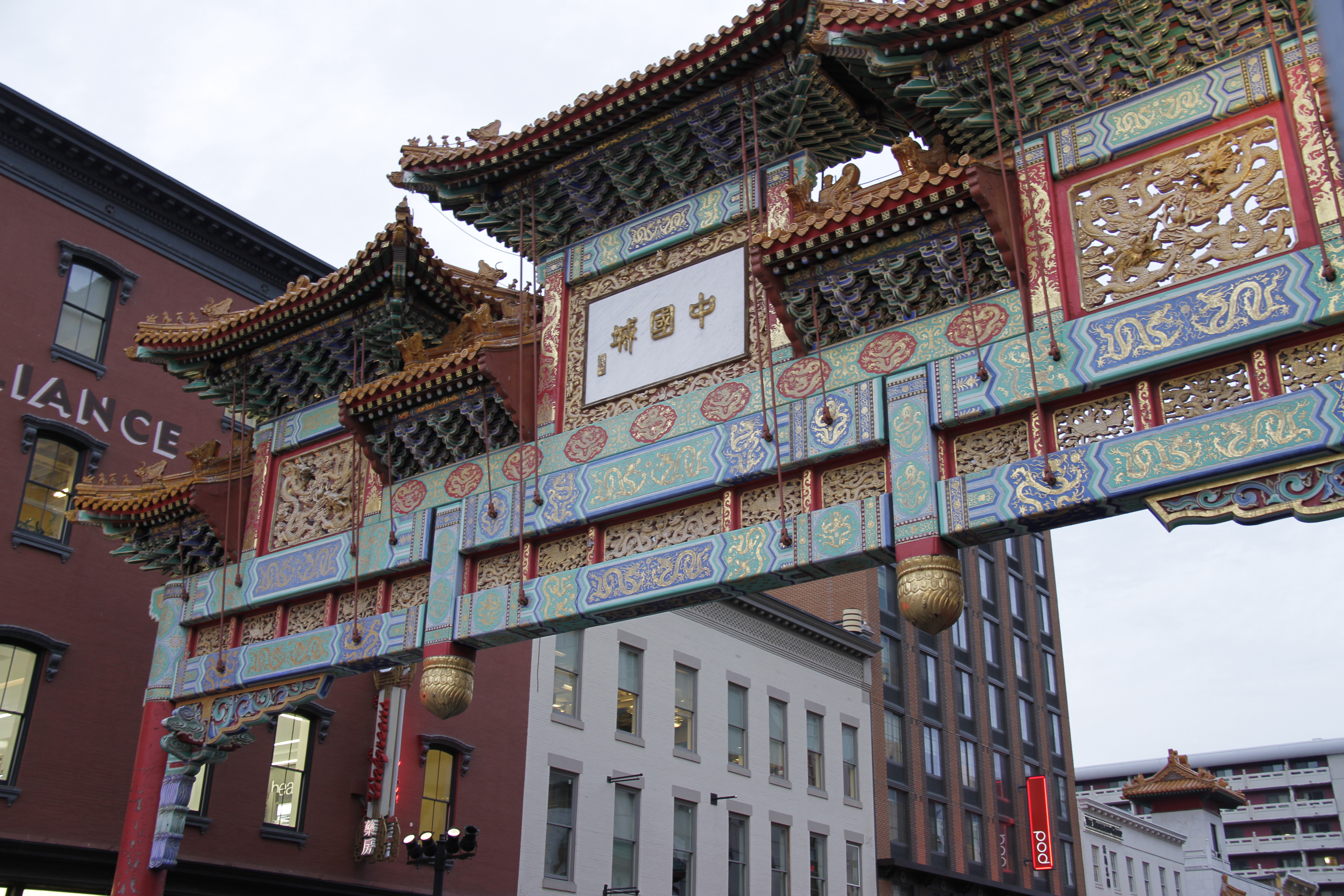
324,000.
That’s the number of Chinese tourists that visited D.C. in 2017, a 98 percent increase since 2013, according to Destination DC. Visitors from China made up the largest group of overseas visitors to the District in 2017, a year with about 2 million overseas visitors in total.
Courting Chinese visitors has been an economic priority since Mayor Muriel Bowser took office in 2015, says Karima Woods, director of business development and strategy in the office of the Deputy Mayor for Planning and Economic Development. One of the ways they do that is through trade missions, or trips to China to improve economic cooperation.
In 2015, Bowser led a week-long trip to China, accompanied by District officials and about 30 private and non-profit sector leaders. One of their goals: to promote D.C as a travel destination, Woods says. Members of Bowser’s administration made a second trip to China in October. Deputy Mayor Brian Kenner, who oversees planning and economic development, led that visit, which included efforts to improve relations with south China, Woods says. Each trip had a budget in the range of tens of thousands of dollars, per DMPED.
Bowser’s forerunner, Vincent Gray, similarly took two trips to China during his tenure as mayor to promote economic development opportunities. He attended the 2014 Beijing ribbon-cutting for the second of the District’s offices in China, called the DC China Center. The first office opened in Shanghai in 2012.
One of the DC China Center’s responsibilities is to cultivate relationships with tour operators in the country, according to Woods. “They have a very good understanding of Chinese tourists, and the importance of them, and so we work very closely on our efforts in that area,” she says.
District officials also pushed to open direct flights between Chinese cities and Dulles International Airport. There are currently restrictions on the number of flights between the two countries. The Washington Metropolitan Airport Authority has had to convince airlines with access to China to fly between there and the DMV-area, says Andrew Trull, spokesperson for Washington Metropolitan Airport Authority.
Dulles opened their first direct route to Beijing in 2014, and later added more seats and daily flights, Trull says. In September, they opened nonstop flights between Dulles and Hong Kong. Their next goal: direct flights to Shanghai, Woods says.
“It is an area focus for us as we continue to develop new routes,” Trull says.
Despite trade tensions, Chinese tourists are still visiting the District, according to flight reservation data from the Washington Metropolitan Airport Authority.
President Donald Trump introduced the first tariffs in January 2018. From January to October, load factor, or how full a flight is, was at least 68 percent for flights from Dulles to Beijing, according to Washington Metropolitan Airport Authority (numbers for January through May are official, and those for June through October are estimates). Load factor for flights to Hong Kong was above 70 percent in October, a popular month for travel in China and the first full month that Dulles offered direct flights there.
Destination DC won’t have final visitor totals for this year until August 2019, says Robin McClain, senior vice president of marketing and communications at Destination DC.
Xiang (Robert) Li, director of the U.S.-Asia Center for Tourism and Hospitality Research at Temple University, surveyed 1,700 Chinese citizens during the summer in five cities. 87 percent of respondents said they were aware of the trade dispute, Li says. In that group, more than 40 percent said it would decrease their intention to travel to the U.S. A third said it wouldn’t influence their travel decisions.
Woods says the president’s trade war with China is separate from the District’s efforts to catalyze tourism locally, and isn’t a concern for their office. It also hasn’t affected how the District markets itself to Chinese visitors, McClain says.
“We elevate this city I think in a different way that goes beyond those federal politics,” McClain says.
U.S. destinations, including D.C., began marketing themselves in China after the two countries signed an agreement in December 2007 that kicked off “a new era” of Chinese tourism to the U.S., Li says. The agreement allowed Chinese citizens to travel to the U.S. for leisure and gave American destinations permission to promote themselves in China.
Marketing organizations then began advertising U.S. cities as tourist destinations in China (cities across the country have destination marketing organizations, like NYC & Company or VISIT FLORIDA. On the national level, there’s Brand USA, a nonprofit established by the U.S. government in 2009 to increase international tourism to the U.S.)
“Everyone is trying to go after the Chinese market,” McClain says.
That’s not to say that U.S. destinations are in fierce competition with each other, though, Li says. Chinese leisure tourists, who travel long distances to the U.S., tend to squeeze multiple cities into their trip, Li says.
“Any American destination that is doing a good job in promoting themselves, it’s helping the American brand overall,” Li says.
China has the world’s largest population, making it difficult for companies without an internationally recognized brand to successfully market there, particularly on social media, says Tom O’Toole, a Northwestern University professor who has been chief marketing officer for United Airlines and Hyatt Hotels Corporation.
“A marketing investment can get swallowed up fast in a market that is of such a large scale,” O’Toole says.
That’s why Destination DC has a Welcome China program, an initiative that certifies hotels, museums, and local businesses as welcoming for Chinese visitors. To become certified, members must complete tasks on a list of options, like serving Chinese tea or hiring Mandarin-speaking staff. In return, they get marketing help from Destination DC, including the opportunity to promote themselves through Chinese social media outlets. Beacon Hotel is one such member.
Another way that Destination DC reaches Chinese customers is through WeChat, a mobile app that is used by 1 billion people in China. The app, a mainstay of social networking in China, allows users to complete tasks that Americans might do in separate apps, like share photos or send messages, all in one place. That’s why it’s an ideal platform to advertise to Chinese customers, according to McClain.
“WeChat is like Twitter, Facebook, Instagram, Venmo, News, Kayak.com—it’s all of that, on one platform,” McClain says.
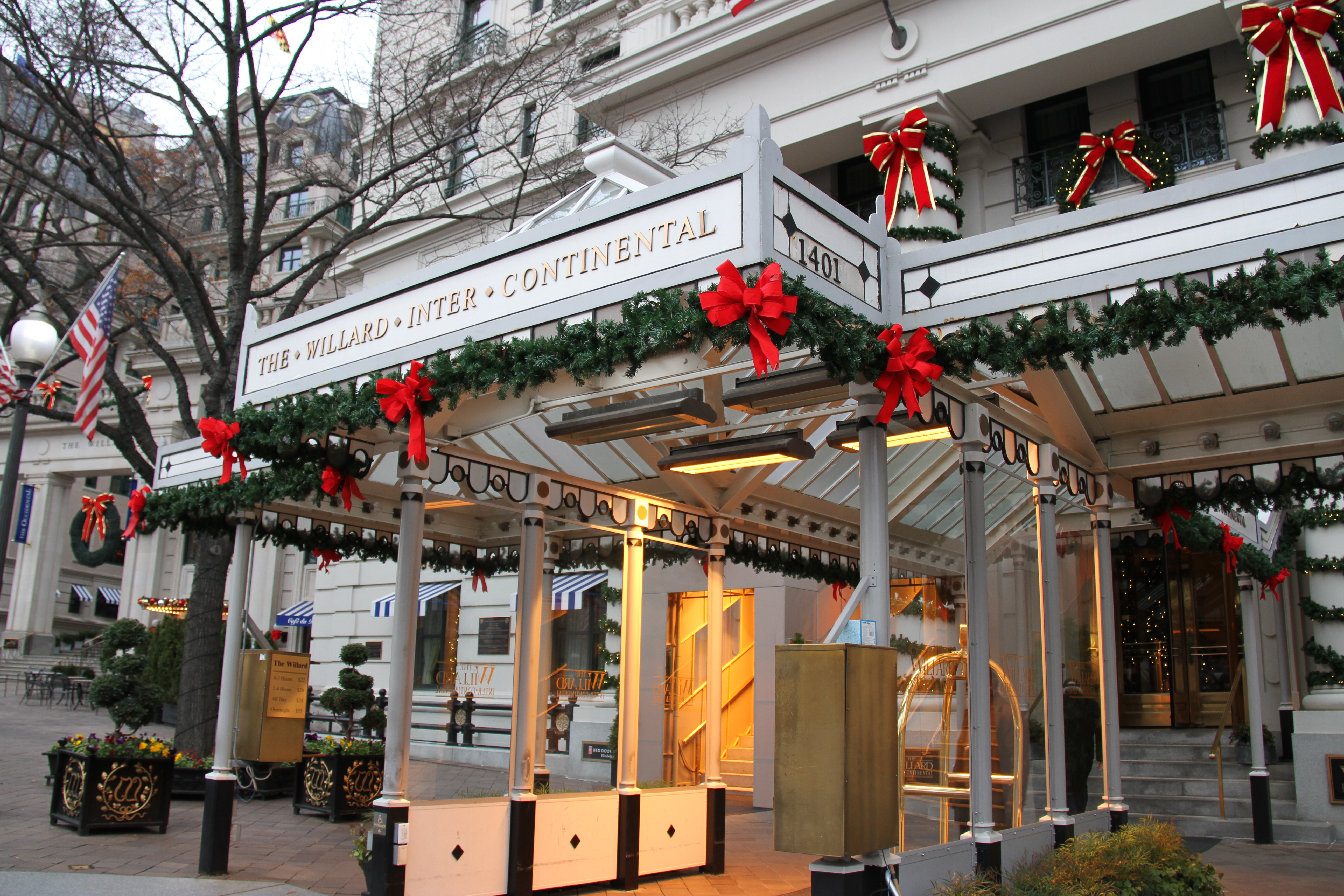
Markus Platzer, manager of the Willard Hotel near the White House, says hotels must slowly build a network of contacts in China to lure customers. It can take a few years before a steady stream of Chinese visitors comes, he says.
The Mandarin Oriental Hotel in Southwest D.C. partners with Cathay Pacific, an airline headquartered in Hong Kong. The airline advertises the hotel to their customers. Mandarin Oriental is a Chinese company, making them a recognized brand for tourists visiting from the country. And it’s paying off. According to Emily Lancaster, the D.C. hotel’s director of communications, about 40 percent of their guests are Chinese.