Jacob Fenston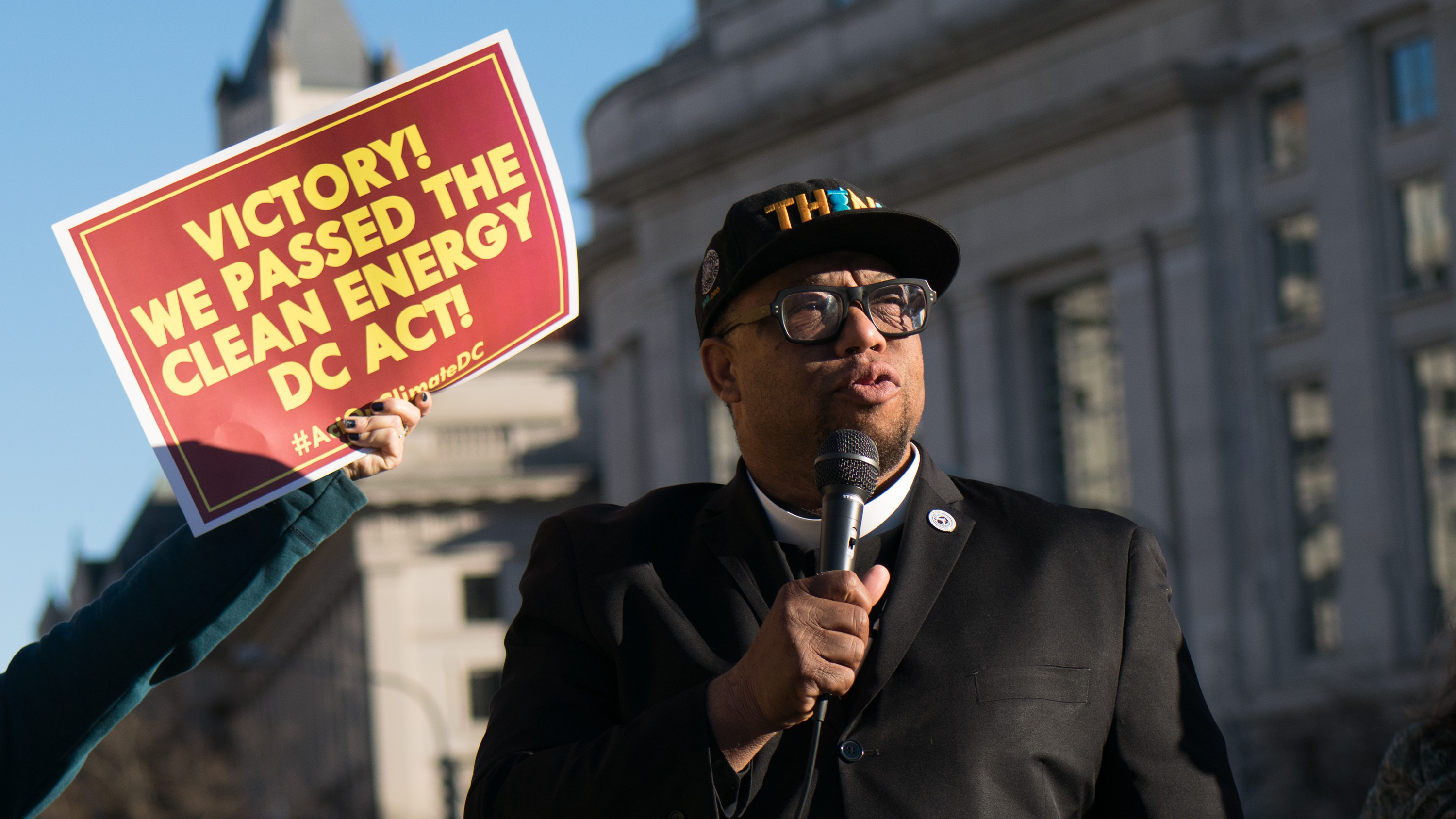
Washington, D.C. will be among the first cities in the nation to transition to 100 percent renewable energy, under a bill that passed a final vote Tuesday by the D.C. Council. The bill updates the District’s renewable portfolio standard, which previously required 50 percent renewables by 2032.
The Clean Energy D.C. Act passed unanimously. It includes a variety of measures to cut carbon emissions and combat climate change: in addition to updating the renewable portfolio standard, it will toughen energy efficiency requirements for new and existing buildings, help fund efficiency upgrades and incentivize electric vehicle purchase. Taken together, these measures are expected to slash emissions by 42 percent by 2032.

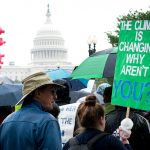
Supporters of the Clean Energy D.C. Act, after the vote.Jacob Fenston / WAMU
Passage of the final bill came after wrangling over several provisions and rounds of amendments. The original bill, introduced by Ward 3 Councilmember Mary Cheh, would have reduced carbon emissions even further, cutting them by 50 percent. Utility companies objected to some measures, which were later stripped or altered.
In the end, utility companies supported the bill. In a statement, Pepco Holdings President Dave Velazquez called it “an important step toward advancing the cause of clean energy for the benefit of every ward in the District of Columbia.”
Environmental activists say Pepco and Washington Gas got behind the bill because they were opposed to the alternative advocates initially proposed with support from several council members: a carbon tax.
“We built such a thunderhead of political pressure for ambitious and comprehensive climate policy that not doing anything was not an option,” said Camila Thorndike, with the Chesapeake Climate Action Network, which backed the bill.

100 or bust.Jacob Fenston / WAMU
The mandate for 100 percent renewables by 2032 is the most ambitious renewable portfolio standard currently on the books among the states.
“This bill is historic,” said Cheh, ahead of the vote. “It will place the District of Columbia at the national forefront in efforts to reduce greenhouse gasses and achieve 100 percent renewable electricity.”
California recently updated its renewable portfolio standard, transitioning away from fossil fuels by 2045. Many cities around the country have made commitments to ditch fossil-fueled electricity, but D.C. enshrined its commitment as a legal mandate—something it can do because of its unique quasi-state status. Nationwide, 90 cities and towns have pledged to transition to 100 percent renewable energy by 2030, according to the Sierra Club.
The D.C. Council meets just steps from the White House and Congress. Ward 6 Councilmember Charles Allen took a swipe at both.
“The guy in the house a couple of blocks away has abdicated complete leadership in how we are moving our country and our world forward,” Allen said. “The folks on the other end of Pennsylvania Avenue don’t seem to care that much. So the responsibility has fallen to our cities and our states to act.”
Neighboring Maryland and Virginia have much less ambitious renewable portfolio standards. Maryland’s mandate is 25 percent renewables by 2020, while Virginia has a voluntary goal of 15 percent renewables by 2025. In Maryland, some are attempting to speed up the state’s transition to renewables, with legislation that would set a goal to be carbon-free by 2040.
This story was originally published on WAMU.