Welcome to the second story in DCist’s three-part series on D.C. alleyways. We’ve already looked into the history of these places, and tomorrow, we’ll delve into the inevitable drama and conflict that ensue over shared community space. Today, we’ll point out some particularly noteworthy alleys to explore.
Washington has plenty of picturesque residential streets lined with colorfully painted rowhouses. But you can also find vibrant scenes—from Instagrammable murals and art workshops to cafés and pocket parks—playing out in the alleyways that form a hidden network of secondary streets behind them. Artists, baristas, developers, and neighbors are transforming narrow, hidden spaces into sought-after studios, coffee shops, housing, and parks. Here are the top 10 alleys in D.C. you should check out.
Blagden Alley
This alley has become the poster child for a certain kind of hip D.C. resident. Before its current buzzy incarnation, Blagden Alley had been converted from dwellings to businesses and auto garages, and in its recent past, served as the home for D.C.’s avant-garde art community. Now, an outpost of Philadelphia-based coffee roaster La Colombe lives behind an industrial size garage door, right next to the neon-lit, Hong Kong-inspired Tiger Fork. Around the cobblestoned bend is Michelin-starred restaurant The Dabney; Derek Brown’s upscale cocktail bar, the Columbia Room; and a fitness studio where drop-in classes cost $24. Home to several murals and artist studios as well as the D.C. Alley Museum, Bladgen Alley is also the site of a recent development by local architect Suzane Reatig, which features 15 apartments above a ground-floor bakery. Despite all the high-profile attention, it still retains some vestiges of its gritty past; you have to walk past a parking lot covered with barbed wire fencing to get in from 9th Street NW.
Naylor Court
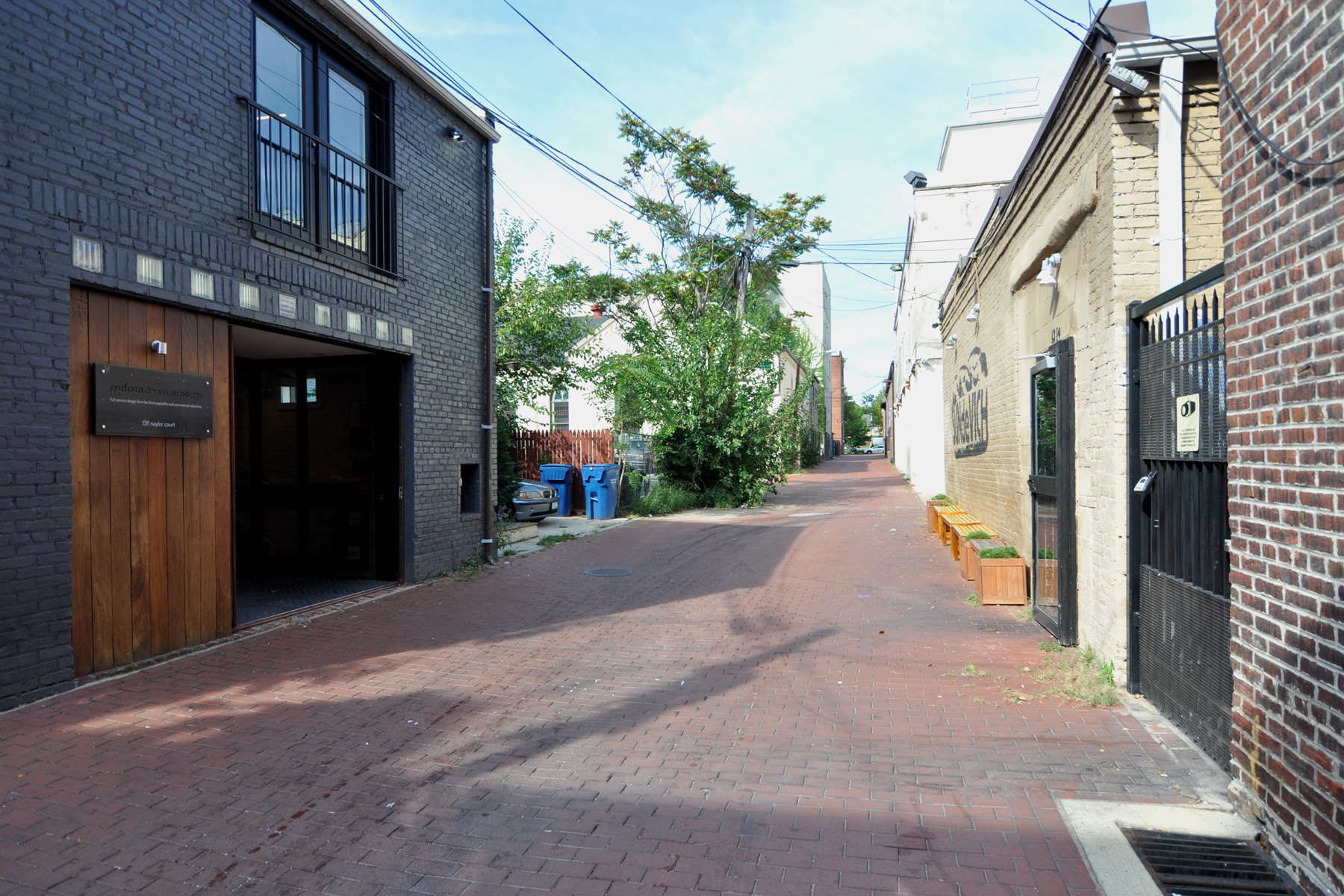
Naylor Court has endured a long arc from its initial development as a crowded residential alleyway in the late 1800s. Around the turn of the century, houses gave way to business uses in the form of a warren of stables. By 1930, these stables were replaced by garages (which, if you think about it, are really just modernized stables housing more horsepower). These days, Naylor Court has come full-circle with a spate of redevelopments that have adapted existing buildings into private residences, two architecture studios, and lunchtime favorite SundeVich. Naylor Court and neighboring Blagden Alley form their own D.C. historic district, which celebrates racially integrated alley dwellings from the 1850s through the 1930s, with these two serving as some of the most intact examples of inhabited alleyways that formerly thrived in Washington.
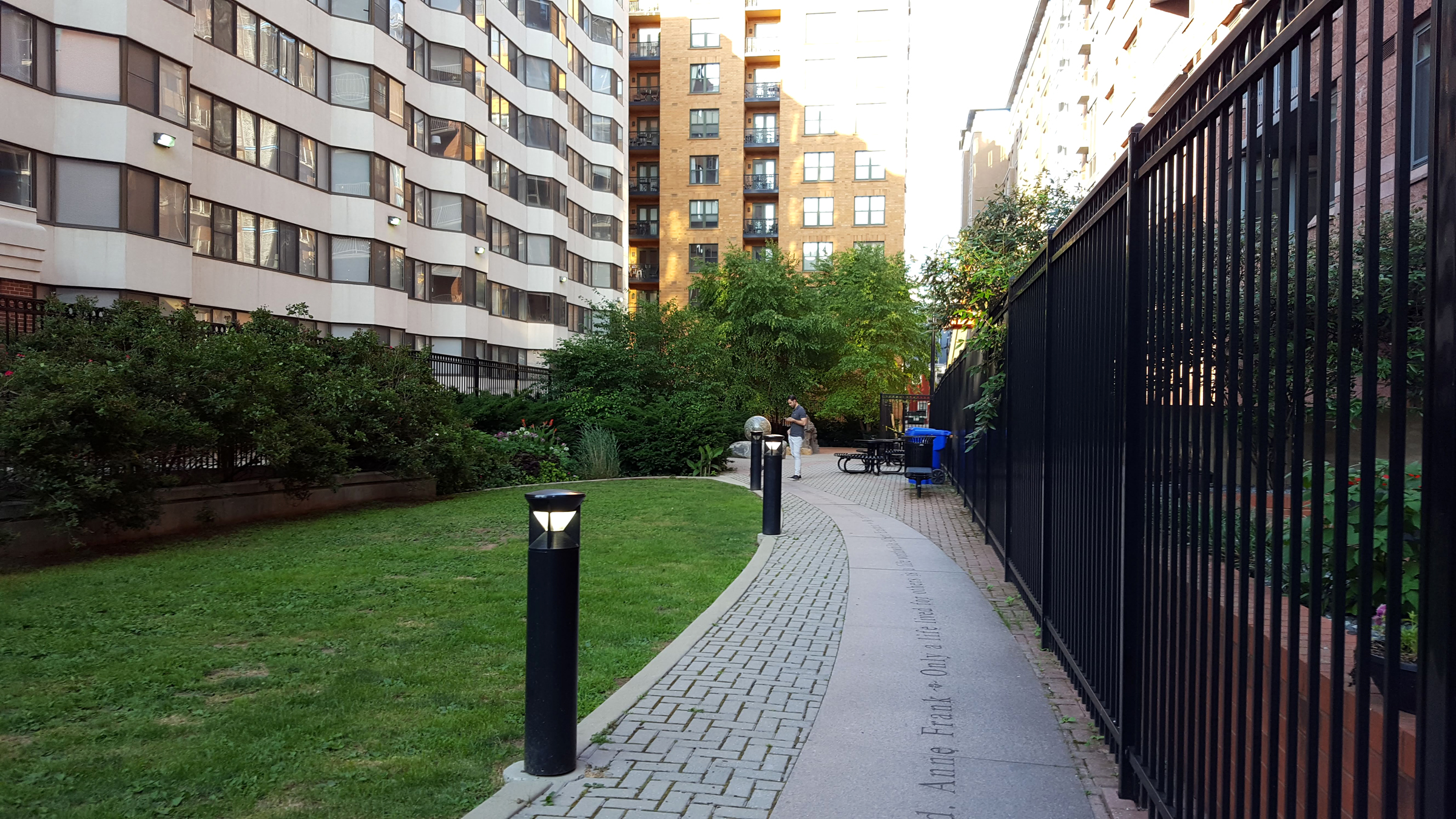
Shepherd’s Alley / 10th Street Community Park
In the 1880s, Washington’s Shaw neighborhood was home to many more alley dwellings than it is today. Developments such as the Convention Center filled in many of the old passages, but some traces still remain. Shepherd’s Alley formerly occupied the block between 9th and 10th and L and M Streets NW. In a small area controlled by the city, community members successfully lobbied for the establishment of the 10th Street Community Park in 2008, breaking ground on the project in the fall of 2009. The resulting green space, which opened in 2011, is a linear pocket park with a pair of tables and a climbing structure as well as an engraved memorial to local community activist Constance Maffin.
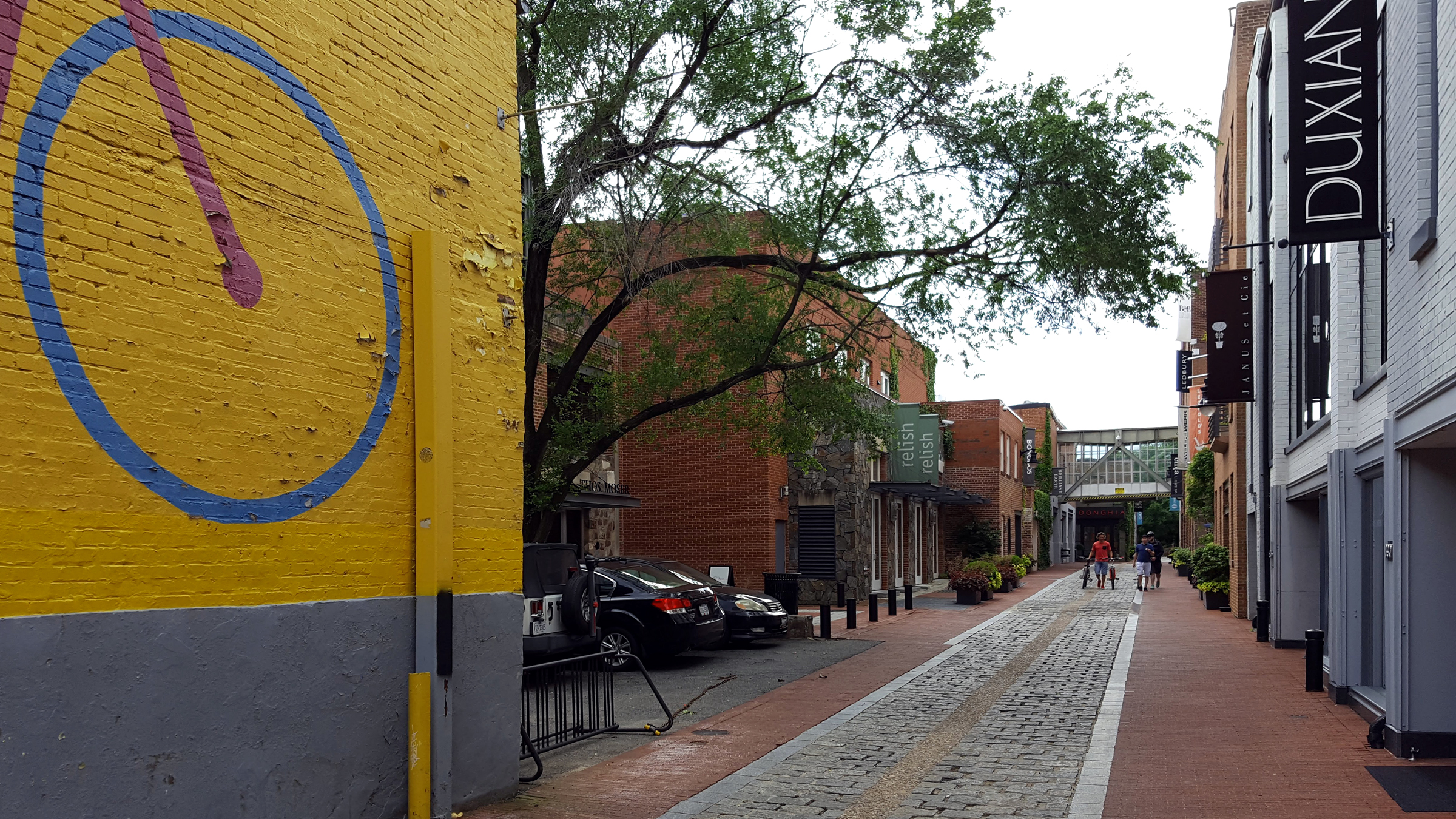
Cady’s Alley
Count on Georgetown to turn a sunlit, cobblestoned alley into a retail opportunity. Just off the beaten path of M Street, Cady’s Alley offers a dining terrace at Leopold’s Kafe, several high-end furniture stores, and a brick-and-mortar outpost of online-first clothing retailer Bonobos. The alley’s redevelopment, which replaced the backsides of several buildings facing Georgetown’s M Street with secondary façades on their alley side, won an Honor Award for Urban Design from the American Institute of Architects in 2005, in part for transforming the neglected rear faces of these buildings into an inviting pedestrian retail promenade with mid-block access to M Street.
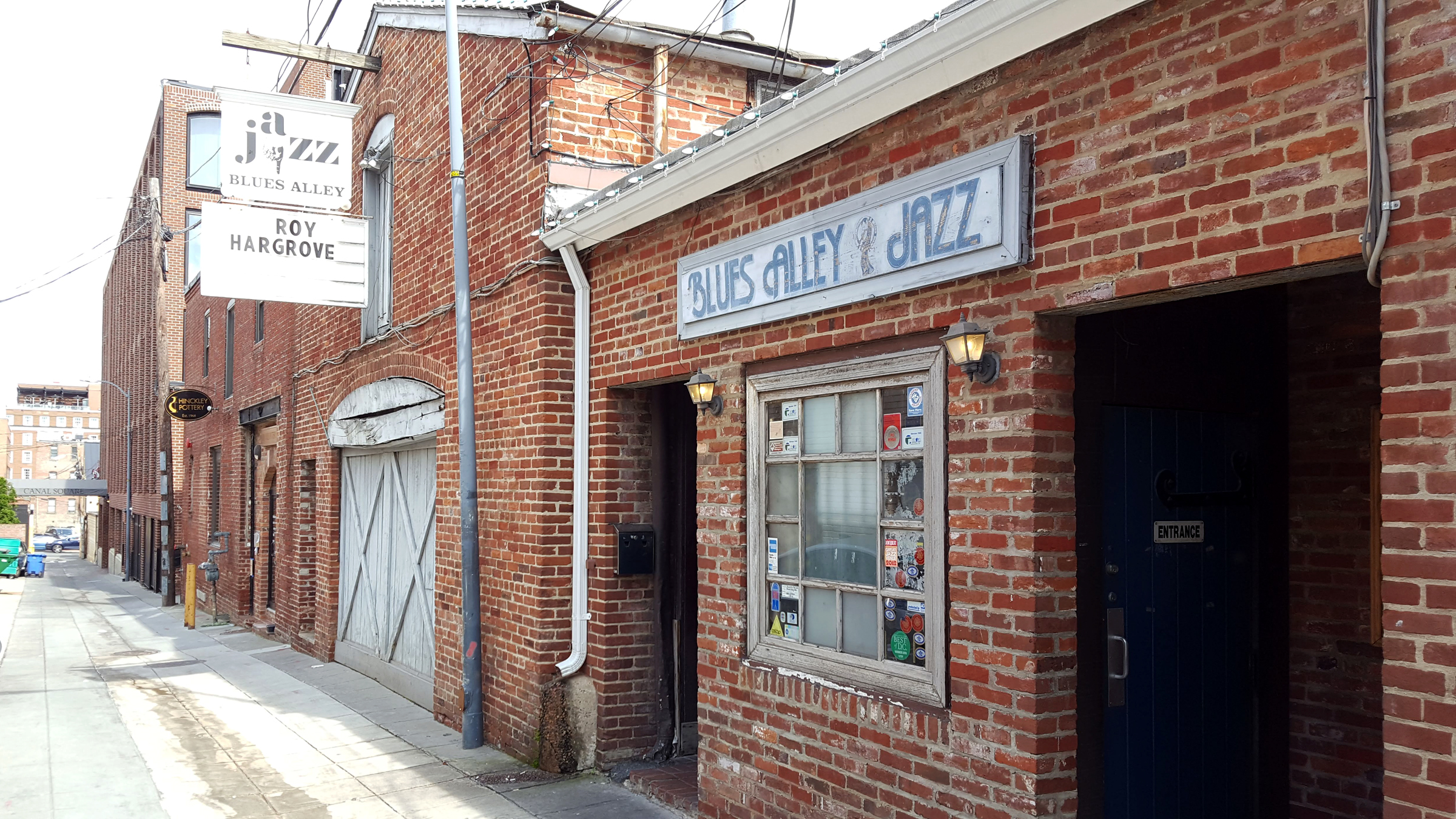
Blues Alley
With less foot traffic and considerably less development than neighboring Cady’s Alley, Blues Alley takes its name from the Blues Alley Jazz Club, which was founded in 1965 and has hosted the likes of Sarah Vaughan, Eva Cassidy, and Dizzy Gillespie. Within earshot is Hinckley Pottery, an artist’s studio and classroom dedicated to clay. Anchoring the eastern end of the alley are Moby Dick House of Kebab and Ristorante Piccolo.
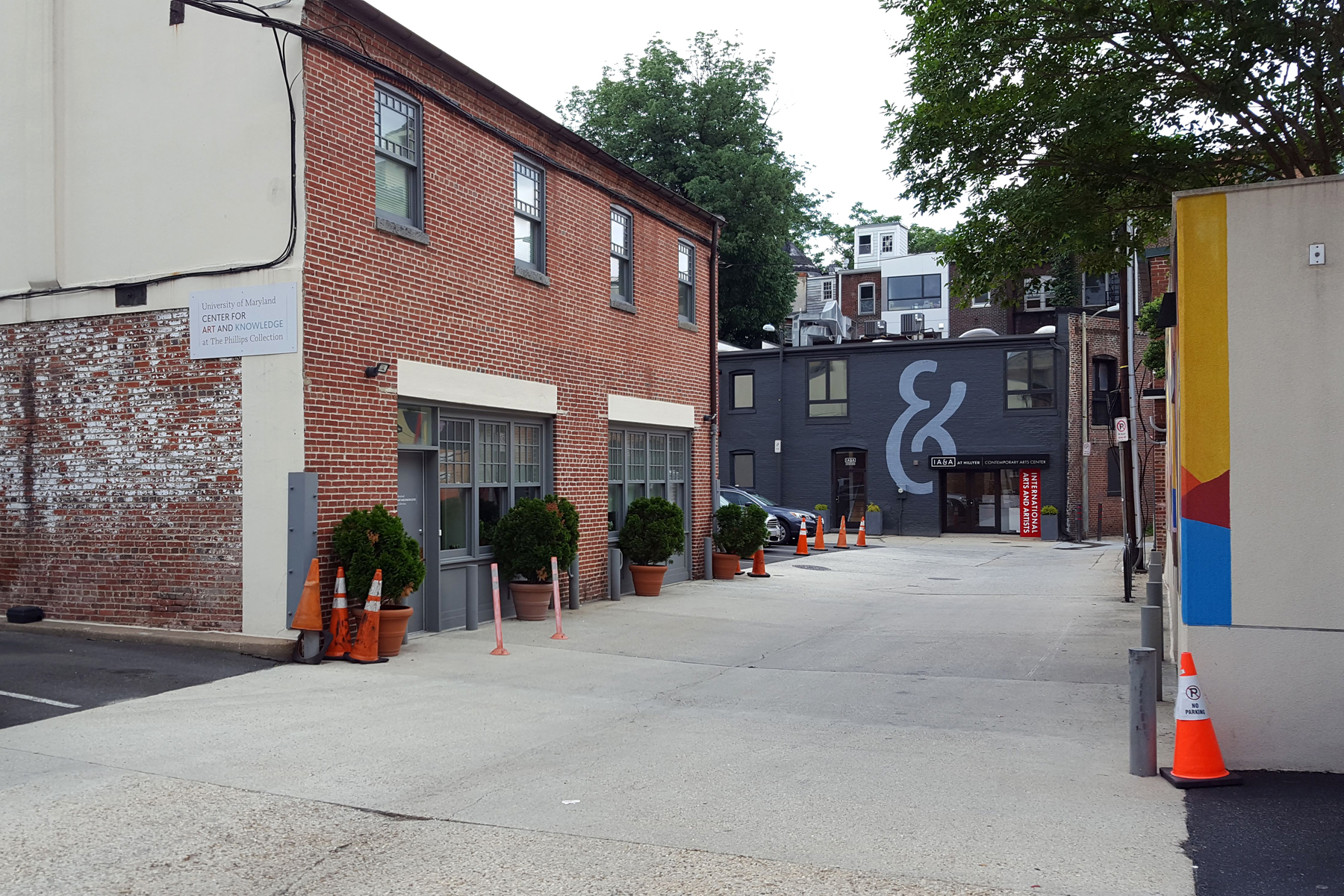
Hillyer Court
Tucked behind the Phillips Collection in Dupont Circle, Hillyer Court west of 21st Street NW includes International Arts & Artists, a small non-profit arts organization and gallery, and a long mural on the back side of the Phillips’ courtyard. East of 24th, it’s Hillyer Place, home to real estate that hovers around $1 million on the low end, in a former alleyway that has been formalized as its own street.
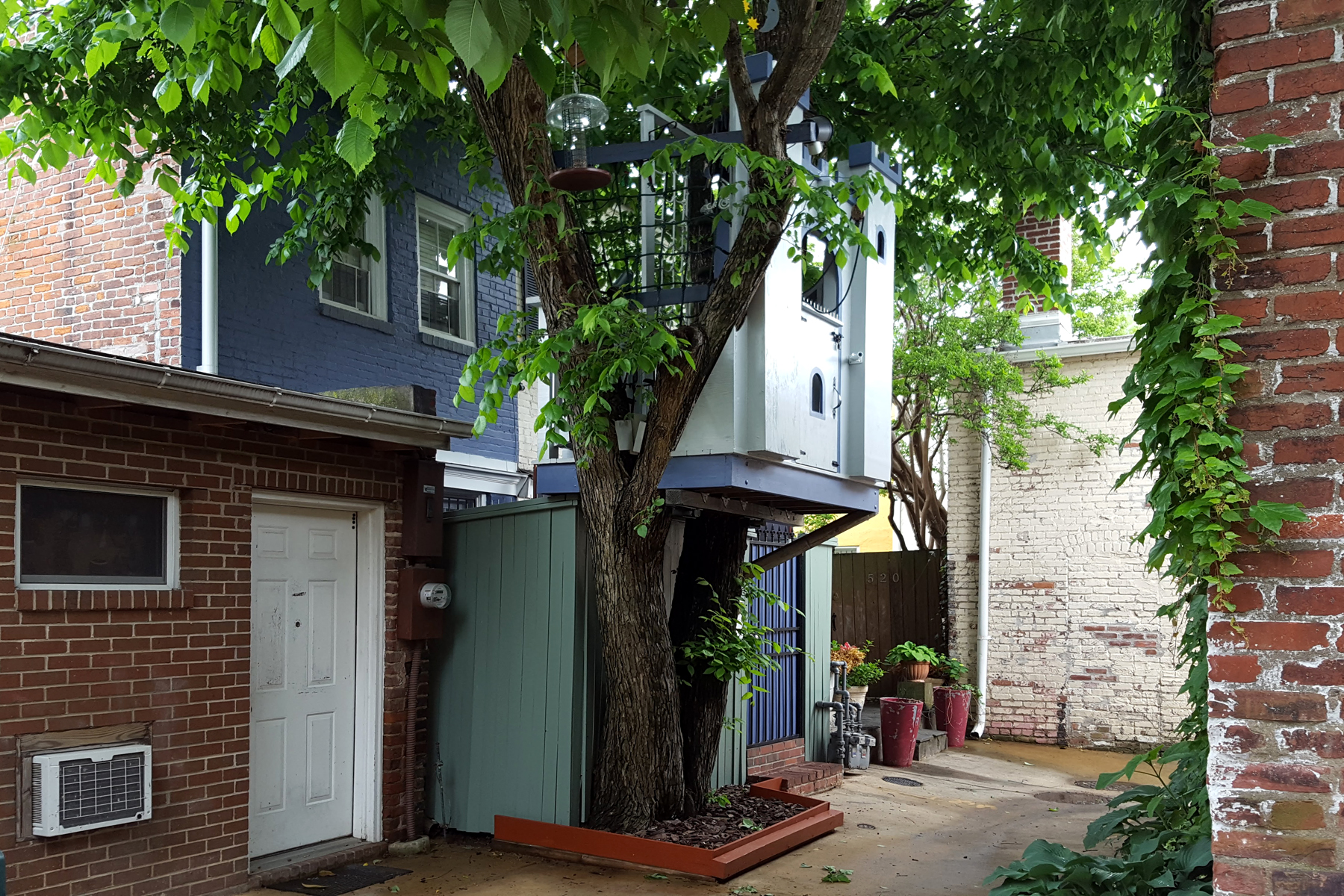
Archibald Walk
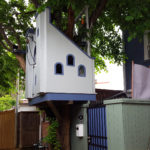
A U-shaped, pedestrian-only alleyway in Southeast pitted neighbor against neighbor in 2015. The public-versus-private-realm debate revolved around … a treehouse for kids. We’ll cover this dispute in more detail tomorrow.
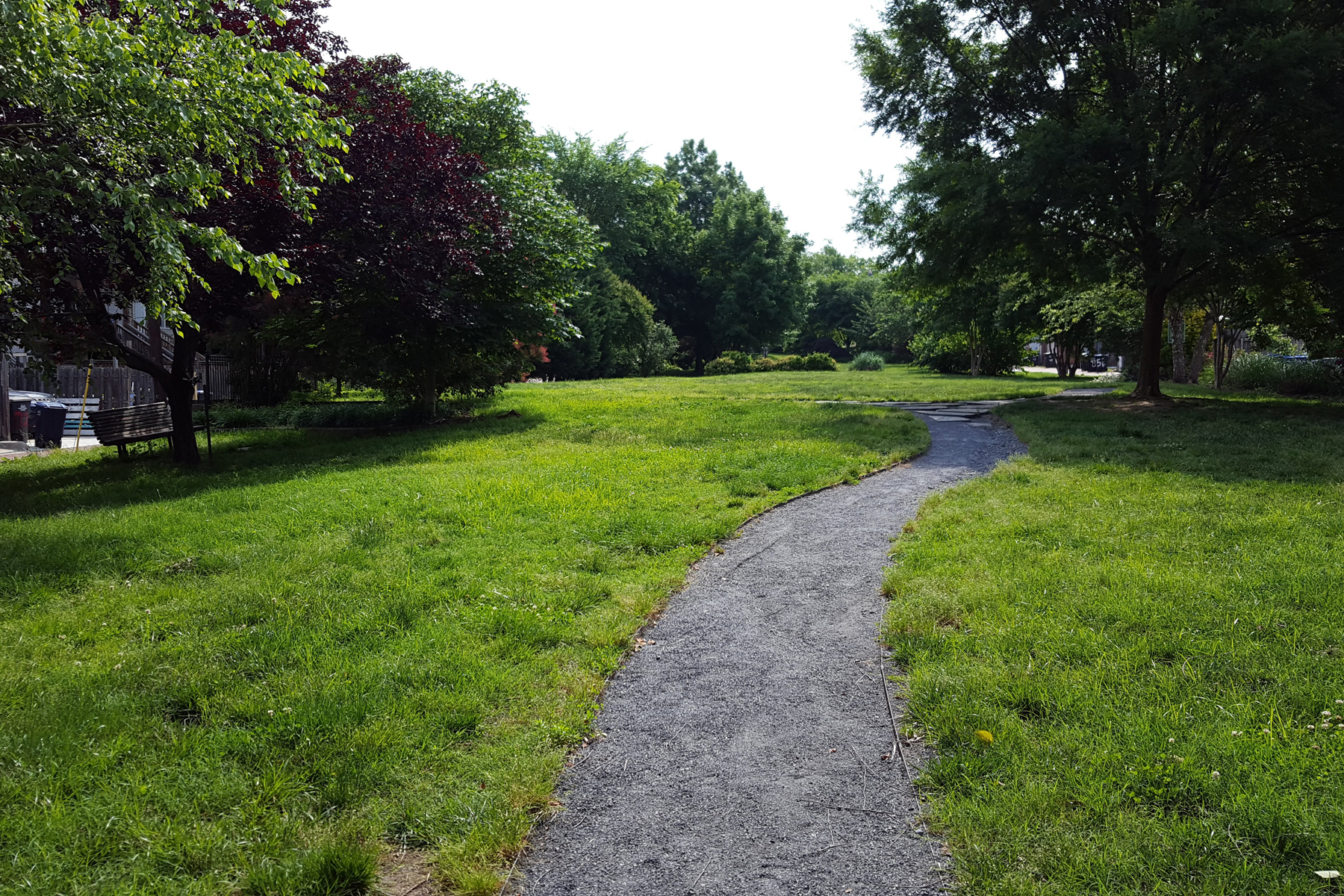
Crispus Attucks Park
In another alley rights controversy, neighbors transformed their collective backyards—once the site of an abandoned telephone company building—into Crispus Attucks Park, a 1.06-acre urban oasis. But questions about who owns this privately maintained public space bubbled over into a 2012 feud that since seems to have since fizzled. We’ll also cover that dispute in more detail tomorrow.
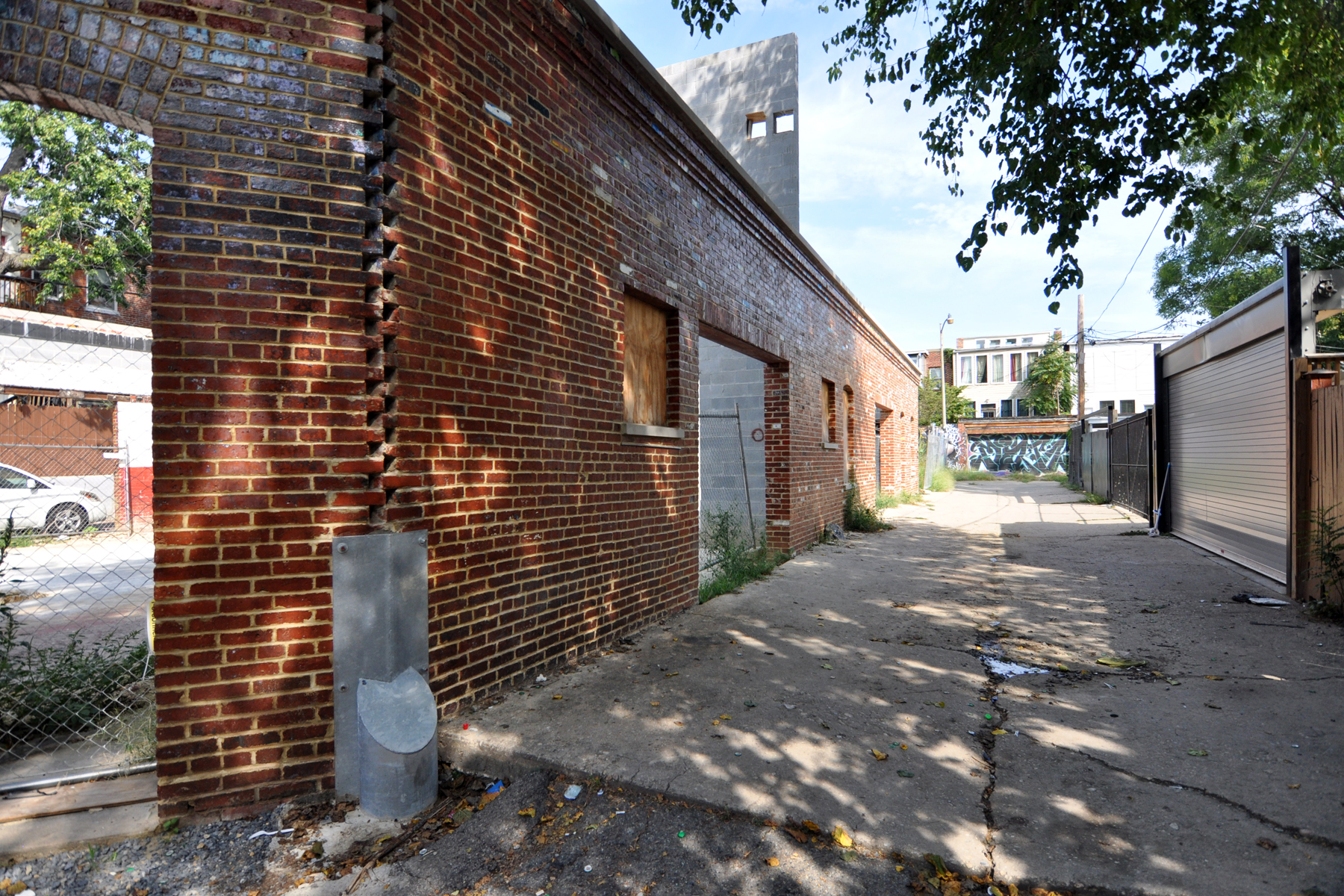
Williams Alley
Named after Theodore Williams, a Columbia Heights community leader, this alley long featured a derelict storeroom covered in graffiti at the center of the block bounded by Irving Street and Columbia Road on its north and south, and Sherman Way and 11th Street on its east and west. Greg Gardner, an architect attempting to repurpose the structure, found that the only way to gain city approvals would be through naming the alley, as the only way to get building permits was by providing an address. Without a street name to work with, Gardner had no address to put on the permits, so he set about getting a street name for the alley. After a 2016 attempt at getting the alley named turned out to be ceremonial, not official, Gardner was finally allowed to proceed in 2017. The project, which will now comprise two houses and an office, is still under construction.
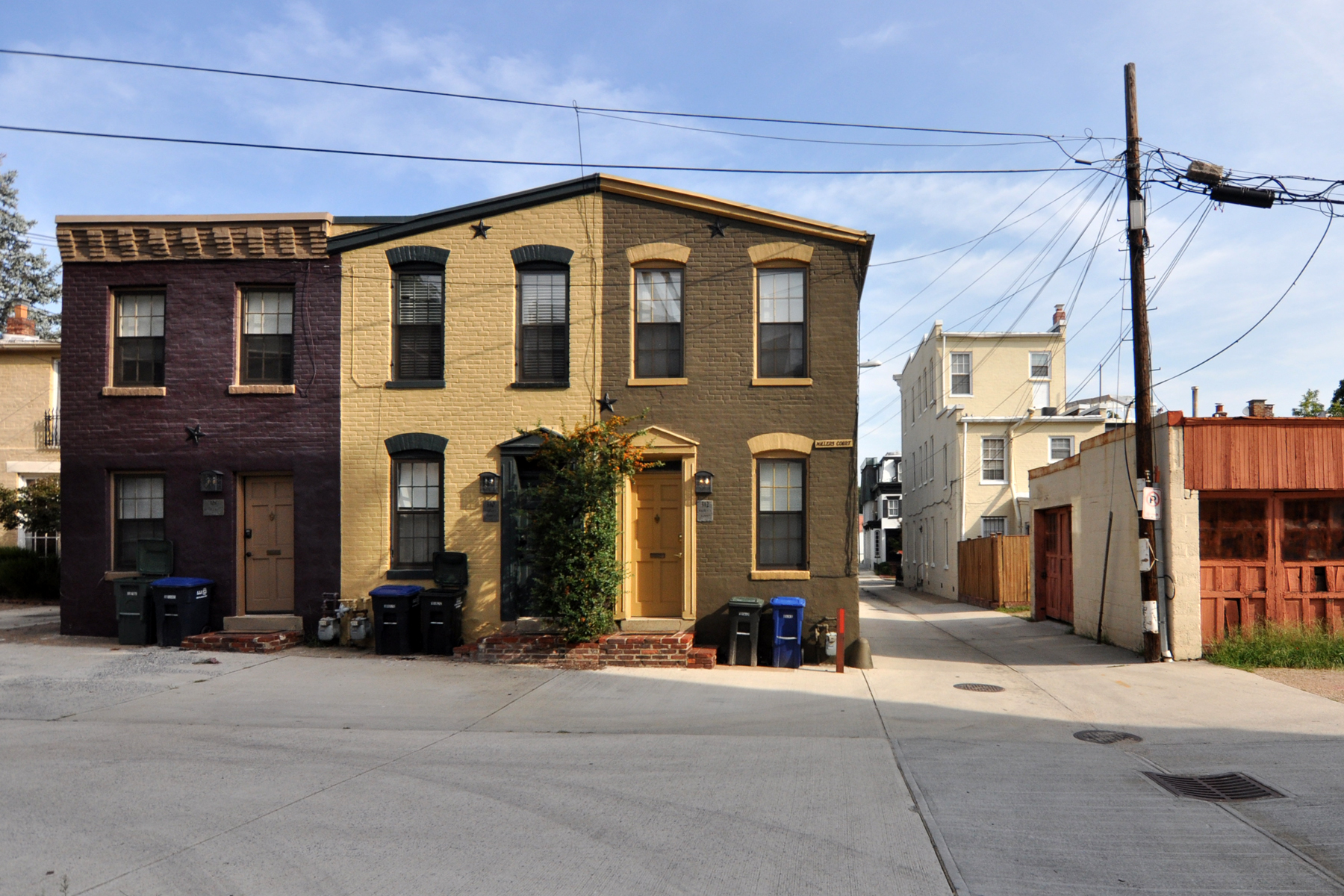
Library Court & Millers Court
Cramped alley dwellings used to exist just a block away from the Library of Congress in what are now known as Library Court and Millers Court, which run parallel to and between 3rd and 4th Streets SE on either side of East Capitol Street. The District created the Alley Dwelling Authority to clear out these areas beginning in 1934, removing residents and renovating what properties could be salvaged, and, in the process, forcing lower income people out to the periphery of the city. These days, a few smaller alley dwellings remain alongside driveways and surface parking behind other street-facing residences.
More in D.C.’s alleys:
The Hidden History of D.C.’s Alleyways
What Do Fights Over Treehouse Castles, Gardens, And Waffles Have In Common? Alleys