Natalie Delgadillo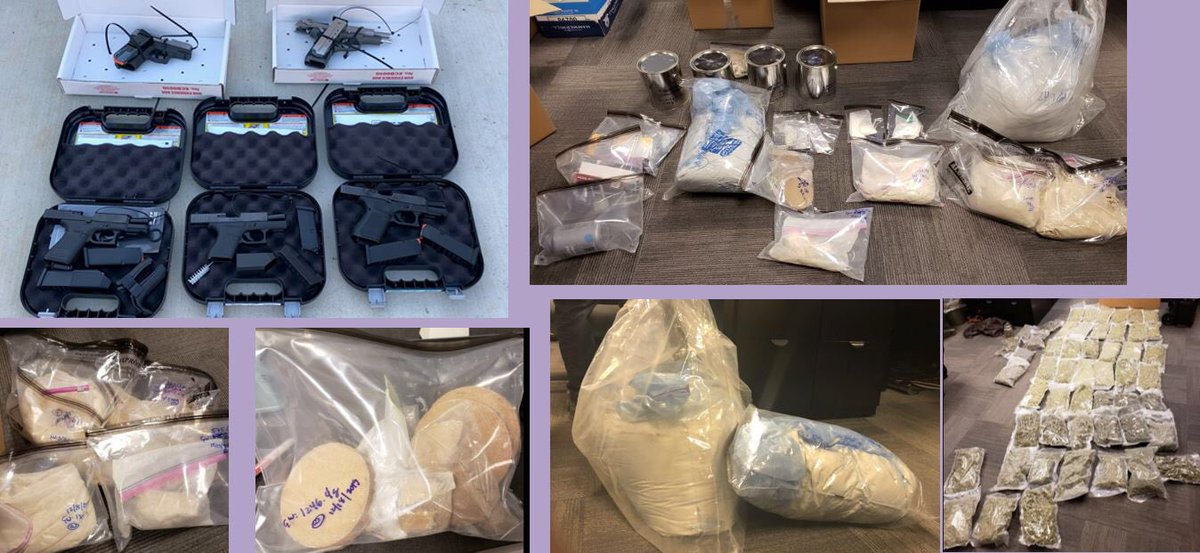
The Metropolitan Police Department has arrested two people in connection with a large seizure of illegal guns and drugs. Officers seized more than 88 pounds of heroin in the bust, making it the largest heroin seizure in D.C.-area history, Mayor Muriel Bowser announced at a press conference in front of the Sixth District police headquarters on Friday afternoon.
An undercover agent with the Bureau of Alcohol, Tobacco, Firearms and Explosives purchased firearms, marijuana, and heroin from one of the suspects, whom Police Chief Peter Newsham said was “known to sell these illegal items” in the nearby community, which includes portions of Northeast and Southeast D.C. east of the Anacostia River. The agent bought nine firearms, 1,500 grams of marijuana, and 270 grams of heroin from the suspect, Newsham said.
On December 19, police executed a search warrant in Falls Church, Virginia, and arrested a 28-year-old man—whom police did not name—in connection with the investigation. The man was transported to federal court in D.C., and charged with the unlawful distribution of heroin and unlawful possession of a firearm. U.S. Marshals arrested the second suspect in Baltimore, Maryland on Thursday shortly after 3 p.m., and charged him with the intention to distribute one kilogram or more of heroin as well as some gun charges. Police identified this suspect as 46-year-old Linwood Douglas Thorne of Northeast.
Police executed two more search warrants in the investigation, one in the 4200 block of Foote Street NE, which Newsham described as the heroin supplier’s home, and the other at a business in Prince George’s County. At these locations, police seized 88 pounds of heroin, 40 pounds of marijuana, six semi-automatic handguns, and a Maserati, as well as drug mixing agents.
The drugs the police seized were worth $2.5 million, Newsham said.
The announcement of these seizures comes in the wake of a Washington Post investigation that found D.C. officials fell short in their response to growing opioid overdoses in black communities across the city. Among other problems, the Post reported that D.C. distributed naloxone, a lifesaving overdose antidote, at far lower rates than other comparable cities.
“Because we have removed this heroin from our streets, we know for a fact that we will save lives,” Bowser said at the press conference. “We know that for many years, heroin has been a scourge in our community, has torn up families, and in recent years has become even more deadly because it is laced with substances like fentanyl.”