Rachel Kurzius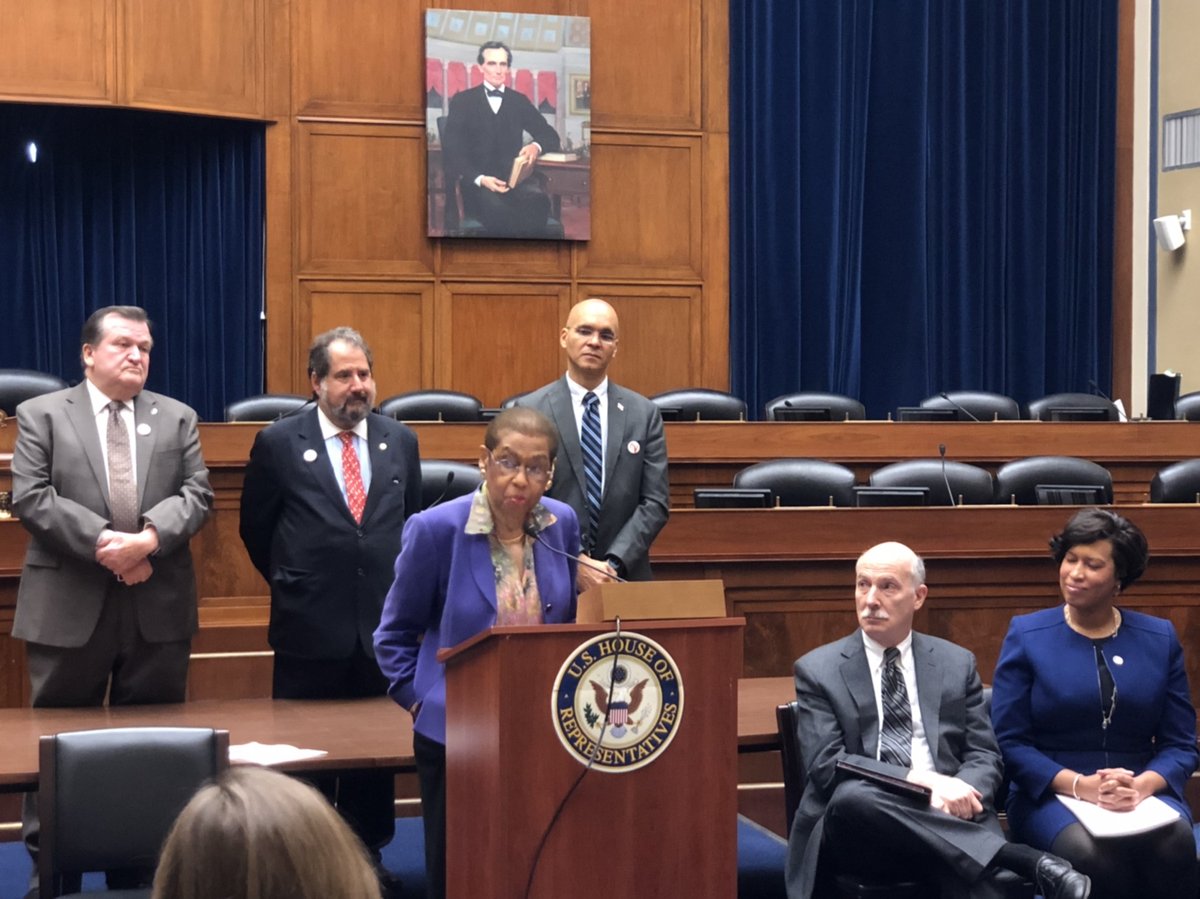
The 116th Congress has officially been sworn in, and so far, the bill with the most co-sponsors is H.R. 51—the bill that would grant D.C. statehood. (D.C. Delegate Eleanor Holmes Norton says she specifically reserved that number, because D.C. would be the 51st state.)
This is far from the first time that Norton—flanked by Mayor Muriel Bowser, Council Chairman Phil Mendelson, and the D.C. shadow delegation—has introduced her statehood bill (indeed, she has introduced a statehood bill every term she’s served). The arguments have stayed largely the same: D.C. pays more per capita in taxes than any state, has residents who serve in the armed forces, and a balanced budget, yet must contend with Congressional meddling and bureaucratic hold-ups (as evidenced by the current federal government shutdown), in addition to having no representation in the Senate and no final vote in the House. Plus, D.C. residents overwhelming voted in favor of statehood in 2016.
But this go-around, under a Democratic-led House of Representatives for the first time since the Republican takeover in 2010, there’s renewed promise that the legislation will go further than it did under a fully GOP Capitol Hill.
For one, H.R. 51 had 155 original co-sponsors on its first day, the most ever for a statehood bill, and a pledge from newly minted Oversight Committee Chair Elijah Cummings, a Maryland representative, to hold a hearing and markup of the bill in 2019. The House hasn’t held a hearing or markup on D.C. statehood since 1993 (a Senate committee held one in 2014).
“We must protect the rights of everyone across the country, including the hundreds of thousands of American citizens who live in our nation’s capital,” Cummings said in a release, also promising to work with leadership to bring H.R. 51 to a House vote.
Right before Norton’s press conference on Friday, Speaker of the House Nancy Pelosi issued her support for H.R. 51, calling it “a critical step in righting this historic wrong” and promising that “Democrats are working to pass bold, ambitious legislation to restore the Voting Rights Act, finally grant full voting rights and statehood to the District of Columbia, and bring back integrity to Washington to ensure our government works for everyone.” Bowser was one of Pelosi’s guests during her swearing-in ceremony on Thursday.
Despite this momentum, there’s still little hope that the Republican-controlled Senate will take up the measure. While Norton and other advocates maintain that statehood is a nonpartisan issue, GOPers have long contended that statehood for the solidly blue District would amount to more votes for Democrats.
Under H.R. 51, D.C.’s eight wards would comprise its own state, with two senators and one House member. The Capitol, the monuments, and other sites would remain federal property.
Norton said that she hasn’t been in touch with the Trump administration about D.C. statehood (for what it’s worth, during the campaign, Trump appeared somewhat open to the idea), and planned on keeping it that way for now. “He has not been hostile to the District of Columbia,” she said. “He is ignorant of the District of Columbia.”
Norton said that, for years, the House of Representatives has been “the bad House,” where she’s had to fight off anti-home rule legislative riders. Often, she turned to the Senate, which, despite having no District representation, would cut most of those riders from the final bill.
She has high hopes that dynamic in the House will change in this new Congressional term: “we’re gonna make it the good House.”
This story has been updated to reflect that the current meeting of the legislative branch is the 116th Congress.