Martin Austermuhle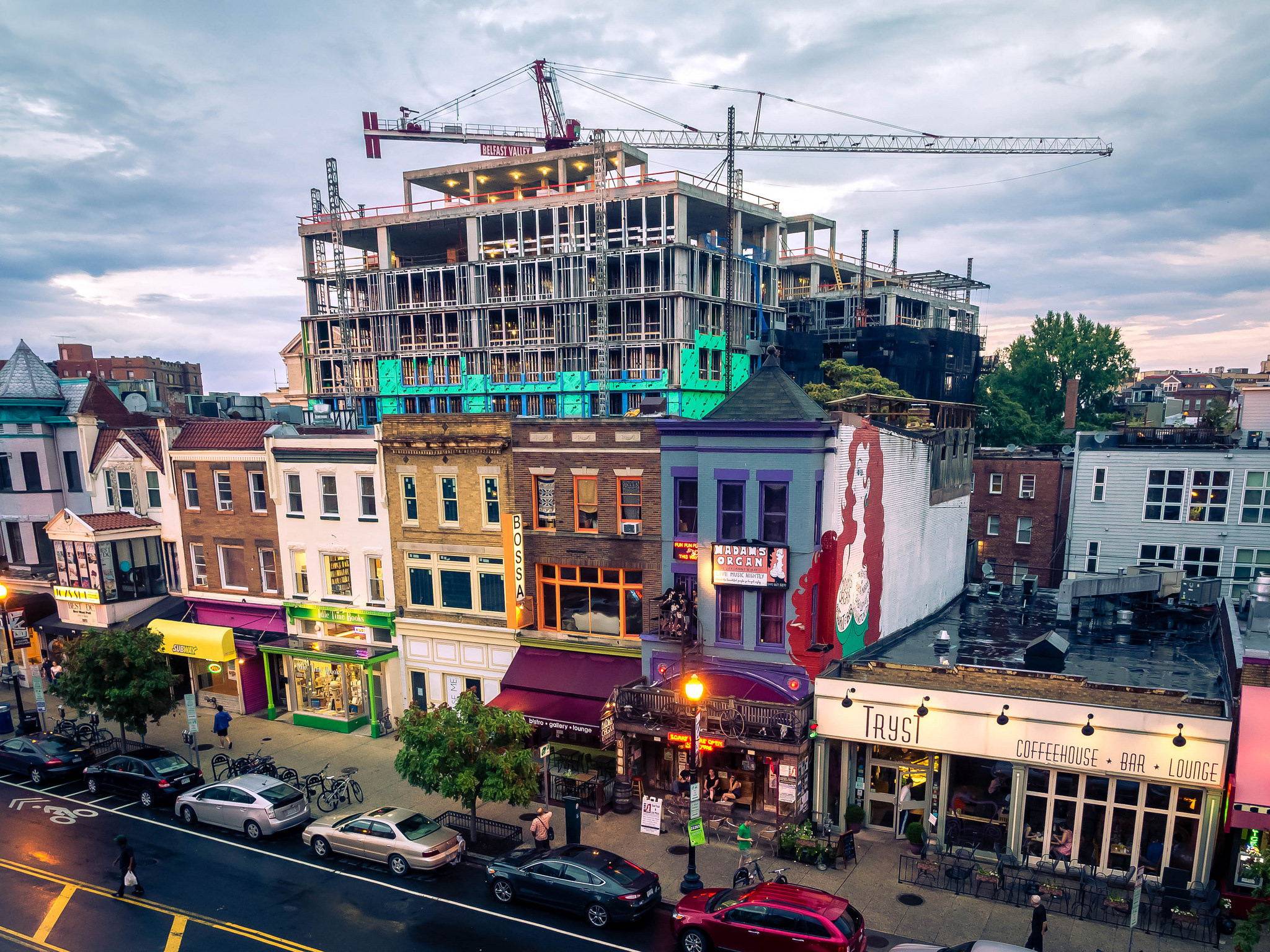
D.C. needs more housing — and fast.
That’s the message Mayor Muriel Bowser is sending as she starts her second term in office, saying that housing construction will have to ramp up significantly over the next six years for the city to help bring housing costs under control.
“Hands down the number one issue among D.C. residents is affordable housing. Hands down,” she said on Monday afternoon. “We are all called on to think big and differently about how we deliver more units in our city. That doesn’t mean that we can do everything the way we’ve always done it. We have to think bigger about it.”
Bowser has even set a goal for D.C.: 36,000 new housing units by 2025, the city’s portion of the estimated 235,000 housing units the Washington region will have to produce in that period to keep up with job growth. Currently, the region is expected to produce 170,000 housing units over the next six years.
Housing analysts say the mayor’s goal is enthusiastic, though achievable. Over the last eight years, D.C. has averaged 4,500 permits for new housing units per year, with slight increases during Bowser’s first term. In 2017, however, that number jumped to 6,000 — both market-rate and affordable. If that number holds in coming years, D.C. could hit the 36,000 mark Bowser is aiming for by 2025.
“Mayor Bowser’s goal is doable, but somewhat ambitious, given recent track record,” Jenny Schuetz, who studies housing policy at the Brookings Institution, said via an email.
But even Bowser said that while current conditions had lent themselves to a steady clip of construction during her first term, more needs to be done to ensure that the pace remains and picks up in coming years.
“Anyone who tells you that we can continue with our current tools and current laws and get to 36,000 units by 2025 is not realistic,” she said.
But what Bowser isn’t yet specifying is what laws and tools would need to change to help reach the goal. While she did advocate “more density and taller buildings where they make sense,” she did not explicitly call for sweeping changes of the zoning code or a Minneapolis-style elimination of single-family zoning.
She also didn’t say whether she would want Congress to relax the Height Act, the federal law that limits how tall buildings can be in the city. In 2013, while she was a member of the D.C. Council, Bowser opposed amending the Height Act to allow taller buildings in peripheral areas of the city.
Council Chairman Phil Mendelson said Monday that he would oppose any changes to the Height Act, but that even without that, more dense construction could happen throughout the city with simple changes to the zoning code.
“There could be quite a bit of change in the zoning designations that would not require any changes to the Height Act that would permit more dense construction,” he said. “We’re talking about hundreds of millions of square feet of density that can still be built within the Height Act.”
A recent analysis by the Brookings Institution found that most of the housing construction in recent years has happened in a relatively limited number of neighborhoods. And another study from the pro-growth D.C. Policy Center said that the city could increase housing by adding density to residential neighborhoods west of Rock Creek Park — some of the city’s most expensive and exclusive.
But debates over new housing or zoning changes could run into a buzzsaw of opposition, largely from individual neighborhood associations or groups who say that too much of the city’s current development is focused on market-rate housing, rather than affordable housing.
That debate played out in part last year, when the Council held a marathon hearing on proposed changes to the city’s Comprehensive Plan, it’s blueprint for growth and development. Critics said Bowser’s proposed changes to the plan — which would limit appeals to approved building plans — were a giveaway to developers, while developers themselves said they were merely adjustments to ensure that proposed projects don’t get hung up in litigation for years at a time.
Bowser’s proposed changes to the plan did not come up for a Council vote last year, but Mendelson said he was hoping for a vote by the spring. He didn’t say what changes he would like made to the plan, but did hint that he would like more emphasis on the production of affordable housing.
City officials say they too are focused on affordable housing, and have produced 6,000 units over the last four years, and could ramp it up to 10,000 more in the four years to come. They want at least a third of the 36,000 new housing units to be affordable.
And Bowser said Monday she would consider a number of ideas to increase overall housing production, including “making the most of some unused land currently including RFK and Poplar Point and the remainder of St. Elizabeths and finally delivering at McMillan [Sand Filtration Site].”
For his part, Brian Kenner, the deputy mayor for planning and economic development, said that he hoped that Bowser’s commitment to produce more housing would run off on the region’s other jurisdictions.
“We would hope that the region also really starts to address and embrace affordable housing the way the District has,” he said. “We’re hopeful that this conversation, of us making goals like this, that other people will do the same.”
This story originally appeared on WAMU.