
 Jacob Fenston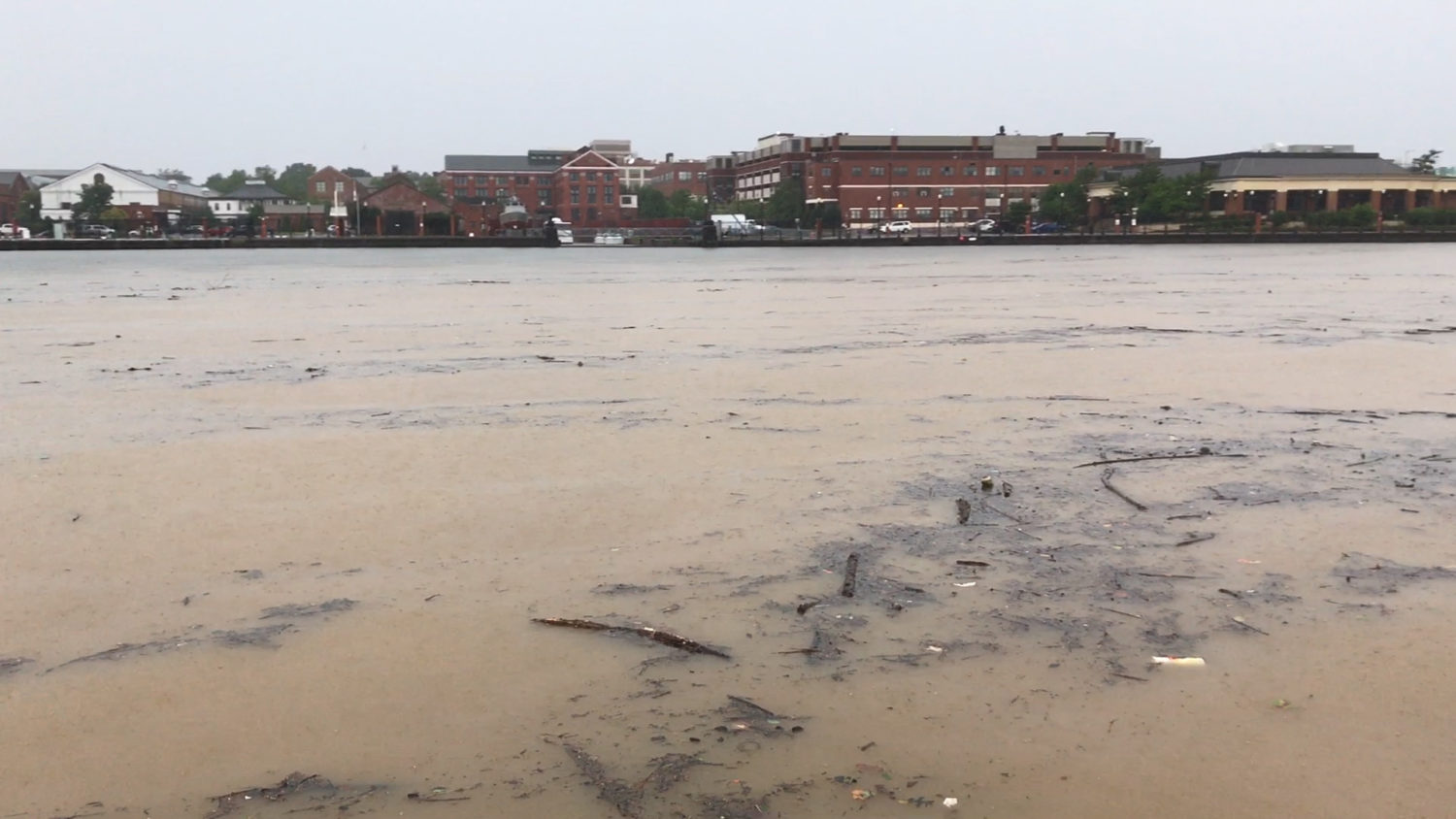
The health of the Chesapeake Bay declined in 2018, following a year of record rainfall that washed enormous amounts of pollution from city streets and rural farm fields into the bay and its tributaries. One wet year isn’t the only threat facing the bay, according to the latest State Of The Bay report from the Chesapeake Bay Foundation.
The report warns that climate change will make extreme weather like the region saw last year more common. Rollbacks of environmental regulations by the Trump administration could also slow or reverse recent progress, according to the foundation.
The report finds the bay “dangerously out of balance,” giving it a D+ grade, down from a C- in the last report, in 2016. Most health indicators dropped or remained the same. The three biggest slides were in nitrogen and phosphorus pollution and water clarity, each of which received an F. The higher nitrogen and phosphorus levels are a direct consequence of more rain washing all sorts of bad stuff into the watershed, from pet waste to fertilizer. The drop in water clarity can also be attributed to rainfall: heavy rain swept muddy water and debris into the bay, and the high nitrogen and phosphorus levels fed algal blooms throughout the summer, clouding the water.
The Chesapeake Bay is in the midst of a decades-long cleanup effort—the first cleanup agreement between the Environmental Protection Agency and the bay states was signed in 1983. Since then, the health of the bay has been gradually improving, thanks to many millions of dollars of investment from the federal government and the states.

The Chesapeake’s health has been slowly improving, despite a setback in 2018.Chesapeake Bay Foundation
“We are still optimistic about the bay’s recovery,” says Beth McGee, director of science and agriculture policy at the foundation. “If you look at some of the long-term studies that have been done on the bay, there are signs of a systemic recovery.”
One reason for optimism: underwater grasses—an important habitat for fish and crabs and an indicator of water quality—are thriving. In 2017, researchers reported 104,000 acres of underwater grasses, the highest ever recorded. Another reason for optimism: summer dead zones, with little or no oxygen, are starting to dissipate sooner.
The bay report card is scored on a scale of 100, but graded on a curve. The top score, 100, represents the Chesapeake that Captain John Smith saw in 1600—a bay teeming with life, surrounded by old-growth forests. This is a bay we will never see again. The more realistic goal of a “saved” bay would earn a score of 70.
According to the foundation, if the EPA and the Chesapeake watershed states fully implement their bay cleanup plans, it would result in a score of 40 by 2025, and achieve “saved” status by 2050. However, the states are falling behind meeting their goals, and the Trump administration has repeatedly attempted to eliminate federal funding for the cleanup.
This story originally appeared on WAMU.
