Rachel Kurzius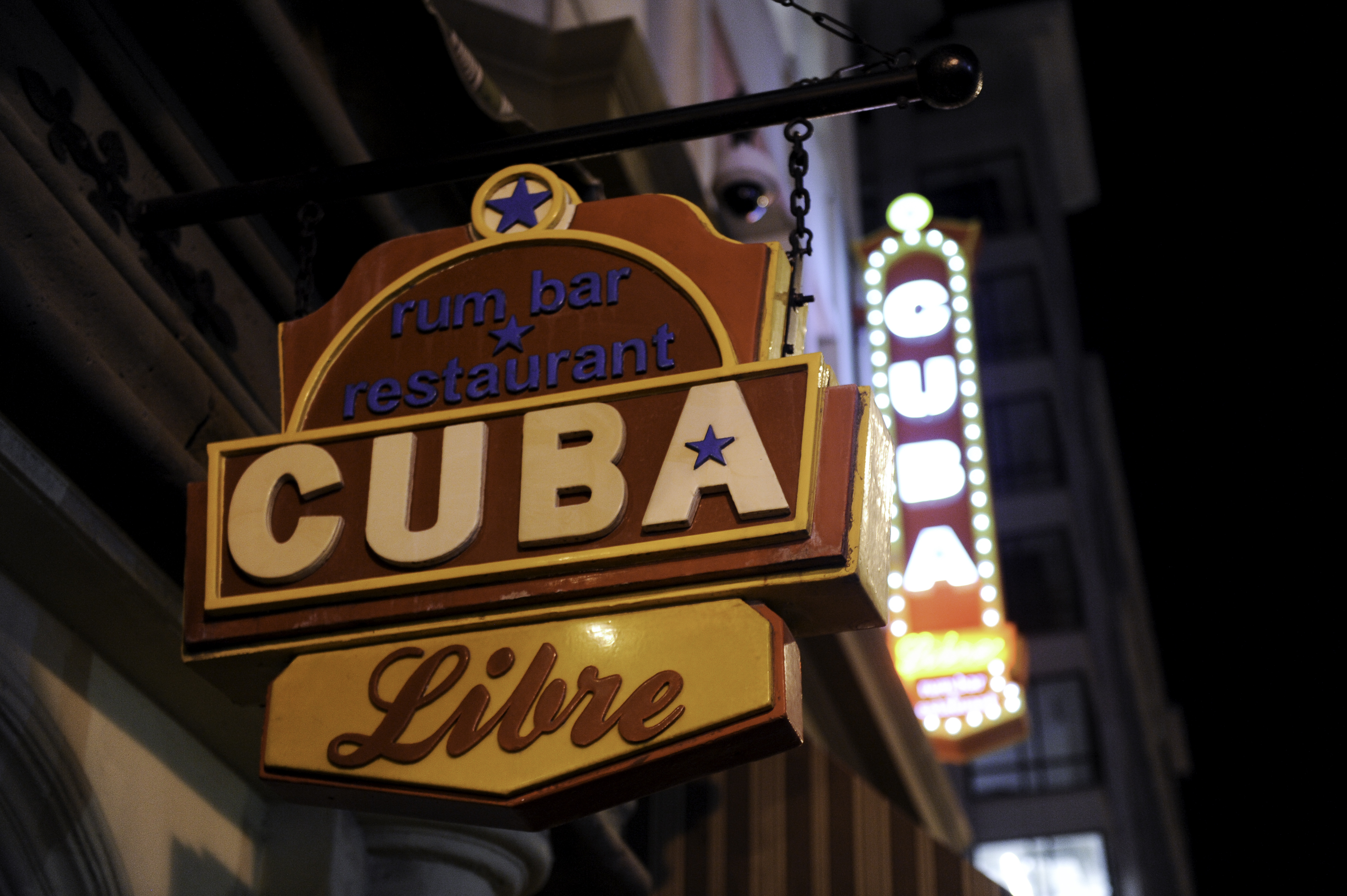
While attending a bachelorette party at a Gallery Place restaurant in June, a transgender woman reported being asked to provide her ID to use the bathroom—which is illegal in the District. Ultimately, she was kicked out of the establishment. Her social media account of the incident drew support from Chelsea Clinton, Mayor Muriel Bowser, and D.C. Attorney General Karl Racine, among others.
Turns out, Racine had more than a tweet on deck. His office announced on Wednesday a settlement with Cuba Libre Rum Bar and Restaurant, which requires the establishment to stop discriminating against transgender patrons, institute policies and employee training to ensure the place is compliant with the District’s anti-discrimination laws, and pay $7,000 to the city both as a penalty for violating the Human Rights Act and in legal costs. Cuba Libre must also post clear signage on its restrooms that say all individuals can use whichever restroom corresponds with their gender identity.
“I am quite grateful for the work of Attorney General Racine and his staff to ensure that discrimination has no place in D.C., and I am thankful that Cuba Libre and CEO Barry Gutin have worked in good faith since the fall to ensure this doesn’t happen again,” Charlotte Clymer, the woman at the center of the incident, tells DCist over email. “All parties worked together to make sure a terrible night was turned into a great teaching moment, which was built on the history of advocacy by trans folks in D.C., particularly trans women of color. I saw a resolution to this because of the foundation they laid.”
When the incident first occurred, Cuba Libre apologized over Twitter, saying the restaurant welcomed “guests of all gender identifications” and was “immediately re-training our entire staff to ensure this does not happen again.”
At the time, Clymer responded by expressing skepticism that a training would impact the manager in question. “His callousness and bigotry far exceeded a simple lack of understanding,” she wrote. “He was intentional in his discrimination. This person did not act in good faith.”
According to Racine’s office, Cuba Libre fired the employees involved the incident, and the restaurant has separately reached a settlement with Clymer.
Clymer says that she cannot say much about the terms of the settlement, though she deleted the original Twitter thread recounting the incident “as a measure of good faith” when Cuba Libra pledged to make improvements. “They have honored that,” she says. “They made specific commitments on their policies, made a sizable donation to Casa Ruby, committed to ongoing training (also through Casa Ruby), and agreed to a personal settlement with me.”
She adds that “the sad truth is that trans people throughout D.C., particularly trans people of color, have experiences like these and are afraid to come forward and report them. I am certainly not naive enough to believe that what happened to me at Cuba Libre will not happen again, but what I’m hoping is that D.C. businesses have taken notice from this and rechecked their policies to ensure they’re operating inclusive environments in accordance with D.C. law.”
Racine also introduced legislation at the D.C. Council on Wednesday that clarifies the D.C. attorney general can bring cases for violations of the Human Rights Act independent of the D.C. Office of Human Rights.