Who says Italy gets to have the monopoly on pizza? Behold the tlayuda (tlah-YOO-dah)—Mesoamerica’s answer to the mozzarella-laden classic. A beloved street food from Mexico’s mezcal-producing Oaxaca region, the tlayuda is still far easier to find in Los Angeles enclaves than in the District. But the search is worth it.
Tlayudas are a dietary staple for the Zapotec people of Oaxaca’s Central Valley, says chef Christian Irabién, who most recently was the brains behind Brookland’s Amparo Fondita pop-up. The word “tlayuda” itself, he explains, is a combination of the Nahuatl word for “threshed corn” and a Spanish suffix meaning “abundance.”
“Oaxaca is a place of fantasy existing in one of the most biodiverse regions of the world, so there are many variations to the tlayuda depending on what is around,” Irabién says. That’s become especially true as the dish has made its way throughout Mexico—toppings can include squash blossoms, seafood, or even chapulines (grasshoppers). But common tlayuda threads exist: a thin, crispy tortilla “crust”, a layer of beans, some kind of protein, a Mexican cheese with a mozzarella-like texture, and “a fresh, crunchy element” like lettuce, he adds.
Irabién collaborated with owners Bettina Stern and Suzanne Simon of Chaia to bring a vegetable-forward tlayuda to life. “We played around with our tortillas and some of the product we get from Tuscarora Organic Growers, a farmer co-op out of Lancaster [Pa.,] with some of the most beautiful vegetables near us, and came up with our version,” he says.
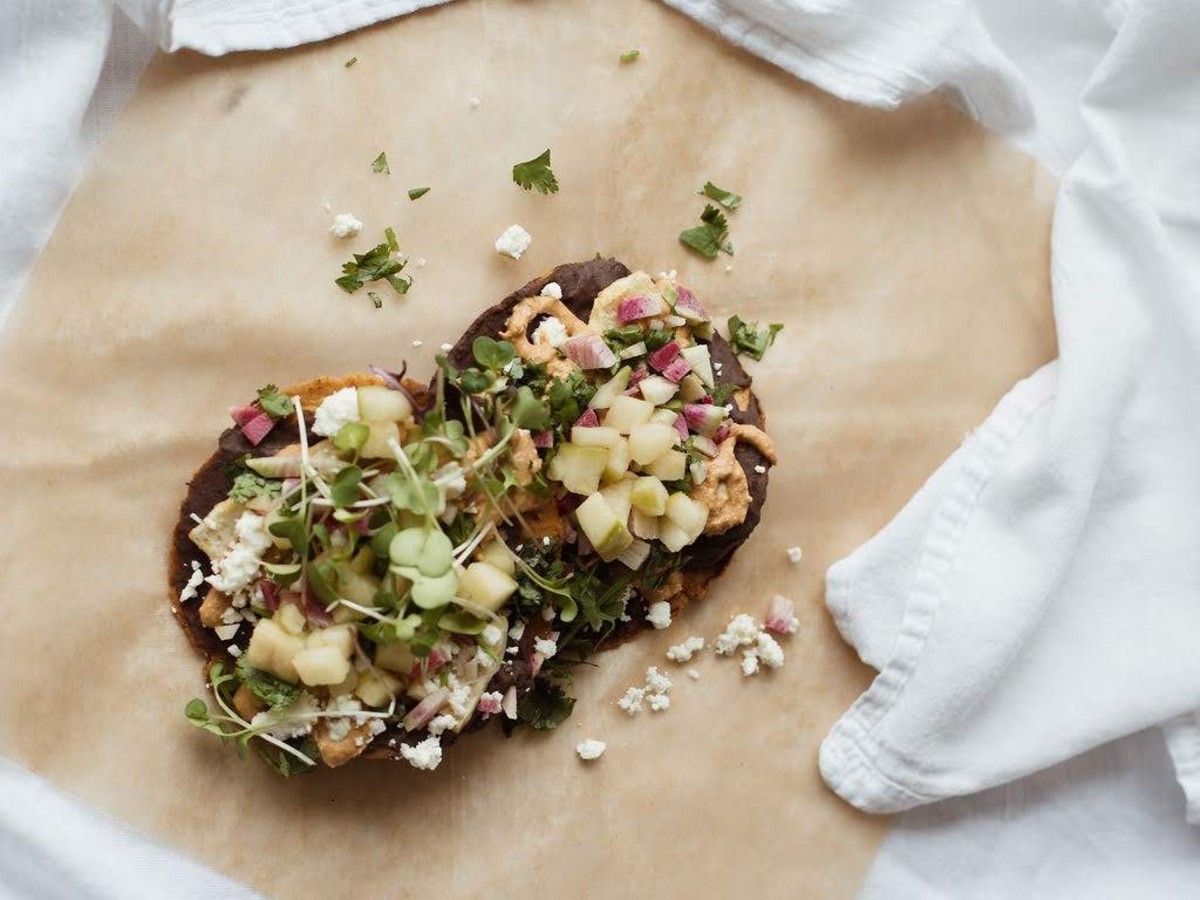
Available at both locations of Chaia—including the new restaurant at Mt. Vernon Triangle—the dish takes two house-made crisped tostadas and tops them with a cold weather bounty, including black beans, slightly tart feta, house-pickled apples, a pumpkin seed sauce called pipián, and roasted celery root ($10). A different seasonal version is in the works for the sunnier months. “We’re mindful about food waste,” and the tlayuda very much fits with that mission, says Simon. “We’re about eating more vegetables because they last on your shelf.”
The Espita Mezcaleria (1250 9th St. NW) team also plays with pickled ingredients in their tlayudas—both an array of pickled veggies and a fermented salsa made with fresno chili peppers. The restaurant’s pride for Oaxacan flavors is on display with their use of fresh quesillo, a string cheese from the region. Both their brunch tlayuda ($15) and dinner tlayuda ($22) contain the fermented goods and quesillo atop a large tortilla. The main difference is the meat: adobo pork shoulder and pork belly for brunch, and chorizo rojo for dinner. The dinner iteration also gets dressed with spiced royal trumpet mushrooms.
The National Museum of the American Indian’s Mitsitam Cafe (4th St. & Independence Ave. SW) offers a tlayuda as part of its Mesoamerica menu. According to a Facebook post from the restaurant, Mitsitam’s version is for meat fans who love choices: Asiento (unrefined pork lard) and either shredded chicken, beef tenderloin, or chorizo are on offer in the toppings department. (The museum is currently closed due to the government shutdown.)
Fans of a meaty, traditional tlayuda can also mosey to OMG (Oh My Guac) Latin Flavors, a catering business and kiosk at Brookland’s Tastemakers food hall (2800 10th St. NE). Chef/owner Pedro Aleman serves a made-to-order 8-inch version ($11). Slathered with pasilla de Oaxaca refried black beans, the corn dough crust has pico de gallo, pickled grilled peppers, jalapeños, chile de arbor sauce, queso fresco, crema, and guacamole. Patrons can choose between chicken tinga, shredded cochinita de pibil pork, or a spinach/kale combo topping. “The rules for topping a tlayuda are not strict,” Aleman says. “So be creative and add your favorite toppings to make your own!”
This post has been updated to reflect that the tlayuda is available at both Chaia locations.