 Mikaela Lefrak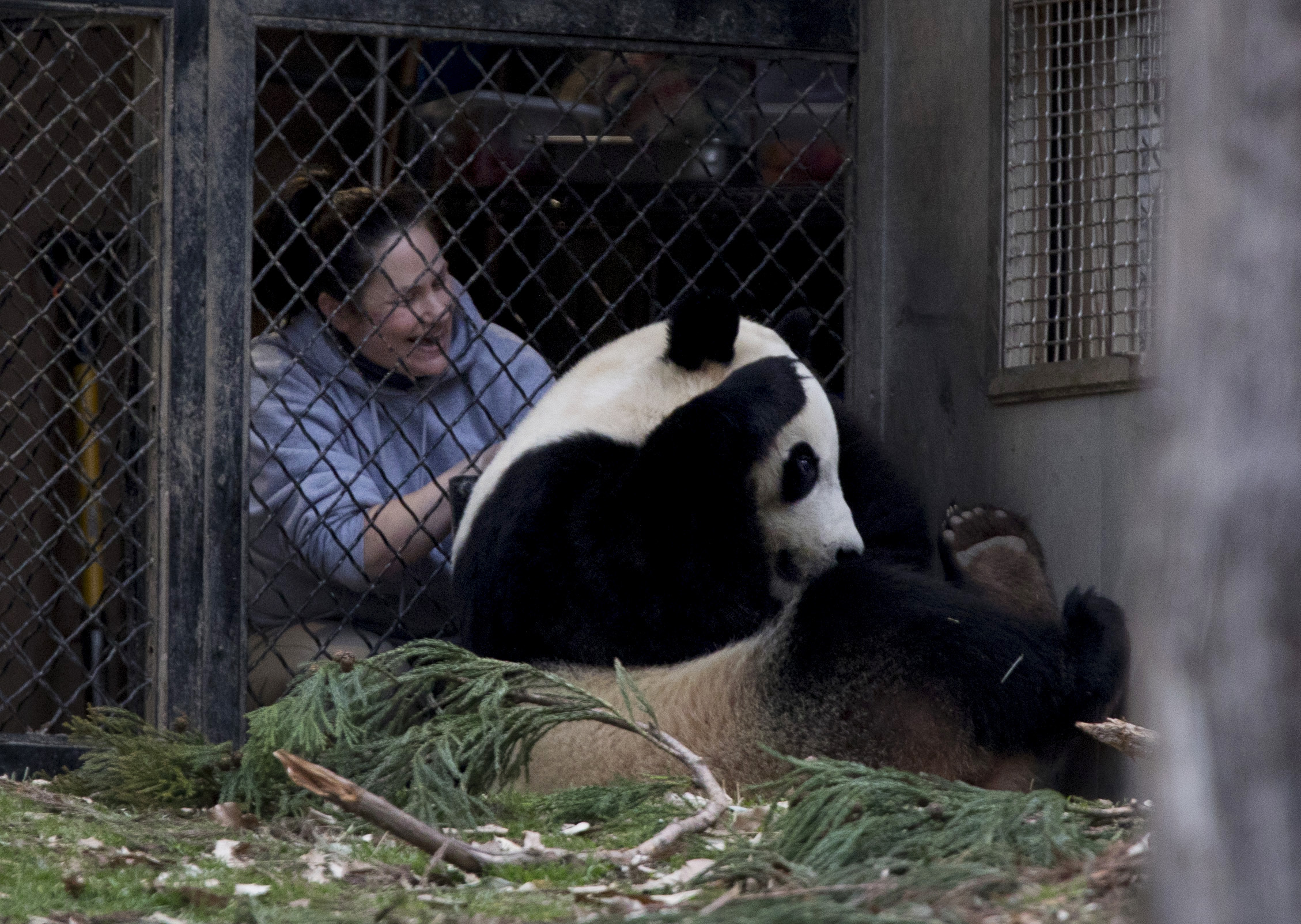
At 8 a.m. Tuesday, the National Zoo’s Connecticut Avenue gates clanged open for the first time in nearly a month.
“Thank you for everything you’ve done!” said the first entrant, Helen Gonzalez, to zoo staff as she bustled in, camera hanging around her neck. The self-described “panda addict” nearly broke into a trot as she aimed herself towards the Panda House. Gonzalez typically visits a couple of times a week, but she wasn’t able to during the shutdown.
Nineteen Smithsonian museums and the National Zoo used reserve funds to stay open for the first 11 days of the partial federal government shutdown. But on Jan. 2, they closed their doors and sent much of their staff home.
Of the zoo’s 350 federal employees, about 190 were allowed to keep working in order to feed and care for the animals. They did not receive paychecks.
“These people would walk on their hands and knees to come to work to take care of their animals,” said Steven Monfort, the zoo’s director, at Tuesday’s reopening. “But we also have contractors that depend on work here, and many of those people aren’t going to be made whole at the end of this. Our staff deserves better.”
Each day of the closure prevented 45,000 visitors from coming to the Smithsonian’s museums and learning centers, according to a USA Today opinion piece by Smithsonian Institution secretary David J. Skorton. About 4,000 Smithsonian employees were furloughed, and the institution lost $1 million in revenue from the closure of museum shops, restaurants, IMAX theaters, and other operations.
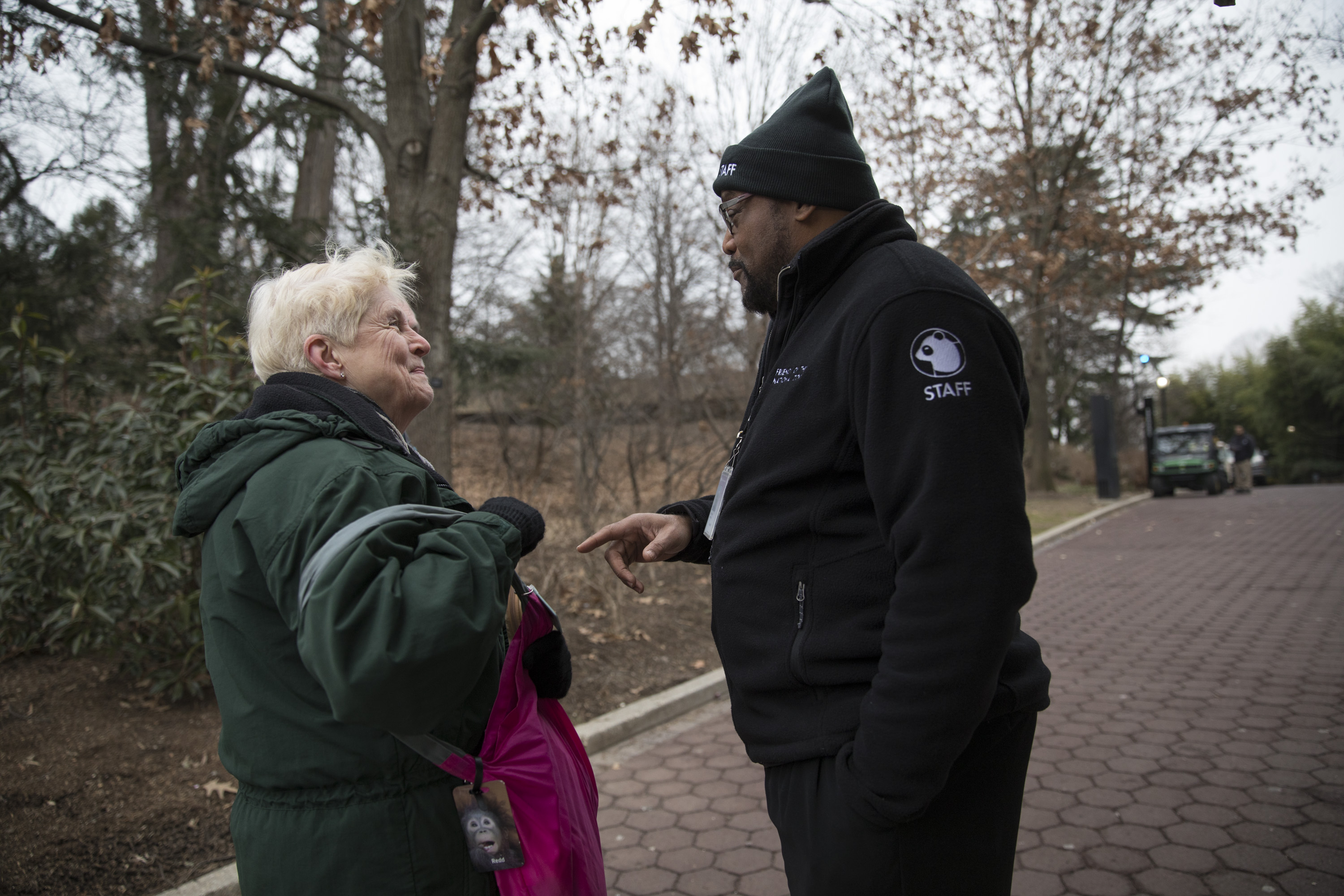
Rafford Seymour, who works in guest services, greeted visitors as they walked onto the zoo grounds Tuesday.Tyrone Turner / WAMU
The zoo animals carried on with their lives despite their lack of visitors.
The mid-January snowstorm created a chilly playground for the snow-loving giant pandas. Thousands of people typically tune into the zoo’s Panda Cam to watch the animals play in the snow, but all of the live animal cameras were disabled during the shutdown (they’re back on now, too).
The orangutans and western lowland gorillas reportedly noticed the lack of visitors.
“Part of my job became walking through the [Great Ape House], just to provide some entertainment for the animals,” said Brandi Smith, the zoo’s director of animal care. She said the Asian elephants also seemed more curious about staff and researchers than they normally would be.
There were also a number of births: Three North American river otter pups were born on Jan. 21, and a lesser kudu (a type of antelope) was born on Jan. 12. A brown kiwi chick hatched at the Smithsonian Conservation Biology Institute in Front Royal, Virginia on Jan. 9.
Smithsonian museum staff are also spending this week taking stock of what visitors missed during the shutdown.
The Hirshhorn Museum’s three-month-long Charline Von Heyl exhibition, “Snake Eyes,” was scheduled to close this past Sunday. Employees are reaching out to lenders to see if they can keep the works longer and extend the exhibition, according to Hirshhorn director Melissa Chiu.
Several upcoming exhibitions at other Smithsonian have been delayed: “Striking Iron: The Art of African Blacksmiths” at the National Museum of African Art, “Votes for Women: A Portrait of Persistence” at the National Portrait Gallery and the orchid show in the Kogod Courtyard of the Portrait Gallery and Smithsonian American Art Museum. Employees were unable to prepare galleries, hang artwork or communicate with lenders for most of January.
The irony of the shutdown runs close to the surface at the Anacostia Community Museum. Its interim director, Lisa Sasaki, pointed out that no visitors were able to see its exhibition “A Right To The City” about inequality, development and community activism during the shutdown.
“The exhibition points out how much D.C.’s economy and the way it has developed is wrapped up with the federal government,” Sasaki said. “Changes on a federal level impact the city itself.”
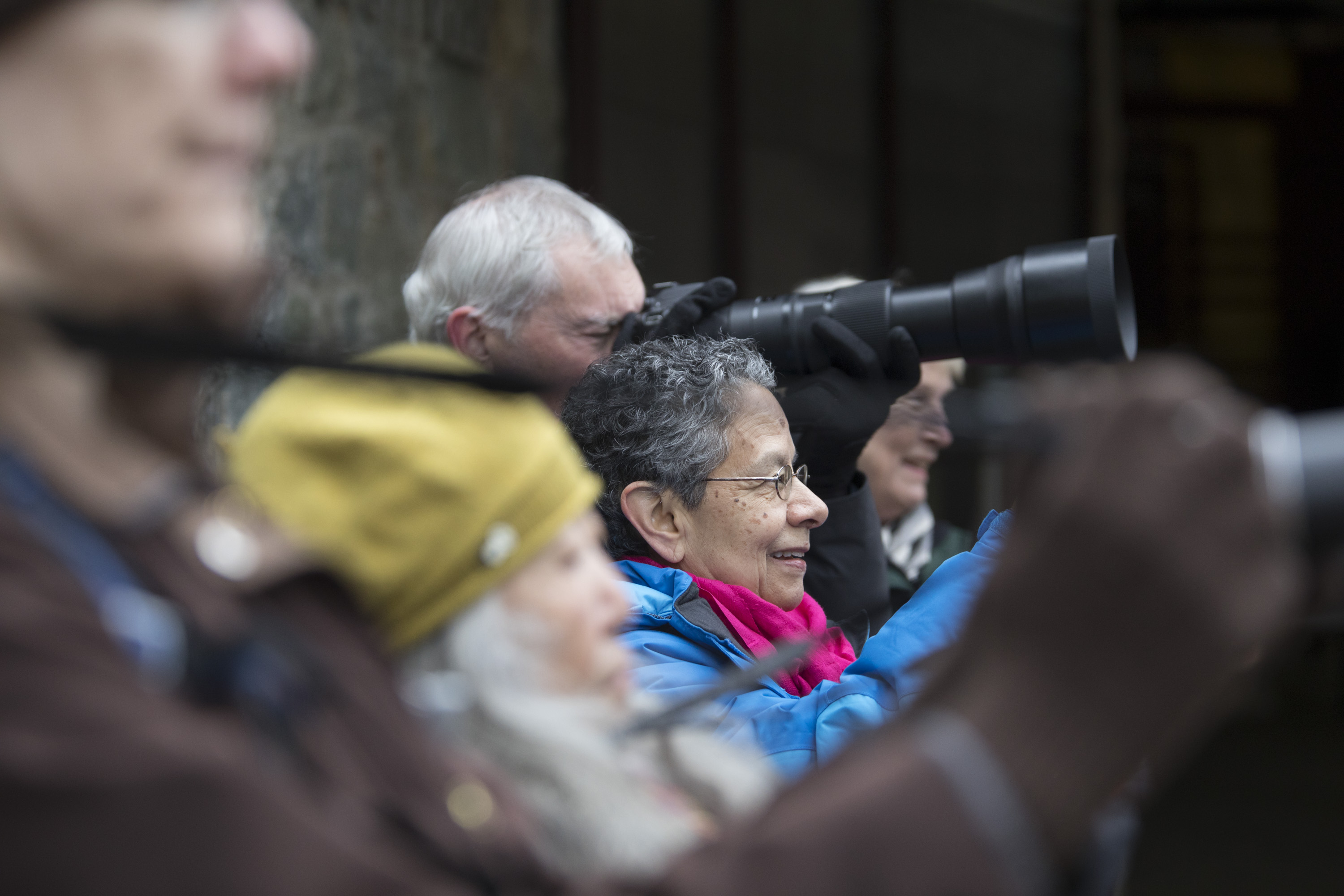
Helen Gonzales, in a pink scarf, and other regular zoo-goers flocked to the giant panda exhibit to get their Bei Bei photos, something they hadn’t been able to do since the zoo closed because of the federal shutdown.Tyrone Turner / WAMU
Within 20 minutes of the zoo reopening its gates, about a half-dozen women had made their way to the Panda House. Most had cameras and snapped pictures of the animals, which enjoy both mornings and brisk weather. Others, like Joyce Carter, simply stood and watched.
“They’re far better than us ethically, I think,” she said. “I think we can learn a lot from them about how to treat one another.” Carter lives three blocks away from the zoo and checks in with the Panda Cam first thing each morning. She tries to visit as much as possible.
Nearby, Charlene Johnson pushed her long gray hair out of her eyes as she took photos. She said the shutdown disrupted her normal routine: Leave her house in Arlington at 7 a.m. to beat the traffic, and be at the Panda House by 8 a.m.
“I had all this time on my hands. That was hard,” she said. “But I survived.”
During the shutdown, she took a trip to Atlanta to visit the twin pandas at its zoo. She also makes regular pilgrimages to the panda research center in Chengdu, China, to visit former National Zoo resident Bao Bao and the other pandas that live there.
But for all her love for the pandas, Johnson said she never worried about their wellbeing during the shutdown. Rather, she fretted about how the furloughed staff and contractors were getting by.
“The parking folks, the greeters, the store people. We see them whenever we’re here, so we get to know them pretty well,” she said. “It’s the little guys that got affected.”
This story originally appeared on WAMU.