Natalie Delgadillo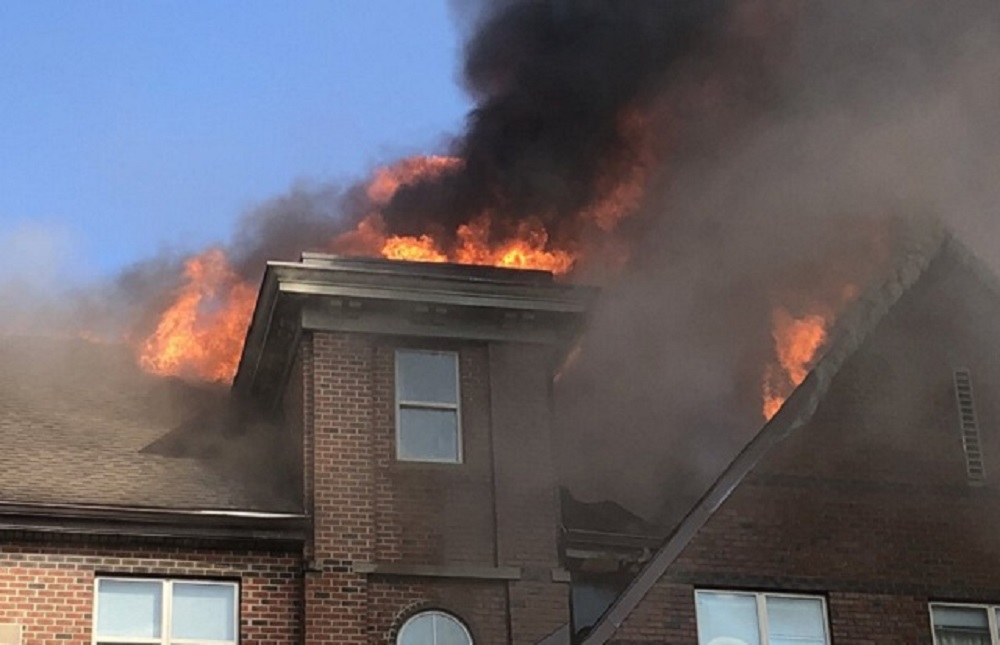
It’s been more than four months since a huge fire in the attic destroyed the Arthur Capper Senior Center in Southeast, and we still don’t know for sure what caused it. But federal investigators with the Bureau of Alcohol, Tobacco, Firearms, and Explosives are clear on this point: D.C. Fire officials were too cautious about letting search crews and other agents into the senior public housing community after the blaze, unknowingly keeping a 74-year-old man trapped in a water-logged, damaged apartment for five days.
“Although investigators were told that all residents of the building had been accounted for by the building’s management, investigators remained concerned about the potential of some residents or occupants being inside the building,” according to a report from ATF on the Arthur Capper fire, written after months of investigation. On September 21, two days after the fire broke out, members of the D.C. Arson Task Force—comprised of D.C. Fire officials, D.C. police, and ATF agents—assembled a team of cadaver dogs and search-and-rescue dogs to make rounds in the building. D.C. Fire Chief Gregory Dean declined to allow the agents to search the building, fearing that it wasn’t structurally sound.
On September 24, a full three days later, an engineering company retained by the building’s owner (which had entered the premises to assess its structural stability and safety for crews to enter) found 74-year-old Raymond Holton trapped in his apartment. The door was swollen shut, and he was surviving off of water bottles he had in the apartment. He was carried out of his apartment on the chair he had been sitting in and transported to a hospital without major injuries.
“It should also be noted, that despite investigators being denied access into the building, the investigators observed the owner of the building being allowed access on multiple occasions during the first six days following the fire event,” the ATF report reads in a (rather salty) aside.
D.C. Fire, for its part, says that the chief was making decisions based on the information available to him at the time. “On the night of the fire, with apartment management there, we were assured [management] had touched, spoken to, or seen everyone that lived or worked in the building and were therefore given assurances that everyone was accounted for and safe,” says Douglas Buchanan, a public information officer for D.C. Fire and EMS. “Which made Chief Dean’s decision mostly easy in terms of not allowing his members or our dogs into the building because it was unsafe, with the condition of much of the building being unsecured or at least undetermined.”
Buchanan says he knows that some agents, “rightfully or wrongfully,” got upset that they weren’t allowed into the building even as engineers contracted by the building owner were going in and out of the building days after the fire. But he says that the fire chief continues to stand by his decision not to allow agents into the building when the extent of the damage still wasn’t known. “The question we could be having posed to us now is, ‘Why did one of your members lose his life going into the building when you didn’t know whether it was safe to enter?'” Buchanan says.
He also says that, had the management company, Edgewood Management, not assured D.C. Fire that all residents and employees of the building were accounted for, the calculus in deciding whether firefighters should go inside would have been very different. (Edgewood is reportedly conducting an investigation to find out why management told the city all residents were accounted for, when in fact no one from the company had been in touch with Holton). “Even the night of [the fire], if we had heard, ‘we have yet to contact Joe Schmoe in Apartment B’, decisions would have been made a lot differently,” Buchanan says.
There was another drawback to the delay in allowing investigators on site, according to the ATF report. By the time they were able to inspect the fire alarm panel, it had lost power, and all the data stored inside was gone. One of the most pressing questions after the fire was why the fire alarms never went off. According to several seniors on the scene, no one ever heard a fire alarm, even when a maintenance worker who saw the blaze manually pulled alarm switches.
A photo of the fire alarm panel on September 19 showed that a light labeled “disable” was illuminated. Chief Dean decided that day to leave the alarm panel in place so it could be examined by insurance investigators. Several days later, the panel had lost power. “I don’t know that we will ever know the answer” to why the alarms didn’t go off, Buchanan says. “While we wish we would have gotten to that fire alarm, it’s unclear what information it would have provided to us,” he says.
After months of investigation, ATF agents could not really pinpoint the cause of the fire—they never found an initial ignition source, so the official cause of the fire is classified as undetermined. But the agents have some solid theories. They believe, for example, that the fire was caused by human activity in a small attic space directly above apartment 431 (but, to be clear, not accessible from the apartment). Several residents of the building told investigators that they would hear people walking around in the attic space during odd hours, when maintenance workers (who had keys to the space) would not have been on the property. It was discovered, also, that some doors to get into the attic could be easily jimmied open with a flat-head screwdriver. One resident said she often heard people in that space, and smelled marijuana or other narcotics coming through the air vents from the space above.
There are several pieces of circumstantial evidence to support the hypothesis that a person started the fire, but here’s the clincher: investigators found a garden hose, which maintenance workers used to clean the air conditioning units on the roof, that had been pulled as close to the area where the fire started as it would reach. This is “clear evidence that there was some attempt by an unknown individual to fight the fire in its early stages,” the report reads.
As for the nearly 200 seniors who were displaced by the fire: all but a few are finally secured in new housing, according to the office of Ward 6 Councilmember Charles Allen. He has been involved in helping residents who lived in the building, which is in his ward, since the day of the fire.
Allen has been publicly flabbergasted by the fact that a resident was left inside the building for five days after the fire. “It’s completely unacceptable and inexcusable,” he said at the time. His staff says he has reviewed the ATF report.
Allen “is grateful for the report, which is thorough. It raises more questions that need to be answered and will be included Councilmember Allen’s public oversight hearing for Fire and EMS coming up on Monday, February 11,” Erik Salmi, his spokesperson, tells DCist via email.