Natalie Delgadillo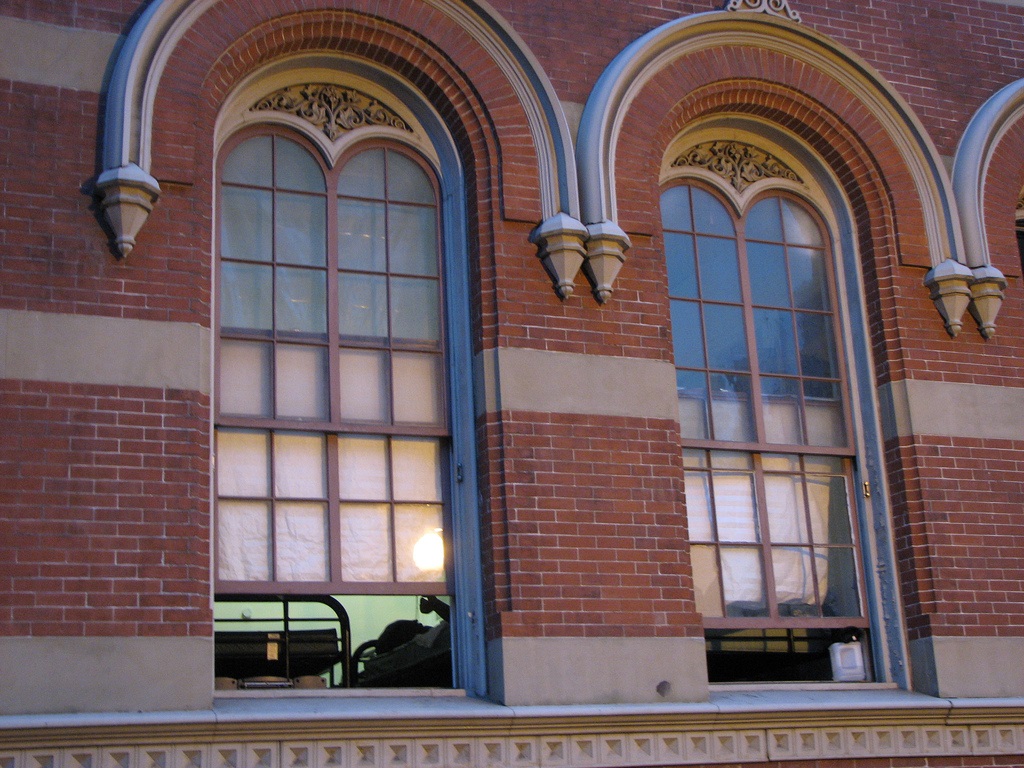
After an oversight hearing earlier this month where more or less nothing was learned, the D.C. Council on Wednesday had another meeting trying to ascertain how and why developers of a new museum destroyed so much historically protected material inside the Franklin School on K Street NW.
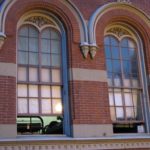
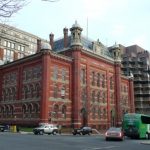
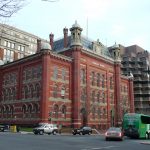
The Franklin School is one of D.C.’s oldest buildings, erected in 1869 as the city’s first high school. Alexander Graham Bell transmitted his first message by photophone from the rooftop of the Franklin School in 1880. Both the outer facade and substantial portions of the interior are historically protected, meaning developers have to jump through numerous bureaucratic hoops to get approval to alter or remove anything (only 18 other structures in the whole city reach this high level of protection). The Franklin School is also a National Historic Landmark.
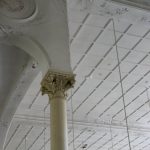
The school has been used for numerous purposes over the years, most recently as a homeless shelter. But in 2017, the city tapped philanthropist Ann Friedman to turn the school into an interactive language arts museum called Planet Word. It’s her development team that destroyed historically protected material in the school, reportedly commencing with work that hadn’t been cleared with the project architect. The team also violated permits they had been granted for environmental abatement, which allowed only for things like removing mold and asbestos. Crews removed and destroyed nearly all the wood wainscoting (or panelling) in the building, tin ceilings, and other finishes.
Earlier this month, a Council oversight hearing proved unsatisfactory for answering several questions, perhaps most pressingly: Why didn’t the city step in sooner after it learned about the permit violation? City officials received an email about the destruction of historic materials on August 22, 2018, according to Wednesday’s testimony from acting chief buildings official at the Department of Consumer and Regulatory Affairs, Garret Whitescarver. Officials didn’t inspect the building until August 30, and didn’t issue the stop work order until the day after that (the Washington Post previously reported that the order was issued on September 4, but Whitescarver said Wednesday that it happened on August 31).
“Why didn’t DCRA [issue the order] sooner?” Mendelson asked multiple times at the earlier hearing. No one from DCRA was present at the previous meeting to answer that question, so Mendelson recessed the hearing and rescheduled it for Wednesday, asking that a DCRA official be present.
Whitescarver said this delay was the result of a decision by the head of DCRA at the time, Melinda Bolling. The director wanted DCRA to conduct an inspection in conjunction with the Historical Preservation Office, so she made the decision to wait on an inspection until both agencies could do it at once.
“You get my concern here. When there’s illegal activity … DCRA should go there immediately and issue a stop work order immediately, if warranted,” Mendelson said in response.
Whitescarver said that DCRA usually responds to allegations of illegal construction much more quickly, but “the wrinkle in this was trying to do it as a combined activity” with the Historical Preservation Office.
“I can see the efficiency of a joint inspection but it meant the delay of another week,” Mendelson said.
Whitescarver also tried to allay Mendelson’s concerns with the announcement of new procedures in DCRA that will make illegal construction inspections a more regular part of the agency’s day-to-day work, folding them into the larger general construction inspection team’s workload.
“That sounds promising,” Mendelson said. Still, the councilmember seemed circumspect about some of Whitescarver’s claims of DCRA’s efficiency in responding to requests for inspection. He warned Whitescarver that he would be asking for hard data about the agency’s practices at a general oversight hearing later this month. He also acknowledged that the Historical Preservation Office also could have issued a stop work order sooner, or done the inspection sooner.
The work on Planet Word resumed on December 27, according to Whitescarver. It’s expected to open up late this year. The city and the developer reached an agreement requiring that Friedman restore parts of what was lost, including some finishes across the building. Prior to the damage, the city and the developer had already agreed that she would recreate three historic rooms.
On Planet Word’s blog, a post written by developer Ann Friedman says that “work continues apace to restore and rehabilitate the magnificent spaces of the Franklin School.” There is no mention of the rebuilding or restoration necessary after historical material was destroyed.
“Right now, the ornate cast-iron handrails, marble-tiled stairways and landings, and other beautiful, historic features of the building are being cleaned and restored. The building contractor, Whiting-Turner, is also preparing to stabilize and replicate the peeling frescoes in the Great Hall and recreate a classroom as it existed in 1869, when the school opened,” the blog reads.
Friedman has previously acknowledged that her employees made a mistake when they started work on the Franklin School.
“As the developer, it is my responsibility to ensure that the work we are doing to rehabilitate and preserve the Franklin School is conducted with appropriate care and within the boundaries established by our building permits. I sincerely regret that unpermitted work occurred and am committed to ensuring that these mistakes aren’t repeated,” Friedman wrote to DCist in an emailed statement in January.
This story has been updated to clarify details about the agreement between Friedman and the city to restore parts of the Franklin School.