Jacob Fenston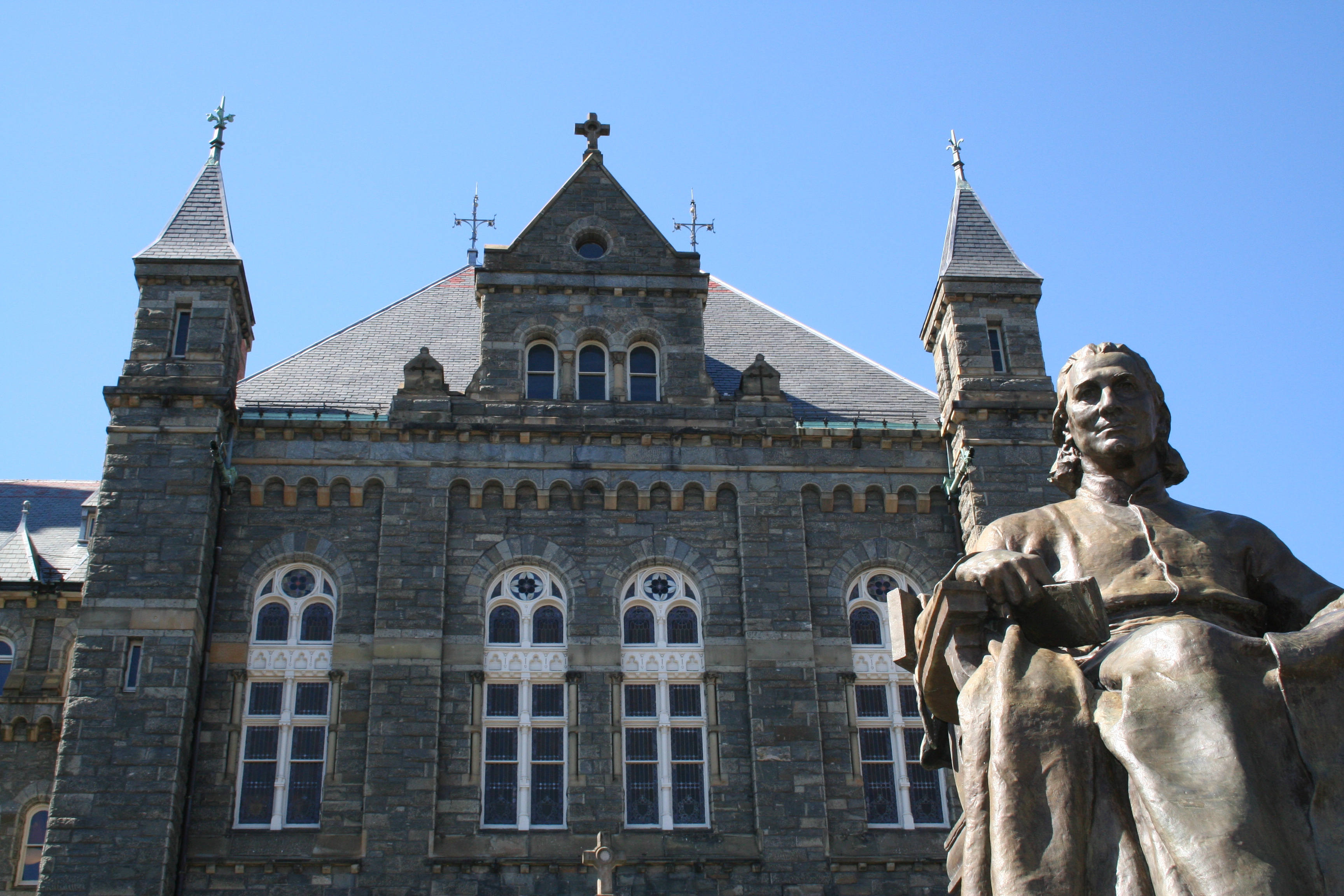
Georgetown University has a bold plan for cutting greenhouse gas emissions: by later this year, it will get nearly half its electricity from solar power. However, building the new solar farm in Charles County, Maryland to power the university will require clear cutting 210 acres of forested land.
“I’m very much in favor of solar, but the solar needs to be properly sited,” says Bonnie Bick, a self-described forest activist, and the political chair of the Southern Maryland Sierra Club. She wants Georgetown to reconsider the solar project, and find a location that wouldn’t involve removing hundreds of trees.
The site in question is in Nanjemoy, Maryland, on a peninsula that juts into the Potomac River. The area is covered with forests and dotted with a few active farms.
Georgetown officials defend the project.
“The proposed offsite solar project would reduce greenhouse emissions equivalent to planting more than 429,000 trees, which is the amount of carbon sequestered by approximately 30,000 acres of forest,” said a university spokesperson in a statement, declining an interview.
Georgetown is contracting with the solar company Origis Energy for the project. Origis will build the solar farm and sell the energy to the university under a long-term power purchase agreement.
Edwin Moses, who is overseeing the project for Origis, says the math is clear, in terms of carbon emissions and climate change. The solar project will produce 32 megawatts of energy, roughly equal to the electricity needed to power 4,400 homes. That clean energy will displace electricity produced by burning fossil fuels.
“Origis is extremely confident the tradeoff is a good one,” says Moses.
In D.C. and Maryland, 18 percent of electricity comes from coal, 38 percent comes from natural gas, and most of the rest comes from nuclear, according to the Environmental Protection Agency. Renewables account for less than 5 percent of the region’s energy mix.
But Bonnie Bick says the project creates a false choice between clean energy and trees.
“The question is not forest or solar, it’s where is the proper place to install solar?” Bick says.
She suggests that Origis and Georgetown could find a better location, one that isn’t covered with forest. Forests, after all, have value beyond just sequestering carbon—they’re also valuable habitat for birds and other wildlife.
The Nanjemoy Peninsula is designated an “important bird area” by the Audubon Society because it contains “a large block of contiguous forest.” The peninsula is 81 percent forest, 11 percent agricultural land, and 4 percent wetland. It is home to a “highly diverse assemblage” of birds that need large, connected forests to successfully breed, according to the Audubon Society.
“We maximize our benefit with solar when it is placed on a property of low value, such as a capped landfill,” says Bick. Another suggestion: couldn’t Georgetown put panels all over its campus?
Edwin Moses says that smaller, scattered solar installations are much more expensive. He says the site in Charles County is a good one. The land in question is zoned for agriculture, and has been periodically logged in past years. “The land is already subject to timbering,” says Moses.
The Maryland Public Service Commission has already approved the solar project. The Maryland Department of Environment scheduled a hearing for Feb. 27 in Charles County, after local activists raised concerns.
This story was originally published on WAMU.