Rachel Kurzius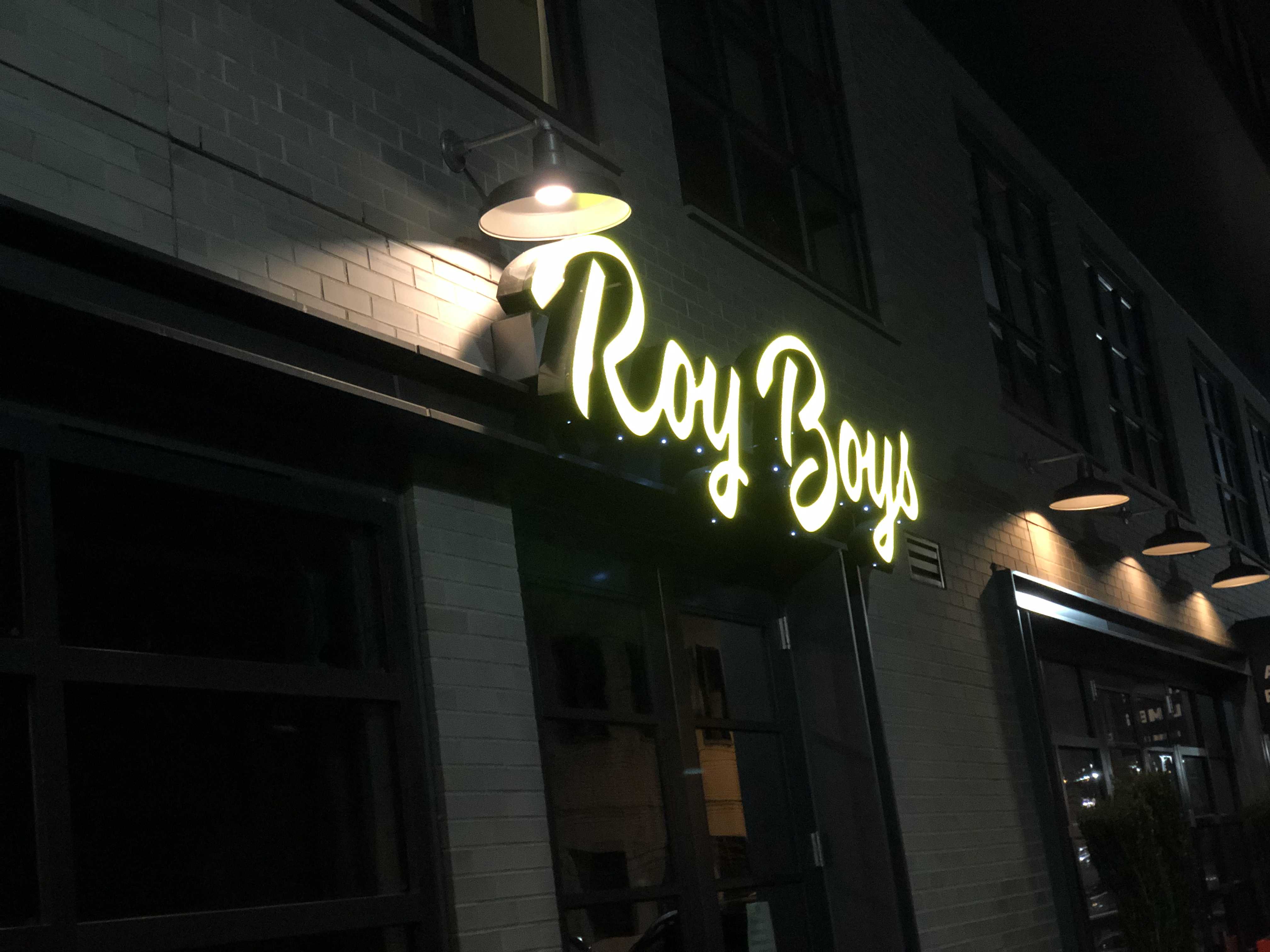
After facing a backlash, a forthcoming hip hop-themed fried chicken and oyster restaurant in Shaw will take down a series of murals that depict famous rappers as chickens.
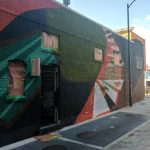
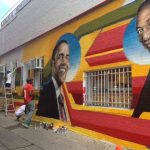
The co-owner of Roy Boys says the opening, initially scheduled for next week, will likely be delayed to remove and replace the artwork, which includes a mural of the iconic VIBE magazine cover of Death Row rappers with chicken beaks and another showing Notorious BIG as a rooster.
“My intent is not to upset anyone by anything I do,” says Marlon Marshall, a majority partner of Roy Boys alongside Scott Parker, who also owns Arlington establishments like Don Tito and G.O.A.T Sports Bar. Twenty-eight-year-old Marshall is black, whereas Parker and the local artist behind the mural, Chris Lynch, are white. “There was no malintent when we designed the artwork—it was to pay homage to hip hop culture and tie in our menu concept. We commissioned the artwork, going back and forth, asking what’s going to work? What looks good? What would be unique?”
As WUSA 9 first reported, though, the murals drew controversy. Rahman “Rock” Harper, an activist and chef, characterized the artwork as part of “a long history of negative images being used to demean and minimize black folks as it relates to fried chicken” in a podcast he recorded about the art. He called it “the latest offender in a long line of restaurants that are hell bent on cultural appropriation as a way to introduce themselves to the neighborhood.”
Roy Boys is located in the former home of Tasty Burger in the Atlantic Plumbing development, blocks from Howard University. The restaurant will sling food like fried chicken, bivalves, and ice cream tacos from dinner until 5 a.m. to take advantage of its location in a heavy nightlife neighborhood. But right now, no one is talking about the food.
Harper says during his podcast that the artwork “just doesn’t sit right to me … These four black men in a fried chicken restaurant have been made to look like the animal that is being slaughtered and deep fried.” He noted that the term “chickenhead” is used often in rap songs. “Do you know what a chickenhead is? Google that,” he said. “If you’re a fan of hip hop, why would you make Biggie Smalls into a chickenhead?”
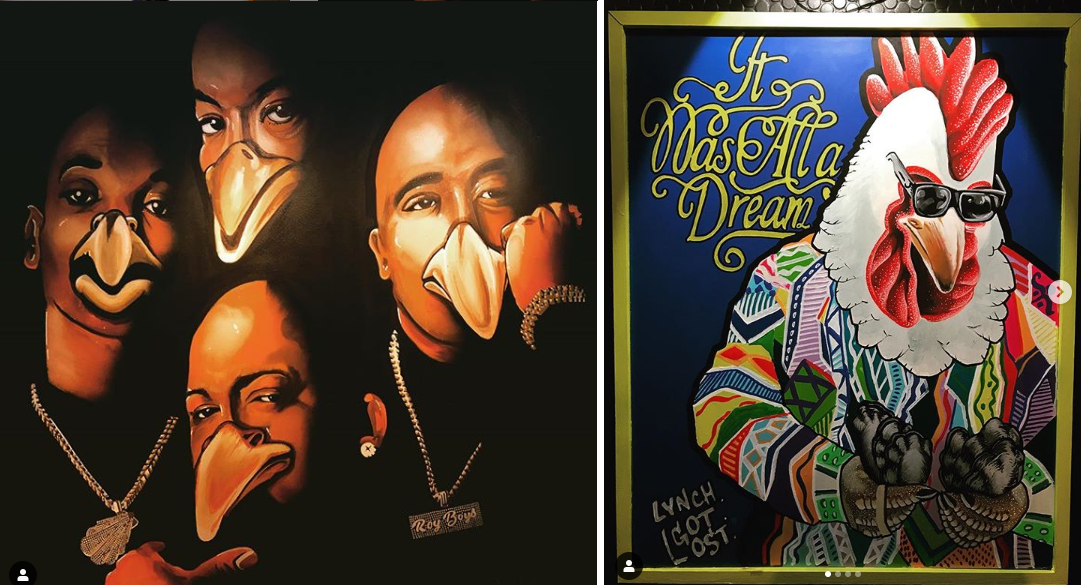
Lynch, the artist, is a native of Northern Virginia who describes himself as “a big hip hop head” (he says he has a version of the original Biggie photo as a poster in his bedroom). After facing criticism for the paintings this past week, he says he was “very surprised it was interpreted that way because after composing it, I got a huge wave of love … It was the first time I started having people who don’t even know me complimenting my work. That lasted two weeks and then I started getting the backlash.”
Indeed, comments on his Instagram posts switched from the likes of “Love it very cool brother” to “So disrespectful…” Lynch says he was inspired by his love for imagery ranging from Egyptian myth, which often depicts humans in animal form, to comic books and 1980s animation.
“I’m limited to my own perception—I think the artwork is great and I don’t have a problem with it,” Lynch says. “But mistakes happen, you’ve gotta learn from everyone around you. There’s a lot of humans on the planet. I’m not the sun, and I’m more than welcome to listen to everybody and communicate with everybody.”
Marshall says that he thought the concept was “a great idea and a very unique one … I definitely can understand where some people draw offense, but I have a large community of people who liked it.” As a business owner, though, “I’m not in the business of doing anything outlandish or controversial. I want to have my staff working somewhere they feel comfortable. I want my investors to feel comfortable.”
That’s why Roy Boys is taking down the artwork, even if it delays the grand opening. “For better or worse, people are expecting some kinds of art themes. We’ll have to figure out what that art work will be. It’s not an overnight fix.” Marshall says he’s been talking to Lynch as well as other local artists about what will replace the murals.
Lynch says he respects Roy Boys’ decision to take them down. “I have no animosity there. It’s their house. They have every right to make that call,” he says.
In his podcast, Harper says that establishments screw up, and it’s on them to listen when communities call them out. “Do businesses and restaurants get it right all the time? No, and that’s all gravy,” Harper said. “But I feel like if you make a mistake, if you do something that’s out of order, you need to be checked on that.”