 Rachel Sadon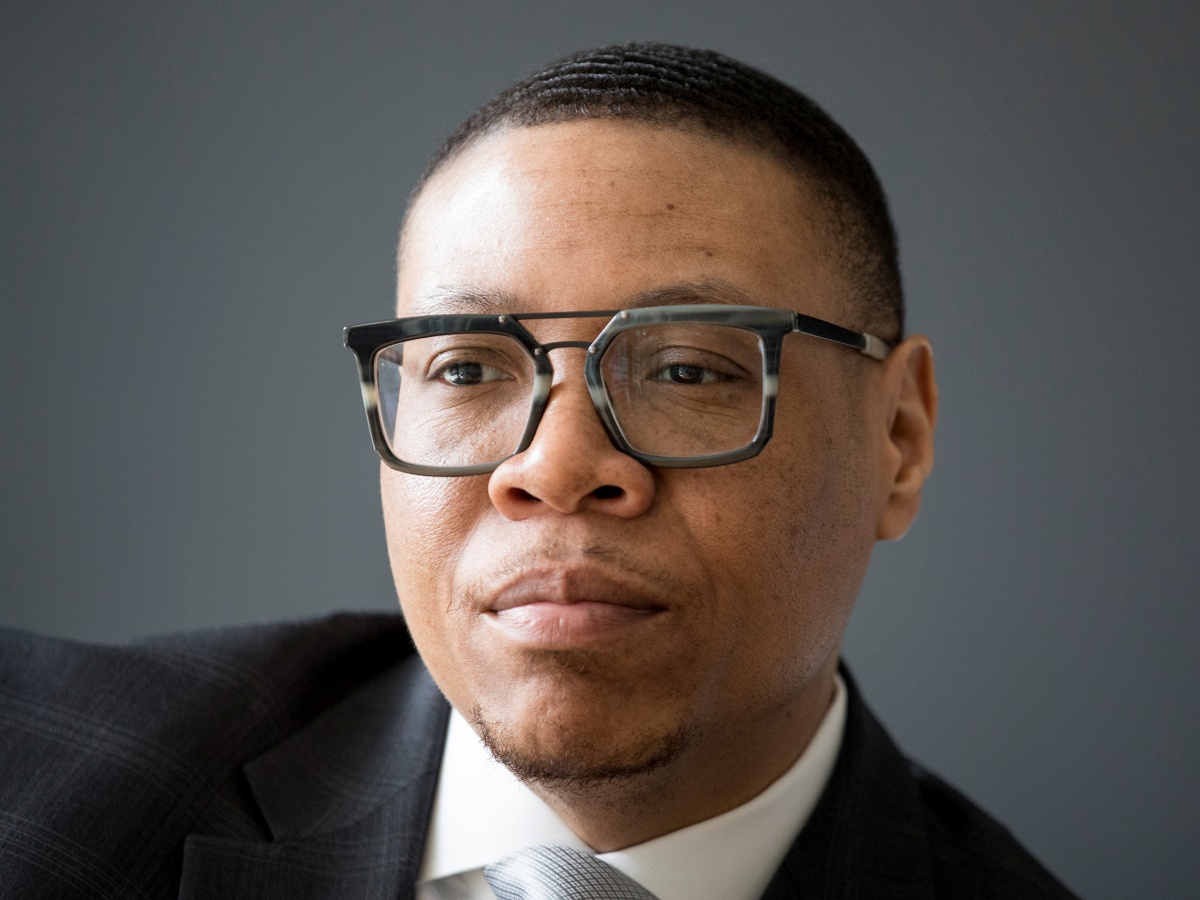
It’s been a tumultuous few years for public education in the District, with back-to-back-to-back scandals over preferential treatment for the children of some of the city’s top leaders (twice) and inflated graduation rates.
Mayor Muriel Bowser’s pick to replace D.C. schools chancellor Antwan Wilson (who resigned last February along with the deputy mayor of education after violating city policy to transfer his daughter’s school) is former Indianapolis Superintendent Lewis Ferebee.
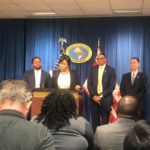
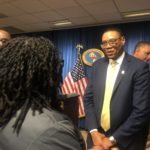
Ferebee says that what he’s learned from three weeks as acting chancellor—in which he’s been visiting schools, attending public forums, and meeting with the teachers union—is that all of the upheaval has left the community seeking transparency and stability.
“There seems to be a widespread concern about continuity in the DCPS community,” he said on the Kojo Nnamdi Show on Wednesday, following a marathon hearing at the D.C. Council on Tuesday night.
Haven’t been following along so far? Here’s what we know about Ferebee.
Let’s start with the basics.
Ferebee beat out 40 other applicants for the job, including Interim Schools Chancellor Amanda Alexander. Since 2013, he served as superintendent of Indianapolis Public Schools, where he earned a reputation as an ambitious reformer. Prior to that, he served as a teacher, principal, and chief of staff in Durham, North Carolina. Ferebee has also touted familial connections to the District, saying he spent summers with an aunt in Hillcrest.
He’s a well-known figure in the education world, and had been a finalist to head up Los Angeles’ public schools before pulling his name from consideration.
Does that mean he’s a reformer?
Ferebee has repeatedly rejected the label, saying that while he’s willing to make bold choices, he’s not interested in change for change’s sake.
Still, he led major transformational changes in Indianapolis, most notably by creating “innovation schools” that essentially amount to public schools that are managed by charter groups. Ferebee has been careful to say that this isn’t necessarily the tactic that he’d propose for the District, while also noting that there are already some specialized public schools in the District, specifically Duke Ellington School for the Arts.
What is his track record like?
Essentially mixed. It’s worth giving Perry Stein’s examination of his time in Indianapolis a read. She writes:
Ferebee built a national reputation for collaborating with charter schools and disrupting the status quo as he overhauled Indianapolis’s approach to public education. In addition to exploding the old model of elementary schools, he shuttered three high schools with dwindling enrollment and turned four other high schools into career- and college-focused academies.
But he left a complicated and unfinished legacy in this state capital, according to student performance data and interviews with Indianapolis residents, teachers, politicians and parents.
Black students fell further behind their white peers on standardized tests during Ferebee’s five-year stint as superintendent. Passing rates for nearly every demographic group dropped from 2015 to 2018, the heart of Ferebee’s time as Indianapolis superintendent — and the decline was steepest for students of color.
The gulf in the achievement gap has come up repeatedly in Ferebee’s public appearances. His answer that changing testing methods makes the data unreliable has left some unsatisfied.
“Your answer is sort of like saying, even though tests are a way of measuring progress, when the test results don’t look so good, we are going to look at other measures,” D.C. Council Chairman Phil Mendelson said during his testimony, according to Chalkbeat. “That leaves me skeptical.”
Didn’t I hear something about a sexual abuse case?
You did. A guidance counselor had an intimate relationship with a 17-year-old student at a public school in Indianapolis, and Ferebee is among the officials accused of botching the school system’s response. The incident eventually lead to the firing of four people. It’s such a complicated situation that the Washington Post made a flow chart to describe the series of interactions among officials. Though Ferebee was never disciplined for his role, he is a defendant in three civil lawsuits related to the case.
He hasn’t said much about it publicly, citing the pending legislation. “I take very seriously any allegation of abuse and neglect,” Ferebee said on the Kojo Show. “I have responded by making sure our policies and procedures were followed.”
How different is Indianapolis’ school district from D.C.?
Ferebee pointed out some differences between his past school district and DCPS on the Kojo Show, specifically calling out the significant size of Indianapolis Public Schools special education population.
But the overarching picture still has a lot of similarities. Here’s Indy Star:
The D.C. Public Schools system is not unlike IPS in size, scope or challenges. The district is about 50 percent larger than IPS, with roughly 49,000 students. It faces ongoing challenges with its budget and academic performance and there is competition with the city’s many charter and private schools.
And D.C.’s latest state school board race became a de facto fight between traditional public school advocates and education reformers — not unlike the latest race for seats on the IPS board.
When will his nomination come up for a vote?
It hasn’t been scheduled yet. But if the Council doesn’t take a vote by April 9, Ferebee will be automatically confirmed.
Here’s more to dig into:
Listen to Ferebee’s full segment on the Kojo Nnamdi Show.
Get a recap of his confirmation hearing in the Post and at Chalkbeat.
Read Ferebee’s own words in the DC Line.
Learn eight things to know about Ferebee, from Chalkbeat.