Matt Blitz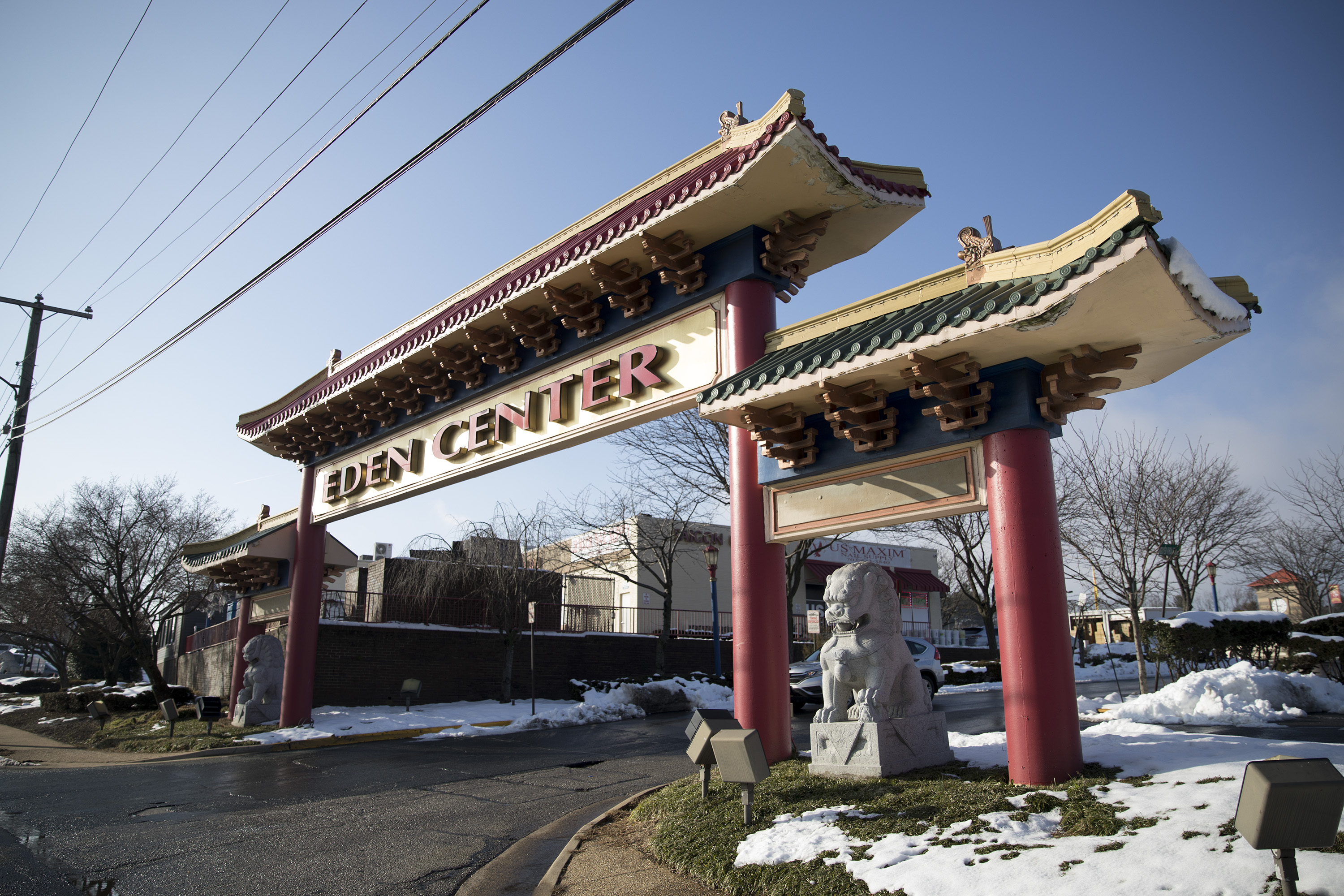
We’re digging into the past, present, and future of Eden Center, the mall that for more than 30 years has been a home for Virginia’s Vietnamese community. First we’re exploring how the shopping plaza was built; next we’ll hear how Eden Center is looking to the future.
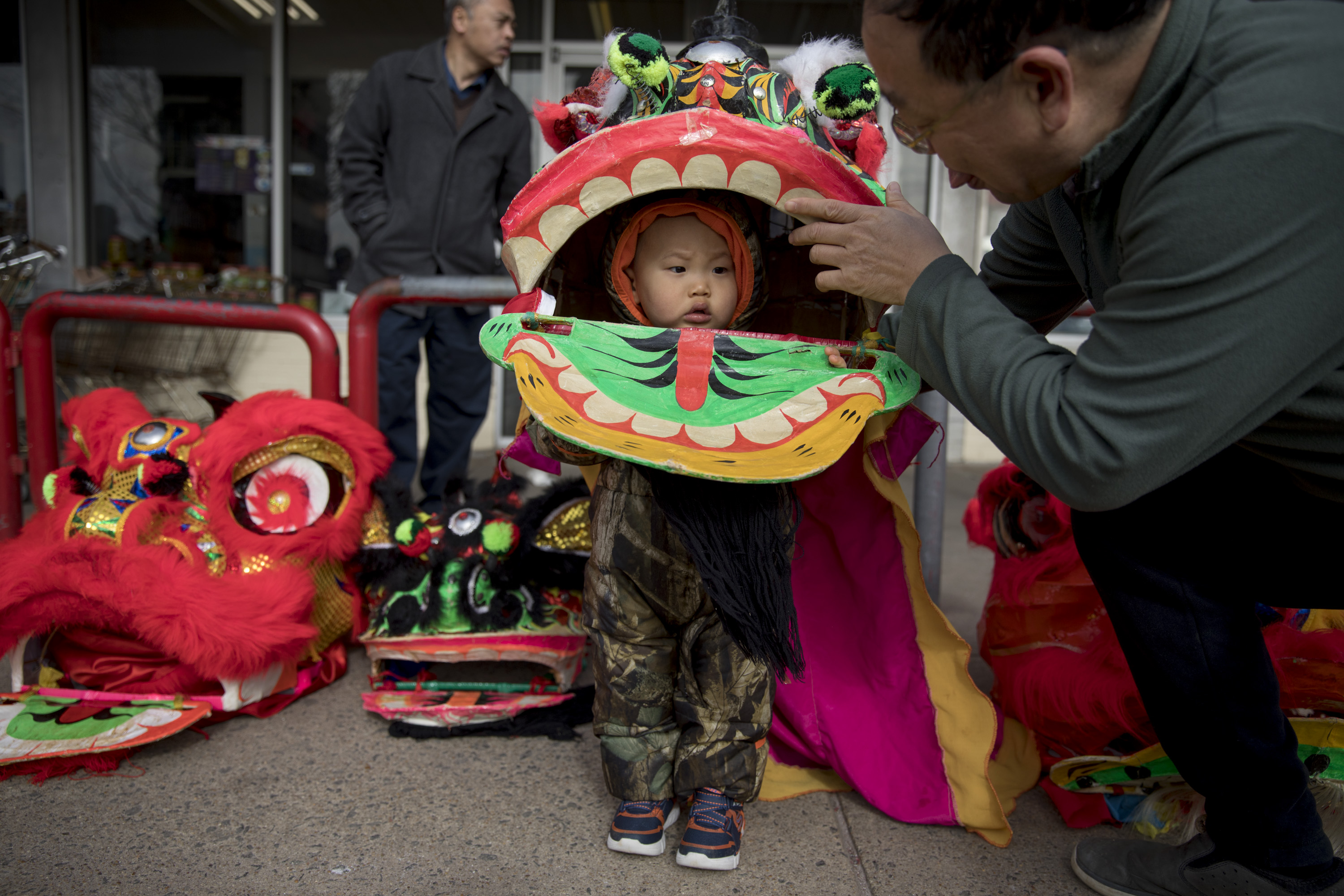
It’s a few days before the Vietnamese New Year in early February at Eden Center in in Falls Church, Virgina, and the highest concentration of Vietnamese-owned businesses under one roof in America is a buzz of activity preparing for this annual celebration.
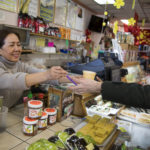
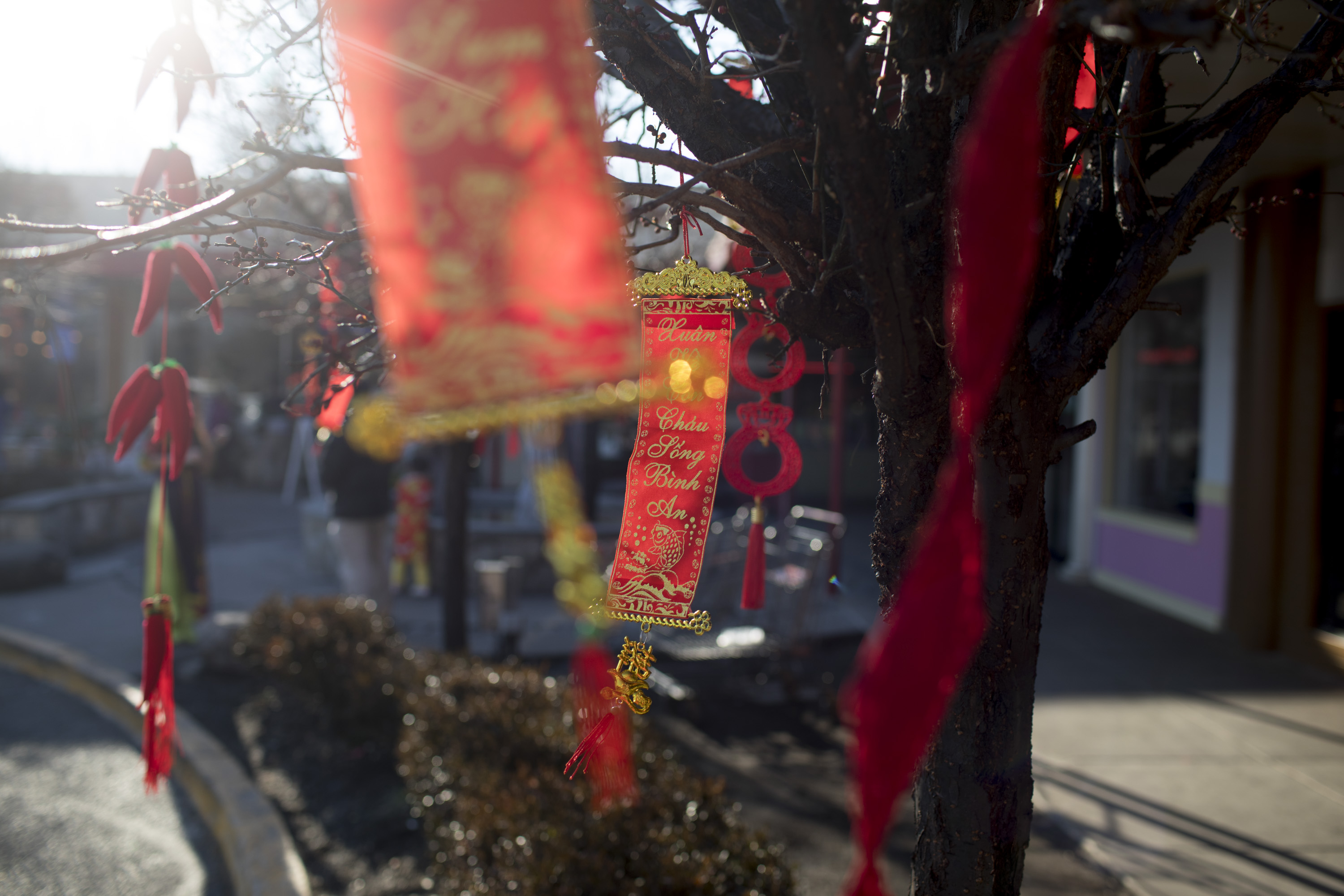
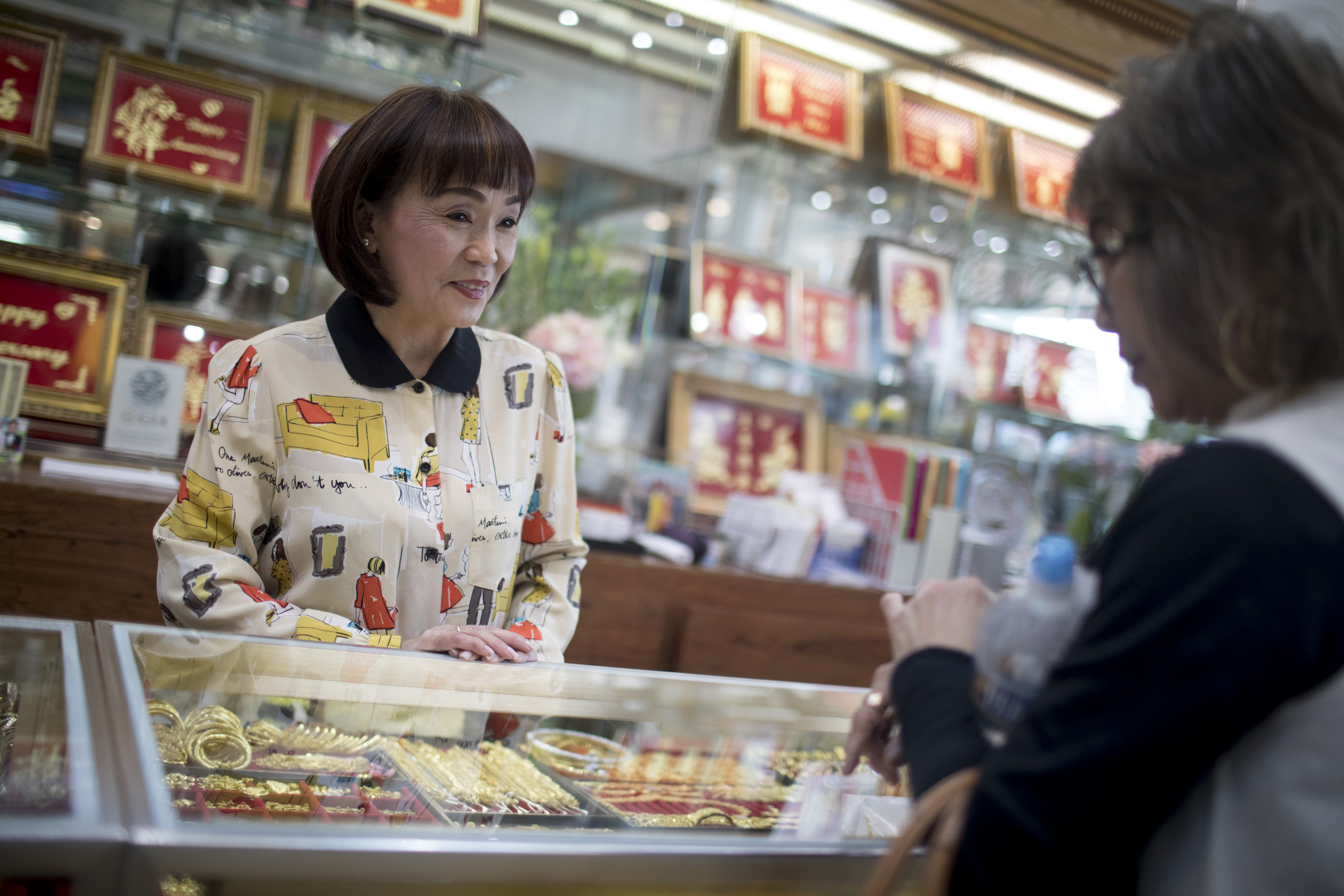
At Huong Binh Bakery, 87-year old Anh Le sits at the counter putting the finishing touches on handmade pink pork rolls. His son Quang takes stock of popular holiday items like Bánh chưng and Mứt dừa, making sure there’s enough for the tide of customers about to roll in. Behind the clock tower and just inside of the mall, Vicki Tu of Dupont Central Jewelry helps a customer decide on the perfect bracelet to give as a new year’s gift. Her husband David, glasses slipping down his nose, watches as a worker chisels away on a ring. All around the roughly 120-store, 200,000 square foot shopping plaza, the words Chúc mừng năm mới reverberate through the air as preparations are underway for the Year of the Pig.
The story of how this Northern Virginia community came together starts in Vietnam. For two long decades, from 1955 to 1975, the country was consumed by civil war. America joined in the fight by sending more than three million American troops overseas in support of the South Vietnamese government repelling the North Vietnamese communists. It didn’t work: On April 30th 1975, the city of Saigon fell to the communists.
Anhthu Lu—now a Falls Church resident and frequent Eden Center visitor—was there when the city was taken. She was 16 at the time, the daughter of a three-star South Vietnamese general. She remembers sprinting to the riverbank with her family—mother, father, and siblings—to catch one of the final barges out. “We were so afraid of losing each other,” says Lu. “We were getting yanked, pushed, and pulled. Blood was running down [my arm] and I did not know it until later.” From the boat, drifting out to a new life, she watched Saigon go up in smoke. “It was so sad. I was trying to get the image of the city that I grew up in into my eyes and my mind,” she says. “I knew I’d never see it again.”
They were picked up by the USS Miller, along with 6,000 other Vietnamese refugees, and dropped off in the Philippines. The family’s journey continued to Guam, then a refugee camp in California, then to Arlington. “They wanted their children to live in liberty and freedom,” Lu says of her parents. “Under communism, there was no future.”
Prior to 1975, it’s estimated that only 15,000 Vietnamese immigrants lived in the United States. After Saigon’s fall, that number ballooned. According to research done by Kim O’Connell, author of the pamphlet “Echoes of Little Saigon,” more than 130,000 refugees moved to America between 1975 and 1978. Of that number, a 1979 Washington Post article estimated that as many 20,000 moved to the D.C. area, making it the third-largest concentration of Vietnamese immigrants in the country behind only Southern California and Houston, Texas. This first wave were often educated, financially well-off, urban, and well-connected. “They tended to be [South Vietnamese] government workers or military personnel,” says O’Connell, “We’ve got the seat of the U.S. government and the Pentagon right here. That alone was enough to bring so many people here.”
Meanwhile, Clarendon, the Arlington neighborhood bordered by Washington, Wilson, and Clarendon Boulevards, had fallen on hard times due to the rise of Tysons Corner Mall and constant subway construction (Clarendon Metro Station would open in December 1979). This gave an opportunity to a new, growing community. As the deputy county planning director Thomas C. Parker told the Post at the time, “There was a vacuum… the Vietnamese just took advantage of the cheap rents and vacant space.”
Within only two years, Clarendon had become home for those who were forced to leave their original one behind. There were restaurants like Nam Viet (which still exists), grocery stores like Saigon Market, and shops like Dat Hung Jewelry. In 1977, the two-story Pacific department store opened, selling clothes, basic supplies, and imported food with a cafe/billiards hall on the top floor. “A lot of these stores sold multiple things. The proprietors were trying to give as much as they could to the community,” O’Connell says. This cluster of businesses that ranged from the intersection of Washington Boulevard and Wilson Boulevard to Highland Street was dubbed “Little Saigon.”
Lu remembers when she first arrived in the United States, everything was foreign to her—even the food. “We were craving Vietnamese food… like nước mắm, but we didn’t know where to find it,” she says. Luckily, not too far from where she was living, she found Little Saigon. “It was a gathering place for all of us. If there was anything you needed or wanted to meet someone, that was the place you would go.”
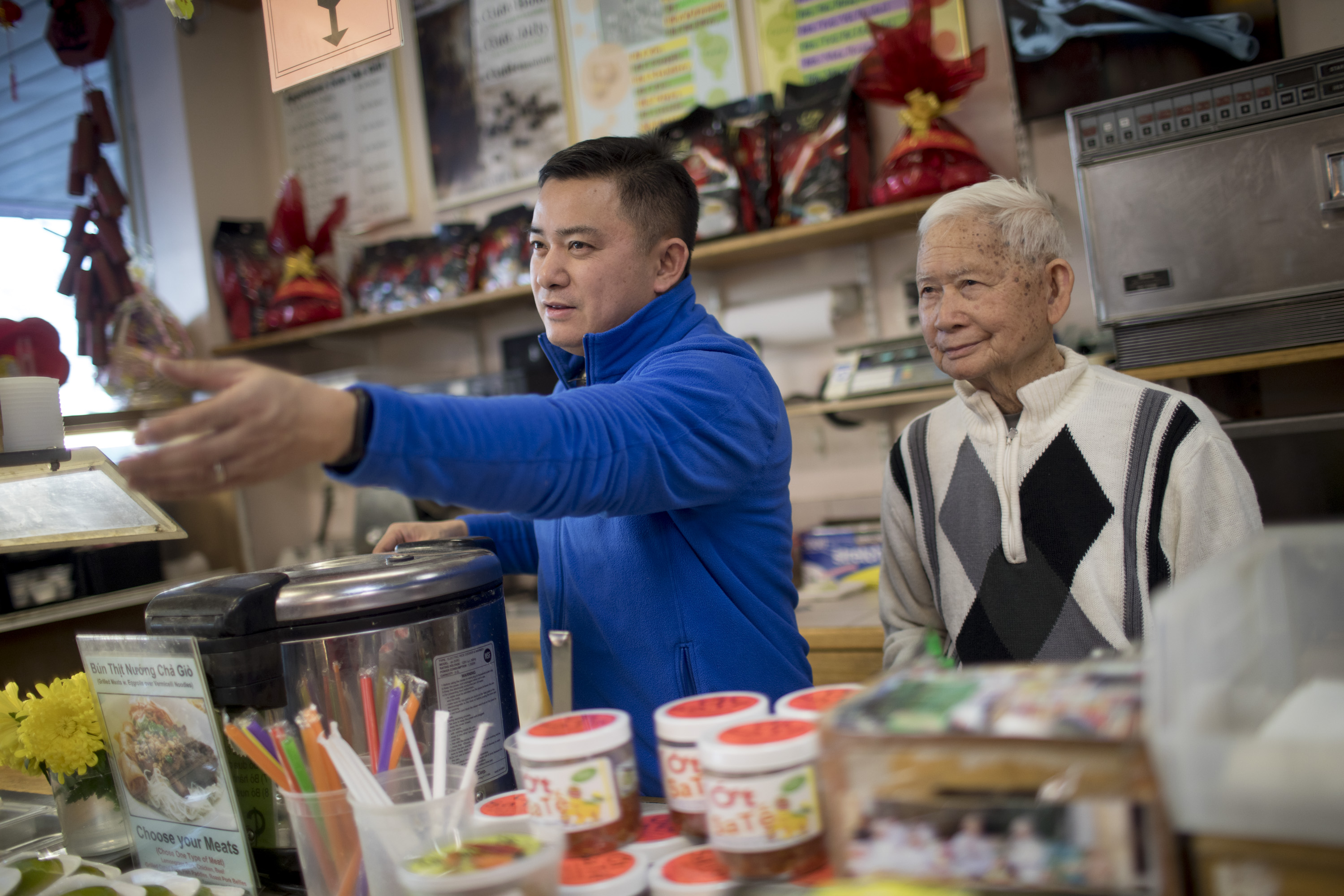
Little Saigon proved to be a beacon to others searching for something familiar in their new home. Quang Le was only six years old when he and his family escaped Vietnam in 1977. He remembers how his father Anh Le had to make the difficult decision to stay behind in Vietnam. “If our trip failed, we needed a place to come back to,” says Le, “It was him taking responsibility for his family.” To this day, Le says his father’s happiest moment was finding out that his family had successfully escaped Vietnam.
After his family arrived in Arlington, Le says they went to Little Saigon all the time to shop, eat, and be with their community. It also provided financial stability. One of Le’s earliest American memories was watching his mother fill up big clean trash cans with layers of fabric and green beans and seeing bean sprouts “grow like magic.” She would then sell them to the markets in Little Saigon. “That’s how she made money for us, along with cooking,” Le says. “It was tough.”
Anh Le finally joined his family in Arlington in 1982 after eight daring attempts to escape. “Each attempt to leave, he put his life at risk,” says Quang Le, “America was a land of opportunity and where his family was.”
The opening of the Clarendon Metro station in December 1979, made it far easier to get to Little Saigon. This wasn’t good news for everyone. Metro’s arrival gave developers and landlords a reason to start buying up the prime real estate, ending short-term leases and pricing the community out. Rents went up and shops closed. Luckily, only about three and a half miles down Wilson Boulevard, Eden Center was taking shape.
According to property owners Capital Commercial Properties, the development was then known as Plaza Seven Shopping Center and was built in 1962. There was a tire center, a paint store, a 7-Eleven, and a Zayre. In 1984, the 20,000-square-foot Grand Union Supermarket moved out, and a group of Vietnamese business people who had been displaced from Clarendon rented a few of spaces inside of the mall. Others soon followed, and they named their cluster of stores ‘Eden’ after a fancy shopping center in Saigon.
“They put up a sign that said ‘Eden.’ It’s still there today,” says Alan Frank, a real estate lawyer who assisted Capital Commercial Properties’ Norman Ebenstein with leases until joining the company full-time in 1995. “The name Plaza Seven just went away. We were okay with that.”
David and Vicky Tu were one of the first tenants at Eden Center. Vicky Tu remembers well that day walking through the mall that would become Eden Center in 1985 when she made the decision to close her watch shop in Little Saigon and open Dupont Central Jewelry there. “I told [the owner] I wanted to rent two units. He looked at me up and down and said ‘Little girl, you sure?’” Tu reminsinces, ‘I said, ‘Yes!’ and then I wrote them a check.” Her husband David laughs at the memory. “She was in charge,” he says.
By the early 1990s, Eden Center had primarily become Vietnamese- American owned businesses. This paralleled the increase of Vietnamese residents in the western suburbs of D.C. According to one study, by 1984, nearly 60 percent of the local population lived within three miles of Seven Corners. “A light bulb went off in Norm [Ebenstein]’s head,” says Frank. “We realized that we could help create this community.”
Inspired by a trip to American Vietnamese shopping centers in Orange County, California, Ebenstein hired an architect to build a clock tower and an ornate archway bookended by lion statues. It was all meant to resemble Bến Thành marketplace in Hồ Chí Minh City (formerly Saigon). Soon after, at the behest of a local Vietnamese organization, the surrounding streets were renamed after famed South Vietnamese generals, including Major General Nguyễn Khoa Nam. In January 1997, a renovated Eden Center made its grand reopening.
Over the last two decades, Eden Center has remained a central point for the area’s Vietnamese community. Frank says that about 90 percent of the shopping center’s businesses remain Vietnamese-owned (the other 10 percent are other Asian nationalities like Thai and Korean).
Spend any time at Eden Center and it’s clear that the language, the food, and culture are ties that continue to bind this community. But there’s something else. It’s the harrowing stories of escape, the long journeys taken to get here, the courage to seek a better life for themselves and future generations. There’s also an immense of love for not only what Little Saigon and Eden Center has given them, but for what this country has provided. “In America, if you work hard, things are great,” says David Tu, “I have my family and my work. I have thanks. [America] has given me a good life.” As he speaks, Vicky Tu brings out a framed picture of her adult children. “They all are happy. And have good jobs.”
Anhthu Lu, who’s today a defense contractor, says she goes to Eden Center at least once a week, sometimes with her 93-year-old father. “It’s a place that makes me feel like I’m home,” she says. “It tells me who I am.” She hasn’t gone back to Vietnam since leaving more than four decades ago and says she doesn’t want to. For all those things that she still loves about her home country, she knows that it will never be able to give her everything she needs. “Here, in America, you have the right to vote, the right to voice your opinion, the right to speak up without fearing persecution,” says Lu, “This land gives you opportunity. Much more than Vietnam.”
Despite being at an age when many are retired, Anh Le still works every day at the bakery he opened at Eden Center in 1992. Quang says his father is always running out to get groceries and greeting customers. With his son helping to translate, Le is asked why he endured so much hardship, so much risk to get himself and his family out of Vietnam and to America. “There was no future. No prospects and no freedom,” says Le. “America is the land of freedom.” With that, he gently puts a hand on his son’s arm and says in English, “I’m happy. I have him.”