Natalie Delgadillo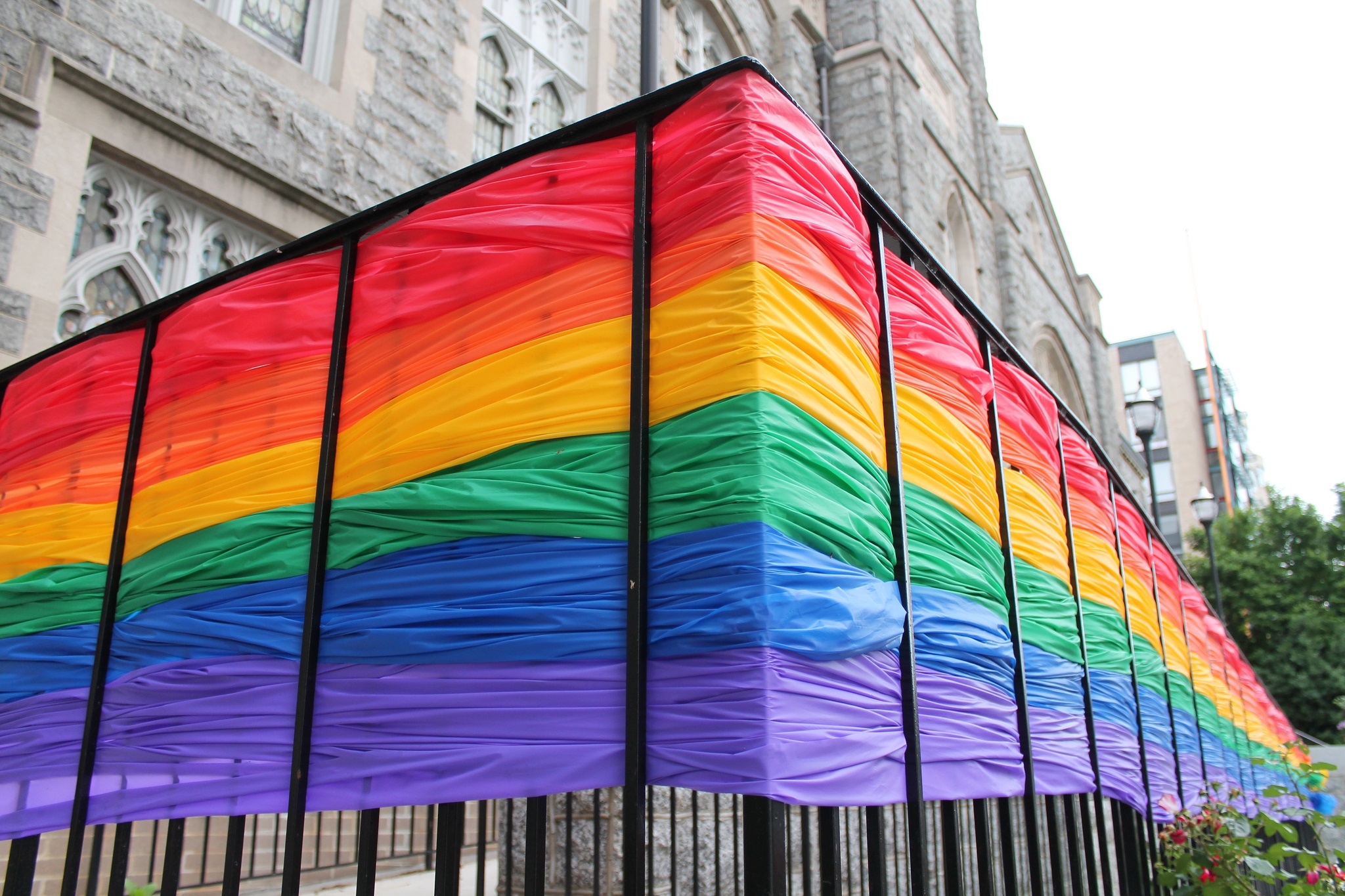
Earlier this week, Methodists from around the world gathered in St. Louis for a specially-called general conference to address one issue: what is the church’s stance on LGBTQ marriages and clergy?
It’s a fraught question for this mainline Christian denomination, which hasn’t yet followed in the footsteps of other mainline denominations that have voted to allow same-sex marriages and gay and lesbian clergy in recent years. According to the Book of Discipline, Methodists’ rulebook, Methodist pastors can’t conduct same-sex weddings, and “self-avowed practicing homosexuals” can’t be ordained as clergy.
United Methodist Church delegates from around the world voted 53 percent in favor of something called the “traditionalist plan” on Tuesday, which preserves current rules concerning LGBTQ people. The approved plan also takes thing one step further than current practice, requiring churches to “certify adherence” to the rules or leave the church. More progressive members of the church were hoping delegates would vote in favor of the “One Church Plan,” which would have allowed individual churches to decide how they would handle the issue themselves.
This outcome has reverberated in Washington, D.C., which has a robust Methodist community—much of it comprised of people who are devastated by the results of the general conference. As these churches look to the future, they’ll have to make a difficult decision: stay within the Methodist denomination and fight to win the church over, or leave altogether.
“My first reaction, I would say, is outrage and heartbreak. There has been a movement for more than 20 years … in this direction that is very well-funded and determined, and what we saw over these last few days is a culminating moment for that movement,” says Reverend Ginger Gaines-Cirelli, the senior pastor at Foundry United Methodist Church in Dupont Circle. Foundry is a well-known, progressive Methodist church whose pastors have been performing gay and lesbian weddings since they were legalized in 2010. It’s famously the home church of the Clintons.
For Gaines-Cirelli and many of her congregants, the results of the general conference are upsetting, but have not yet spurred definitive consideration that the church will leave the Methodist denomination. “I would also say my reaction is renewed commitment and resolve to stay in this struggle, because people need Foundry to continue to be Foundry. And that’s exactly what we’ll do,” Gaines-Cirelli says. “They need us to continue to be a leader on this issue, and that’s exactly what we’ll do. I’m just absolutely exhausted, but I have a real sense of resolve.”
One thing giving some hope to Gaines-Cirelli and other Methodists seeking LGBTQ inclusion is that the traditionalist plan still has to be reviewed by the Judicial Council, the Methodists’ equivalent of the Supreme Court, which will decide which portions of the plan are constitutional and which are not. Gaines-Cirelli says it’s basically certain that some parts of the plan, in particular the provision that requires churches who don’t “certify compliance” to leave, will be found unconstitutional.
“We don’t have to worry about [being forced to leave the church] until we know what passed muster with the Judicial Council,” she says.
Donna Claycomb Sokol, the lead pastor at Mount Vernon Place United Methodist Church, also says that she and her congregants aren’t yet feeling driven to leave the denomination. Just after the vote on Tuesday, she says, she received messages from congregants expressing “extraordinary heartache, this feeling of, how could they inflict more harm on us?” But after a couple of days had passed, people were expressing “this sense of reinvigoration … this send of hope, and sense of a call to make sure that our church will be all that it can be,” Sokol says.
And how does she think this will affect the future of the church and who wants to join it?
“In the last two days, I’ve heard from two of my members sitting on the fence somewhat when it comes to seminary and ordained ministry. And they are both recommitted,” Sokol says. “I think that speaks volumes.”
There are certainly fears about what this decision could mean for the future of the Methodist church, however—the denomination leans drastically older, especially in the United States.
“A number of United Methodist students and future students, people who are applicants, may start to wonder if they really want to serve a church such as this,” says David McCallister, the president of the Wesley Theological Seminary, a United Methodist seminary in Northwest D.C. affiliated with American University. (American University owns DCist’s parent company, WAMU.) “This could affect us in our enrollment. It may be that it affects us in other ways if it causes continued decline in the denomination. Younger people simply have a much more progressive view on this issue.”
McAllister says that Wesley Seminary’s student body has a diversity of opinions on the issue of LGBTQ inclusion, but he believes the decision at the general conference is “a step backwards for our denomination.”
The Reverend Dr. F. Douglas Powe, a professor at Wesley Seminary, also believes the denomination may take a hit after the decision, though he personally has not considered leaving. “I think what we will see probably are some individuals leaving the denomination and starting their own thing, that’s my guess,” he says. “I have not considered leaving. Certainly there would be something that could push me out, but the challenge many are wrestling with is: do you stay and try to change the denomination, or do you go and try to do something new?”
For Ellie Crane, a gay woman and a second-year student at Wesley Seminary’s Master of Divinity program, the decision at the general conference cut deeply. She attended the conference with some people from a class at Wesley, and she says that even the discussion was wounding. One of the delegates from Pennsylvania stood up and implied that gay people should be drowned using scripture, she says. She seemed to lack words to adequately describe her feelings about the outcome of the vote: “I’m angry and hurt and sad,” she says. “This is our home, this is where we grew up, these are the people that raised us, and now they’re turning their back,”
Her feelings about the situation have been very up and down throughout the week, she says, but “where I am right now is, I don’t want this to be the end. I don’t want this to be the way the world sees the UMC, as a place of exclusion and discrimination against people who love differently. Right now, I’m willing to keep fighting.”
Reverend Dr. Mary Kay Totty, the senior pastor at Dumbarton United Methodist Church in Northwest, says her church will continue on exactly as it has been. Dumbarton is the oldest Methodist congregation in D.C., and it has been fully inclusive to LGBTQ members since 1987, Totty says. Leaving the denomination is “certainly a possibility, but that is one of many options on the table,” Totty says. “There are a number of options, from waiting and seeing what happens at the regular general conference scheduled for next spring in 2020, to seeing what it might look like to affiliate with a new Methodist congregation.”
This Sunday, as they do every year, Dumbarton will celebrate the anniversary of the day it voted to fully include LGBTQ people in the life of the church, “meaning that we welcome then to be fully involved, to have their weddings celebrated, to have their children baptized,” Totty says. She calls this a kind of “poetic justice timing” for their church, to celebrate becoming inclusive just days after their larger global denomination voted in the opposite way.
T.C. Morrow, a gay woman and a member of Foundry who has been trying to become ordained as a deacon in the Methodist church for more than a decade, says the vote has saddened her, but has not diminished her resolve to make the denomination more inclusive, nor has it changed her mind about trying to become clergy. “I remain firm in my commitment to make myself available for ordained ministry in the United Methodist Church,” Morrow says. “It will now be up to others to decide what they want to do, given that I continue to present myself as a candidate.”
Morrow and her wife have both attended Foundry since about 2002, she says. When D.C. legalized gay marriage in 2010, the two got married in a church member’s home and had a celebration at Foundry that same afternoon. The church has always been a welcoming place for her, and has always supported her in her desire to become a deacon, she says.
“I think there are some people in the United Methodist Church who want to see schism,” she says. “From conversations that I have been having, there are [also] people all over the United Methodist Church that want to remain together and figure out a way to move forward.”
Cordilia James contributed reporting to this story.