When the Kronos Quartet had a particularly successful moment during a concert, artistic director David Harrington got an idea. Harrington, the founder and violinist of the venerated San Francisco-based ensemble, says that when the group played music from Sudan, Syria and Iran, they received rapturous applause.
“It occurred to me [that] what Kronos should do is a concert that brings together all of these countries,” he says. At the group’s show on Saturday at Sixth & I Historic Synagogue, “there will be music from Iran, Somalia, Yemen, Sudan, Syria, and then there will be sonic elements from the other ‘banned’ countries.”
Presented by Washington Performing Arts, “Music for Change: The Banned Countries,” includes works by composers from across Arab and Muslim nations that have been named in President Trump’s travel ban. Songs on the setlist include “Ya Mun Dakhal Bahr Al-Hawa” (Hey, Who Enters the Sea of Passion?) by Fatimah al-Zaelaeyah and pieces by Islam Chipsy, Omar Souleyman, Franghiz Ali-Zadeh, and others.
Palestinian group Ramallah Underground will also perform, as will Iranian singer and activist Mahsa Vahdat. Harrington describes the acclaimed vocalist’s talents as being “very meditative.”
Her voice “basically trades with an almost refracted call to prayer in the cello part,” Harrington says, “and then the other instruments will be heard from a great distance. Then we all [come] on stage and the piece begins.”
Harrington put Kronos Quartet together in San Francisco in 1973 as a vehicle to perform traditional Western music as well as to give greater voice to up-and-coming composers and unorthodox musical modalities. As often as the group looks back to the great masters of centuries past, they also perform works by new composers and reimagine jazz and rock pieces. Because they tackle all styles from Baroque to spoken word, their sound is difficult to define.
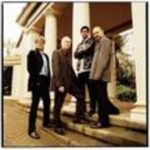
While musicians rotate in and out of the ensemble, Harrington has been there since the beginning. The group’s current lineup includes Harrington and John Sherba on violin, Hank Dutt on viola, and cellist Sunny Yang.
Kronos Quartet is known to the general public largely as performers of the scores for such films as Requiem for a Dream and The Fountain. Harrington says those experiences allow his group to reach audiences who might not normally attend classical concerts, and “Music for Change” is one more such opportunity.
“We’re trying to tell a story through the juxtaposition of various musical elements about the amazing diversity of sounds and music from Muslim-majority countries,” Harrington says.
During his group’s extensive travels, Harrington says he’s come to learn that many of their foreign collaborators are unable to come to the United States due to to the president’s travel ban, which bars U.S. entry to citizens of many majority-Muslim countries, including, he says, Mahsa Vahdat’s sister Marjan. The quartet released an album with the sisters, Placeless, this week.
“I find it’s a good thing that our audience is aware of the realities that musicians are facing,” Harrington says.
It’s not clear if “Music for Change” will be able to affect—or even reach—those who support the president’s travel ban. But even if the audience is entirely composed of listeners who agree with the point Harrington and his group are making, he says sometimes even those sympathetic to a particular position need reinforcement.
“We did a piece in Brooklyn this past [season] that used the voices of survivors of the massacre at the [Parkland] school in Florida,” Harrington says. “The presenter of the concert was in tears, and I asked her, ‘Are we preaching to the choir only?’ And she said to me, ‘The choir needs to be inspired.’”
Even with the perhaps controversial nature of the concert’s material, there will be no speechifying, Harrington insists.
“The music will speak for itself,” he says.
Music for Change: The Banned Countries takes place Saturday, 8 p.m., $45.