Natalie Delgadillo
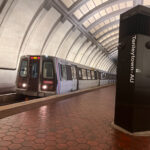
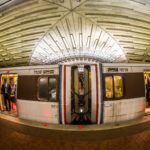
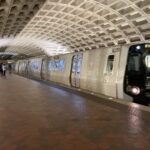
WMATA has been testing automatic doors on Metro trains for the last two weeks, the agency announced in a press release on Monday. The doors automatically open when trains pull into the station, come to a complete stop, and are “confirmed to be properly ‘berthed'” on the platform, according to the release.
After testing and calibration, the agency will move to make all Metro door opening automatic, part of a larger shift back to automatic train operation on the system. Metro train operators will continue to close the doors manually.
The new automatic doors could have some benefits to your commute. For one thing, according to Metro, train operators sometimes “lose awareness” and accidentally open the doors on the wrong side of the platform. After several instances of this happening years ago, the agency put in place new safety guidelines for operators, instructing them to wait several seconds between stopping the train and opening the doors (yes, this is likely what causes that infuriating delay).
When the doors open automatically, there won’t be that several-second pause—the doors will open as soon as the train is stopped at the station, shortening trips by a few seconds at each stop. Metro says that “if all goes well” in this testing and operator-familiarization phase, they’ll roll out the automatic doors later this year.
The automatic doors are just the first step in the transit agency’s move back toward automatic train operation (ATO), which has been floated several times in the past, most recently in fall of last year. The plan is reportedly to move back to ATO by the end of the year, per the Washington Post.
When Metro opened in 1976, its trains were already automatically operated (including automatically-opening doors). But the agency moved away from the system after the fatal crash at Fort Totten in 2009, although ATO was not at fault in that incident. A signaling system failed to detect a train stopped on the platform, and another train crashed into it, killing the driver and several passengers.
The move back to ATO is part of Metro General Manager Paul Wiedefeld’s larger plan to increase ridership on the system, according to the Post. Some leaders have been wary of reinstating ATO during a time when so many track workers are on the tracks performing maintenance or repairs, the Post reports, apparently concerned that automatic operations could endanger them.
Despite being largely automatic, ATO trains are not driverless—drivers remain on board to close the doors and monitor the train for safety.