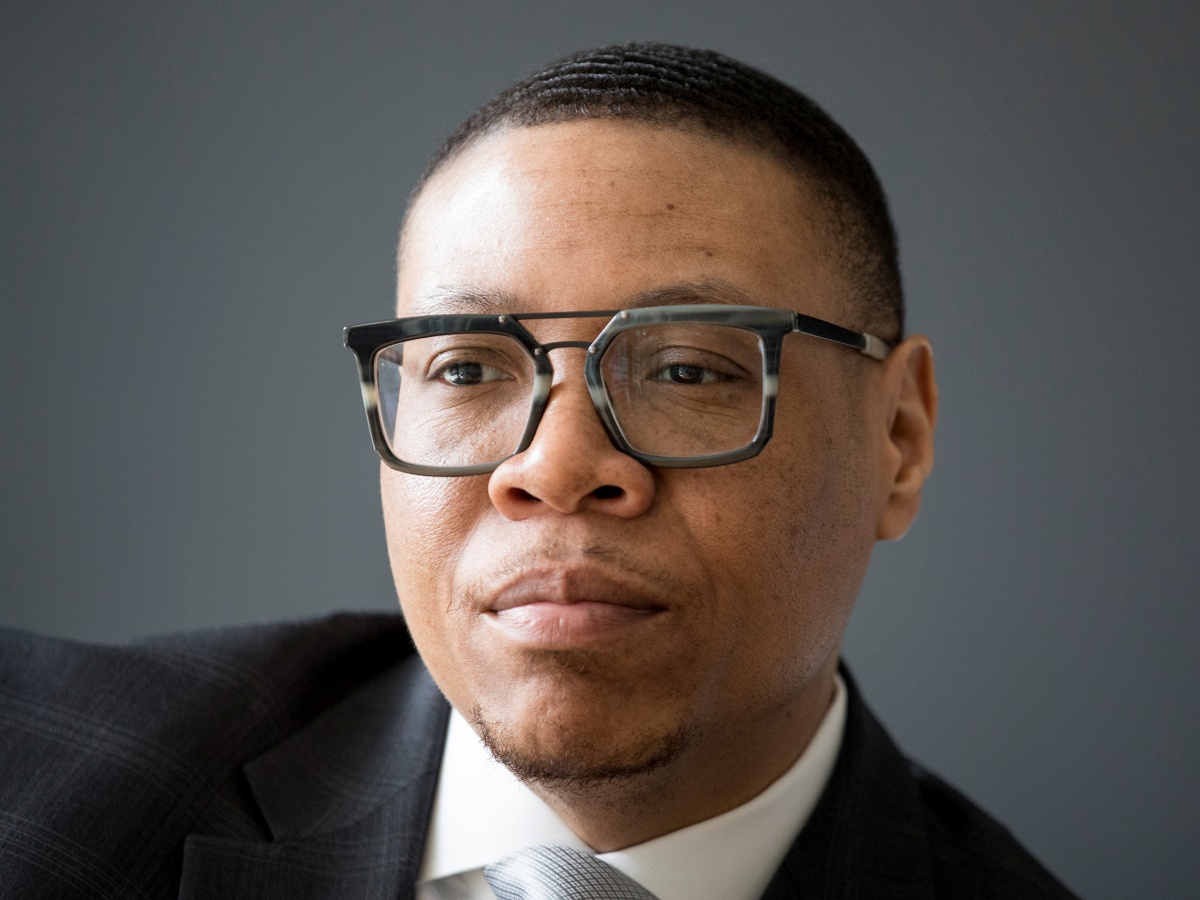
After more than a year without a permanent head for D.C. Public Schools, the D.C. Council voted unanimously Tuesday morning to confirm Lewis Ferebee’s nomination, approving him to become the fourth Chancellor of the District of Columbia.
Some councilmembers voted in favor of the nominee despite concerns, saying they had high expectations for new the chancellor.
Councilmember Robert White (D-At Large), who voted “present” or no to move Ferebee’s nomination forward in the education committee last week, decided to vote for the nominee before the full council.
“He mentioned that no urban school district has closed the achievement gap,” says White, noting that he taking Ferebee at his word. He also noted that he was encouraged by Ferebee’s promise to reduce teacher turnover.
Councilmember Trayon White (D-Ward 8) also voted “present” last week and changed his mind, voting in favor of the nominee Tuesday.
“I met with him yesterday,” White said. “I had a lot of reservation going into the conversation about our career and technical education programs … he gave me a lot of assurance … I am hopeful.”
But other Councilmembers, including David Grosso (I-At Large), were enthusiastic about the new schools chancellor.
“It has been nearly one year since DCPS has had a chancellor, … it is our duty it is to create more stability, not instability,” Grosso said.
Grosso also noted that he has been impressed with Ferebee’s stamina and his recognition that he cannot use the same strategies he used in Indianapolis in D.C. schools.
Hitting The Ground Running
Ferebee has been serving as acting Chancellor since January and has already released a preliminary budget for the next school year, which included some changes he plans to institute in the District.
For starters, 13 extended-year schools will revert to traditional school calendars next school year.
He also plans to expand the “community schools” model with a $1.2 million investment. Community or connected schools are known for offering unique services to both students and families.
DCPS officials say the community schools will work with several agencies including the Department of Employment Services, the Department of Behavioral Health and Children and Family Services to provide a variety of employment and health services for families.
Ferebee has also said that he plans to give more authority to local schools. It is not exactly clear what that will look like, but he has hinted at models he finds appealing. The management structure at the Duke Ellington School of the Arts, where a nonprofit board makes decisions about school operations, is one model Ferebee has voiced support for. He has not said if he plans to expand this model to other schools.
Transparency and ‘Bold Solutions’
Leading up to the confirmation hearing, Ferebee penned an op-ed in the Washington Post saying that budget transparency was a top priority for him and was part of building back the trust that has been shaken between the public and school officials after a year of scandals.
Budget transparency has been an issue of concern for many schools in the District, particularly high schools in southeast Washington that are bracing for possible funding cuts.
Although Ferebee has shied away from the term “reformer,” in his Post column, he noted that the public should be prepared for some big changes.
“We must put forth bold solutions, allowing our schools to innovate to meet the needs of our students—and we must do this while establishing new levels of transparency and equity in how resources are distributed across our school system,” Ferebee wrote.
In his budget proposal, Ferebee announced that DCPS will take more strides to both give schools more control of their budgets and make them more transparent.
DCPS officials say they plan to publish a “snapshot” of the upcoming school’s budget this spring that, according to DCPS officials, will show, “side-by-side the total funding that the school received and how those funds were ultimately budgeted.”
This story originally appeared at WAMU.