Rachel Kurzius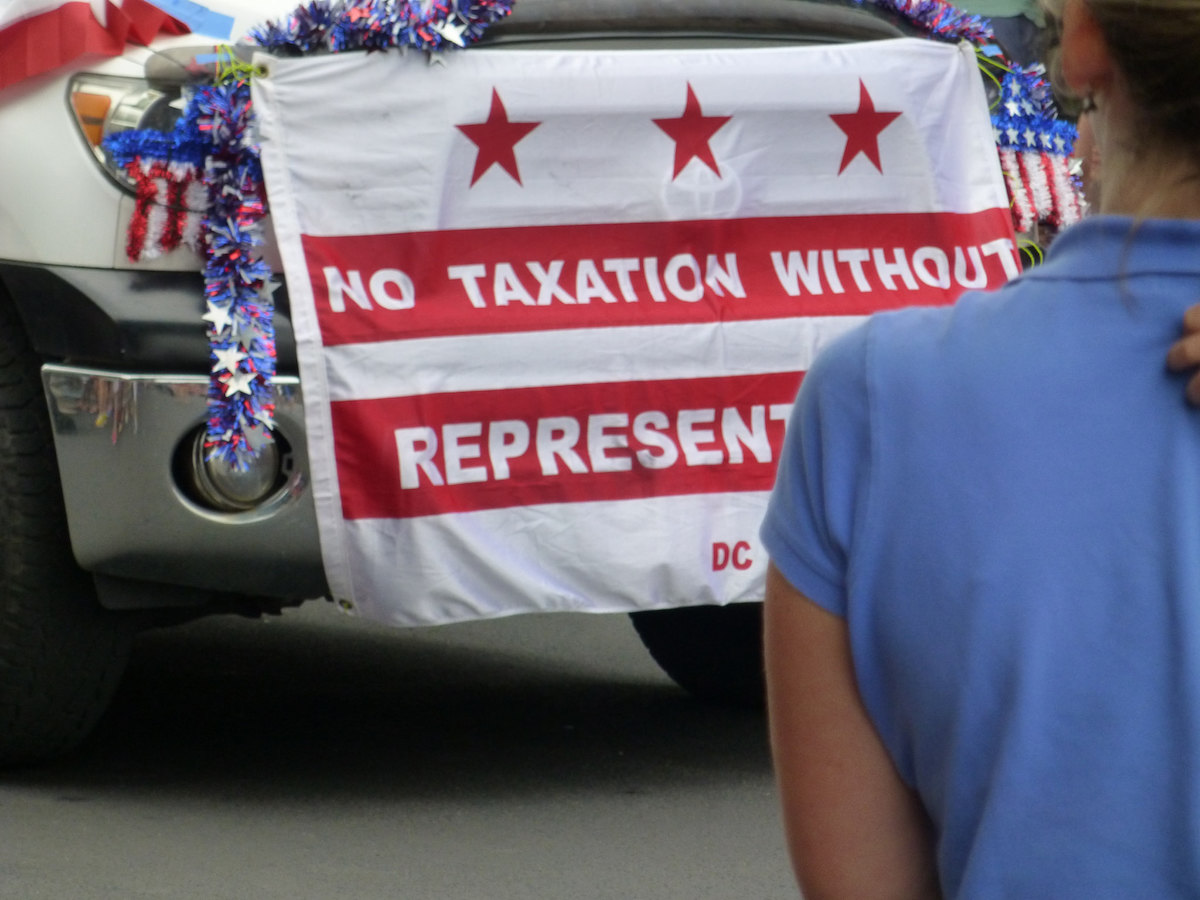
Voting rights legislation passed in the House of Representatives on Friday includes a provision that supports full congressional voting rights and self-government for the District, marking the first time a chamber of Congress has endorsed D.C. statehood.
“There is no other way to describe it—this is historic,” D.C. Delegate Eleanor Holmes Norton said in a statement. “After decades of struggle, the House of Representatives recognized today that the time has come for D.C. statehood.”
While D.C. has a larger population than two states and residents pay more per capita in taxes than in any state, residents have no representation in the Senate and lack a full vote in the House.
“We are committed to building support across the nation by educating our fellow Americans about our struggle,” Mayor Muriel Bowser said in a statement. “D.C. residents pay taxes, have fought in all of the nation’s wars, and have all the other obligations of citizenship. Now, we are demanding our fundamental rights as American citizens.”
The endorsement of D.C. statehood is a small part of the bill, HR 1, which passed on a final vote of 234 to 193. It includes measures to expand voting rights, increase transparency in political campaigns, and other reforms. HR 1 would not actually make D.C. a state—it simply expresses support for statehood, declaring that “District of Columbia residents deserve full congressional voting rights and self-government, which only statehood can provide.”
But the bill has almost no chance of passage in the Senate, where Majority Leader Mitch McConnell has called it “a terrible proposal” that “will not get any floor time in the Senate.”
Still, Norton contends that the passage of HR 1 in the House is part of a larger swell of momentum for D.C. statehood. Her separate House bill to make D.C. a state with two senators and a representative in the House reached a record-breaking 200 co-sponsors this week. It already has support from House Speaker Nancy Pelosi and Oversight Committee Chair Elijah Cummings of Maryland, who has vowed to hold a hearing on the bill. None of the co-sponsors are Republican.
Over in the Senate, the D.C. statehood bill was introduced last week with the backing of 29 senators, all Democrats except for Bernie Sanders, an independent who caucuses with Democrats. D.C. statehood advocates have long tried to win the support of Mark Warner of neighboring Virginia, who is co-sponsoring the legislation for the first time this year.
On Thursday, Minority Leader Chuck Schumer said D.C. statehood was among the top three priorities for strengthening voting rights across the country. “D.C. has had a referendum, they want statehood, and we should have them be allowed to vote in federal elections—have congressmen, have senators,” he said in a floor speech.
But just like HR 1, a statehood measure in the GOP-held Senate has scant chance of passing. Republicans have long contended that statehood would amount to “just more votes in the Democratic Party,” as former Ohio governor John Kasich said.
While Republicans more broadly are opposed to D.C. statehood, President Donald Trump seemed open to the idea during the presidential campaign. “I would like to do whatever is good for the District of Columbia because I love the people,” he said on NBC in 2015. “I’ve really gotten to know the people, the representatives, and the mayor, and everybody. They’re really special people—they’re great and they have a great feeling, so I would say, whatever’s best for them, I’m for.”
A D.C. statehood referendum passed in 2016 with 80 percent of the vote.