
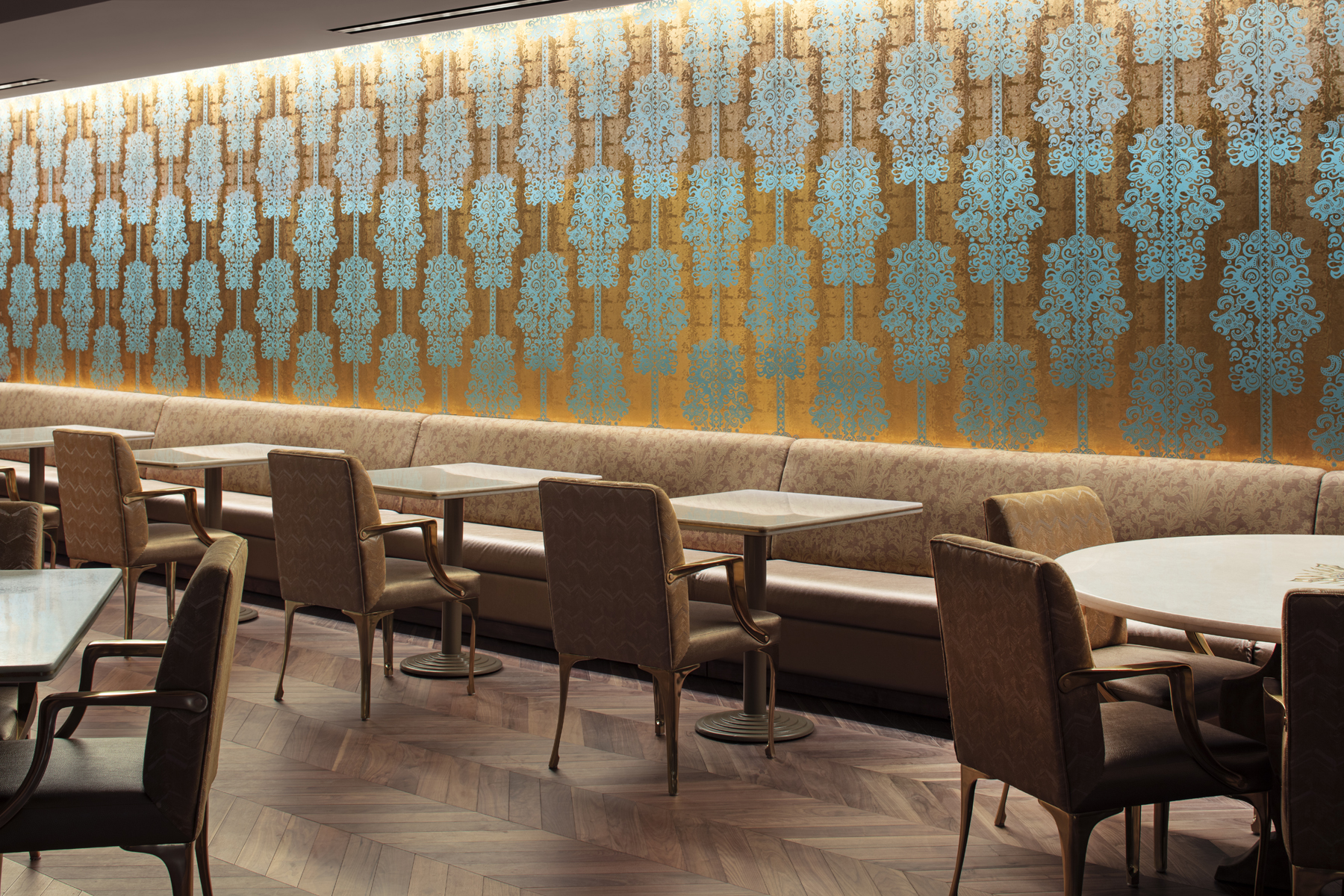
All restaurant owners have a million small details to think about before they open to the public. Karan Singh, the owner of newcomer Punjab Grill, took that process up a notch for his Indian fine dining concept. For two years, artisans crafted every element of the restaurant overseas in India and reassembled, from floor to ceiling, a glittering façade of marble, pink sandstone, and mirrors in the heart of Penn Quarter.
Since the 156-seat restaurant opened last week, Singh estimates he has given 30 tours a day to diners curious about the intricacy of each room. Though Singh says the focus is on the food, he wanted to create “an immersive experience to showcase the beauty and craftsmanship of India,” including ideas from the Taj Mahal, while also staying relevant to the D.C. food scene.
“We didn’t even have water glasses three days before opening because I couldn’t find the right ones,” Singh says. “Nothing happened by accident. Every little piece, we agonized over.”
Singh’s meticulous attention is evident in every room, down to the tailored uniforms staff wear based on their position. The floors’ patterns are stone-cut in jigsaw formation, the ceiling faceted, the tabletops carved marble or onyx and inlaid with semiprecious stones and mother of pearl, the walls intricately patterned wood backed by glass. The hand-carved sandstone wall near the main bar, which weighs 12,000 pounds, had to be reinforced by steel in the building next door. Bathrooms are done up in black marble and brass fixtures.
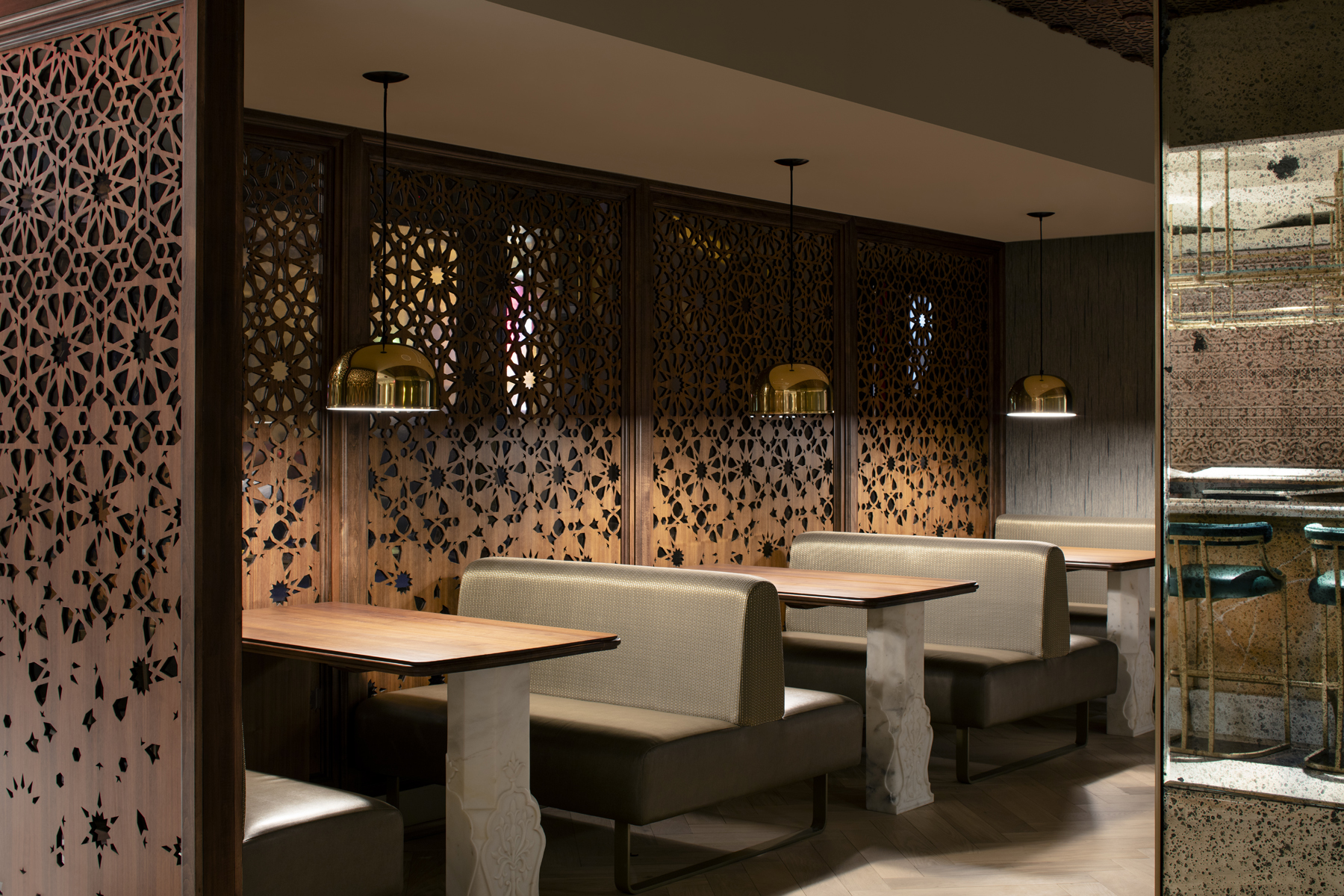
In the Passage to India room, booths take after railway cars of the Golden Age, with 200-pound marble legs. Even a detail as subtle as the tables’ edges has not been forgotten, each one in the “living room” section lined by brass.
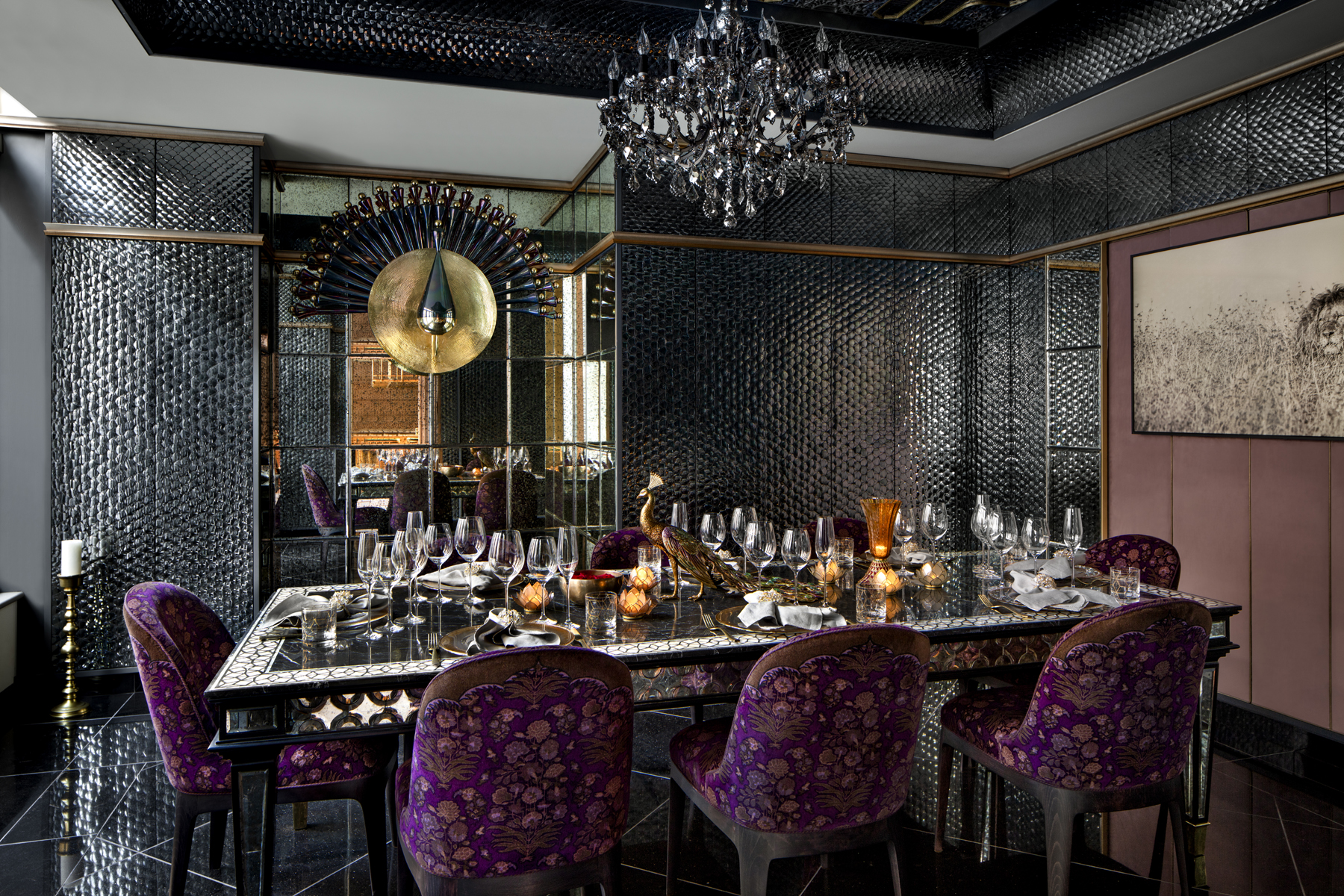
The “crown jewel,” as Singh calls it, is the sheesh mahal private dining room, a lavish hideaway decorated in 150,000 tiny mirrors and upholstered chairs and drapes with fabric customized by the designer Peter D’Ascoli. The room is available to rent for up to 10 people for upwards of $2,000.
Though Punjab Grill is ready-made for business lunches and anniversary dates, Singh’s welcoming vein keeps the restaurant from feeling stuffy. Singh regularly walks around ready to ask diners what they need or tell stories about a dish’s origins.
“Our service philosophy is based on a Hindu doctrine: The guest is god,” says Singh. “At end of the day, it’s a restaurant, not a museum, but we set a high bar. We want people to think, ‘If this is what this looks like, what are they going to do next?’”
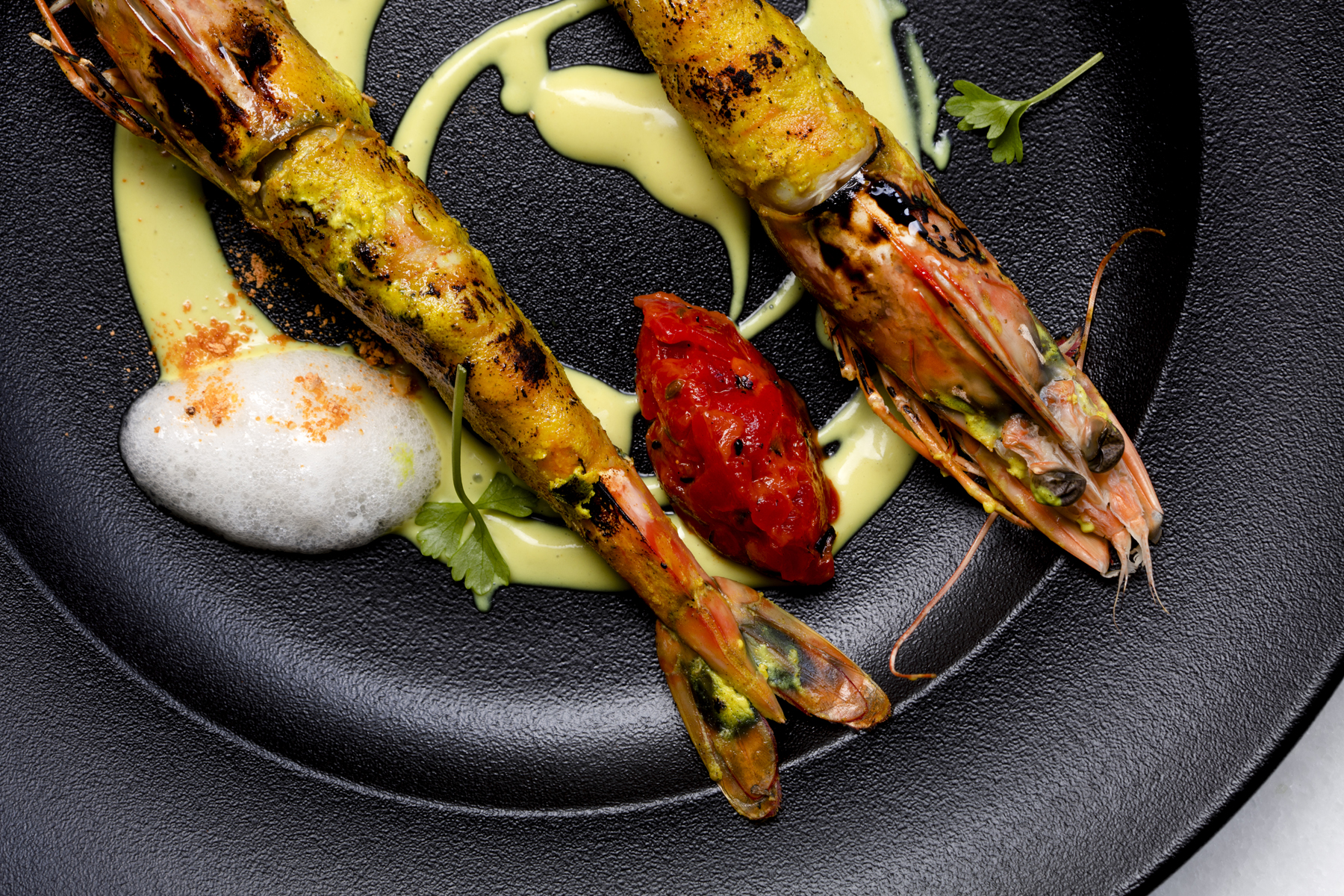
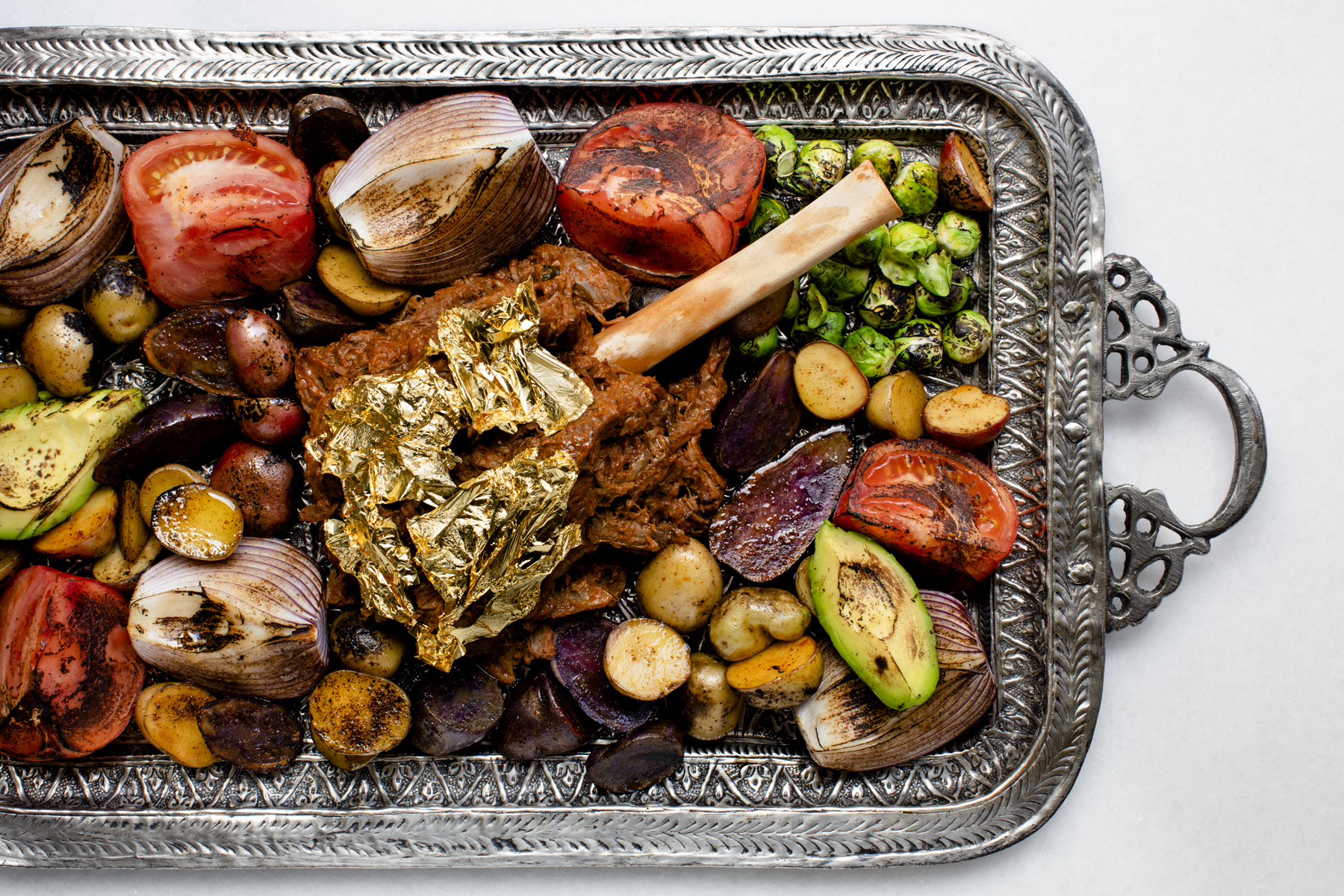
The menu reflects the same luxe detail and heightened presentation as the décor. Executive Chef Jaspratap Bindra, who is from Kanpur, India, collaborated with Singh to create dishes that hold all the flavors of traditional Punjabi cuisine but also pull in global twists. Small plates run $10-$16, larger dishes anywhere from $16-$40. Whether it’s tandoori meat and seafood or one of the many vegetarian options, Chef Bindra plays with creative touches: shaved truffles, gold leaf, a forthcoming caviar naan. When asked to name his favorites, Bindra says the menu is “like poetry, like a canvas: You take one color out of portrait and it’s incomplete.”
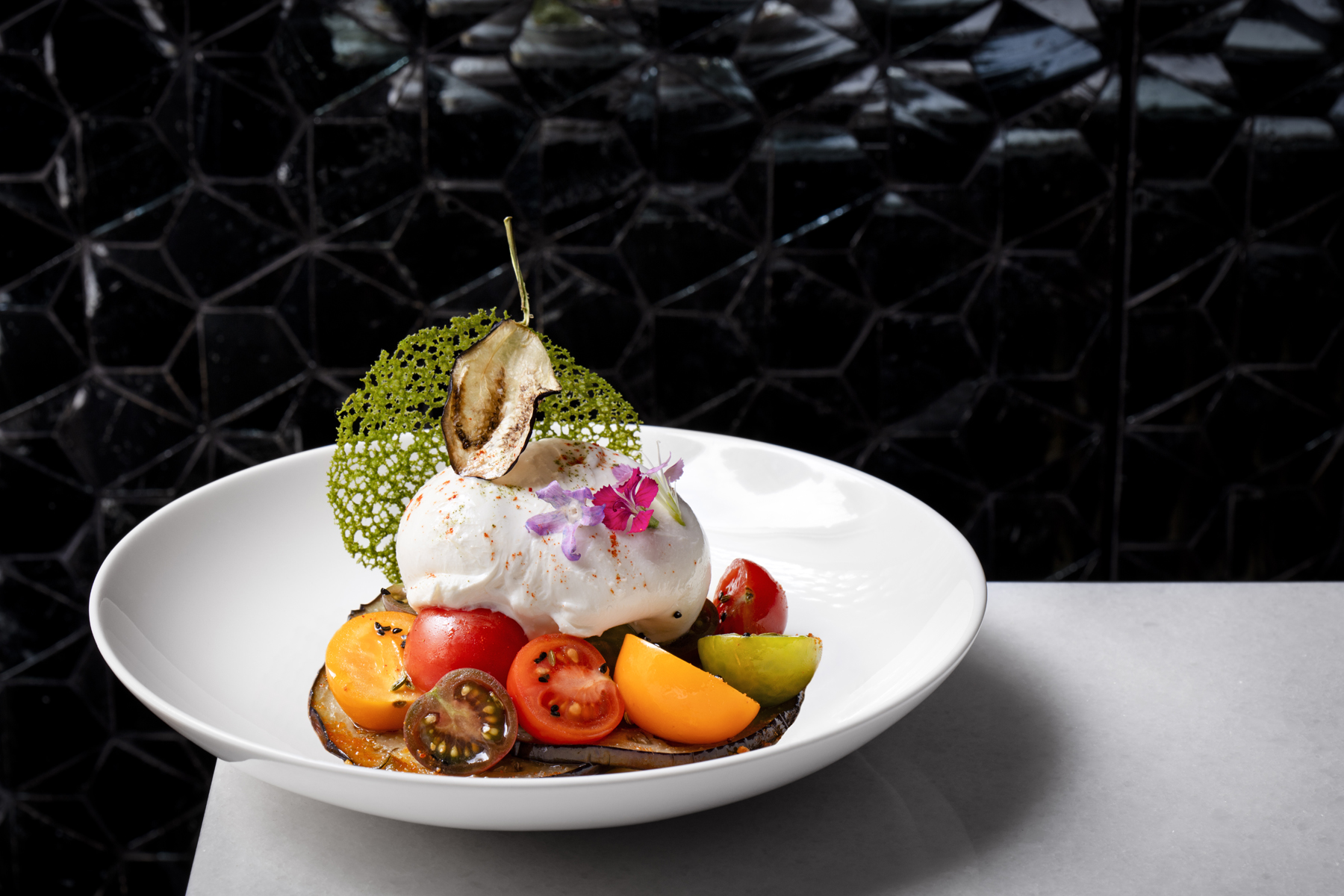
Butter chicken is infused with Thai flavors: tikka marinated in basil, a tomato cream sauce cut by lemongrass, and a lemon-glazed naan, which Singh describes as “the stuff of dreams.” For another classic, sarson da saag, mustard greens are simmered in a sauce and eaten with house-churned white butter, concentrated cane sugar, and fried corn roti. Small plates like Burrata cheese, a more modern favorite, comes over spiced eggplant, saffron, and tomatoes.
The menu also draws from global inspiration: After Singh ate Peking duck at restaurants in New York and D.C., he asked Chef Bindra to create an Indian take with spices, plum chutney, pickled vegetables, and rumali, or “handkerchief,” roti. The birds, which are made to order, cook for 45 minutes before the chef comes out with a cart to serve the table.
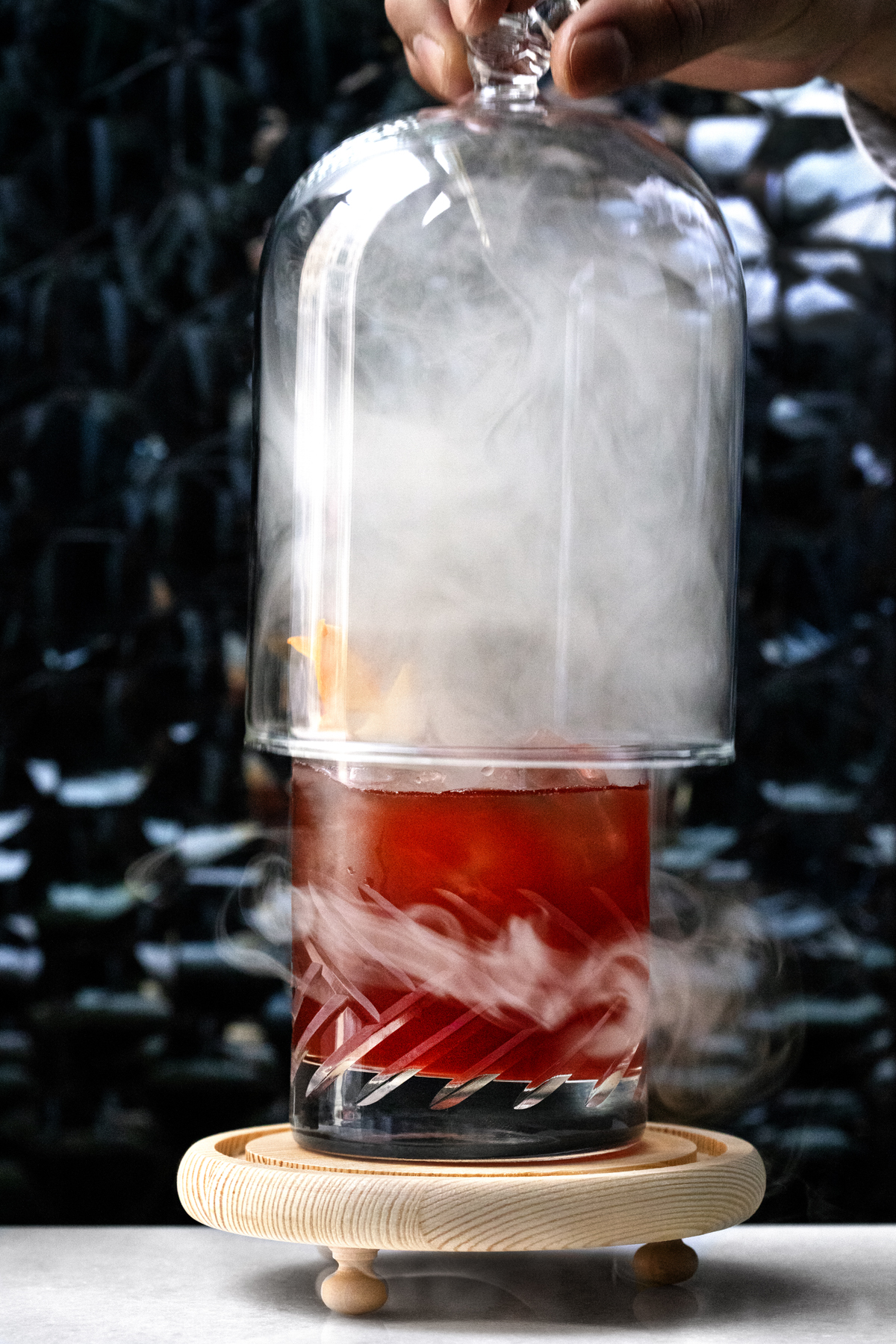
An extensive cocktail list ($14 each) highlights Indian spices like turmeric and masala chai, chamomile, and fruit bitters. A Rose for Maryam, named after Singh’s wife, features egg white, lillet blanc, and rose water. If you order the Kasauli 1820, a take on a rye-based Old Fashioned, a cover is lifted off the glass to let out woodchip smoke for a sensory drinking experience.
Singh, a former airline pilot who still owns an aviation company, switched to the restaurant business in 2013. There are several other Punjab Grill outposts in countries such as India and Singapore, but Singh is adamant that the restaurants are not a chain—each one has a unique menu and concept. His efforts are all in the name of “smashing stereotypes” and changing people’s perception of Indian dining, a goal he sees as shared with other famed Indian spots in D.C. like Rasika and Bombay Club.
People often think, he says, that there’s only room for one or two Indian restaurants, but cities can have 30 Italian restaurants. Why can’t there by 30 Indian restaurants?
“All of us are jointly looking to make Indian food a viable competitor,” Singh said. “We’re brothers in arms. If you come here or Rasika, we’ve both won because you’re eating Indian food. There’s room for all of us.”
Punjab Grill is located at 427 11th Street NW. Lunch is served from 11:30 a.m.-2:30 p.m. Monday-Friday and 11 a.m.-3 p.m. Sunday. Dinner is served from 5 p.m.-10 p.m. Monday-Thursday and 5 p.m.-11 p.m. Friday-Saturday.
Opening Dinner Menu by Lori McCue on Scribd
Opening Lunch Menu v2 by Lori McCue on Scribd
PG Bar Menu by Lori McCue on Scribd