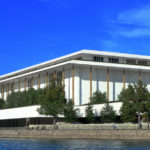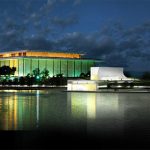
There was a several year period during which the Kennedy Center’s major festivals focused on specific cultural regions, including the Arabian peninsula, Mexico, India, Ireland, and Scandinavia, which is reasonable given the area’s demographic diversity and the District serving as the seat of government.
There has been a subtle shift in recent years after Deborah Rutter took over as the Kennedy Center’s president in 2014. While international programming still plays an important role, albeit more staggered, Rutter’s vision is to create an environment where newer artists are taking advantage of the institution’s considerable reach and infrastructure.
DIRECT CURRENT, a festival that debuted last year and whose second iteration begins on Sunday, is one of the more visible results of Rutter’s leadership. The two-week event focuses on new works, interdisciplinary productions, and topical concerns.
“There’s a stereotype about new work that it’s really academic and really hard to understand, says Jamie Broumas, the Kennedy Center’s director of classical and new music programs and DIRECT CURRENT’s lead curator. “But what’s really interesting is that this generation younger than me are seeing these people with these voices, they have something to say. Oftentimes it’s topical, so it feels current.”
The Kennedy Center is rare among major arts institutions in its ability to present in multiple genres, from classical music, opera, dance, to jazz, and most recently hip-hop. DIRECT CURRENT draws from all of these streams to present works that are on the cutting edge and often difficult to categorize. The material is intentionally challenging, but Broumas finds that there is a hunger among audiences for work that straddles the line between accessibility and experimentalism.
Broumas sees the very real possibility that some of the composers at this year’s festival could become part of the established canon in 50 years, similar to how views of music by Igor Stravinsky and Philip Glass has changed over time.
“This is a golden age of composers and so many composers are working in a soundscape that’s accessible to most ears,” Broumas explains. “They are moving away from the more academic style that came out of the ‘50s and ‘60s. They listen to jazz, they listen to hip-hop, and they are not afraid to be tonal.”
Caroline Shaw exemplifies this 21st century artist. She became the youngest recipient of the Pulitzer Prize for Music when she won it 2013 at age 30. Shaw performs at DIRECT CURRENT with members of her pioneering vocal ensemble, Roomful of Teeth.
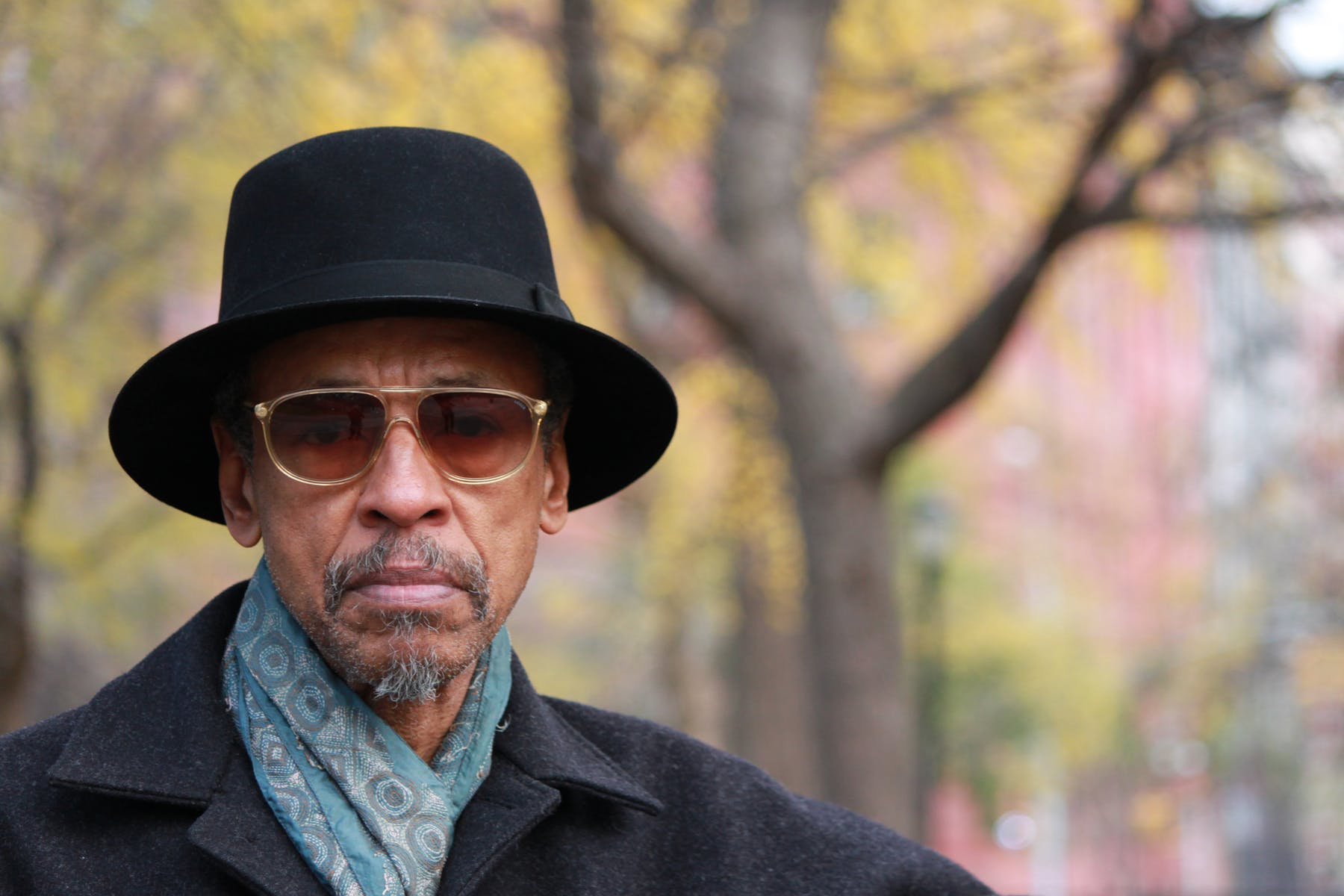
Another of the festival’s highlights is its jazz lineup, which has significantly expanded since last year. Henry Threadgill, another Pulitzer winner and an icon in experimental jazz circles, makes his Kennedy Center debut with Double Up, an ensemble comprised of piano, sax, drums, tuba, and cello. Also on the schedule are guitarist Mary Halvorsen, who presents material from her critically acclaimed album, Code Girl, and trumpeter Amir ElSaffar, whose music draws heavily from his Iraqi background. Pianist and MacArthur “genius” Vijay Iyer is another noteworthy performance as he performs with his celebrated sextet.
Of the many interdisciplinary performances taking place during the festival, TU Dance’s Come Through, which features new music from Bon Iver, is intriguing. Cellist Amanda Gookin teamed up with projectionist and eight female composers to present a multimedia experience at Dupont Underground that comments on the modern female experience through a number of lenses.
The Dupont Underground performance is an example of the Kennedy Center’s effort to incorporate the local arts community into its programming. DIRECT CURRENT also includes performances at The Phillips Collection and the Laboratory for Global Performance and Politics at Georgetown University. The latter is a staging of Falling Out, a production incorporating music and puppetry that drew inspiration from the Fukushima nuclear accident in Japan.
The Kennedy Center is planning to continue DIRECT CURRENT in future seasons. Each version will inform subsequent festivals and there will be year-by-year tweaks, organizers say, but the core vision will remain.
“[DIRECT CURRENT] is a way of being in the moment as we move through the issues of our time and seeing how artists can be part of that conversation,” says Broumas. “People will be able to see someone really taking risks and see something really unusual.”
DIRECT CURRENT runs at the Kennedy Center and other area venues March 24-April 7.