Sommer Hill, 21, is graduating from Howard University in May with a degree in journalism. Like many college students, she says the future is bright but uncertain. Hill is one of hundreds of young women in the Washington region who will graduate from college in the spring and join the workforce.
Hill has already had a couple of jobs, and a few unpaid internships, but the pay for these experiences were always set. So, she never had the chance to test her salary negotiation skills. Hill says it’s not a skill she possesses, but is one that she would have loved to learn in school. Thankfully, some professors did offer some helpful tips.
“[They said] research the salary in that area, for that job and see how much they make, and then request that much. But I wouldn’t know, like, you just send a number back and forth? I would have no idea how to do that,” she said.
Teaching Women to Negotiate Better Salaries
Hill is on the right track, according to the American Association of University Women. The group is looking to train millions of women all over the country, and from all walks of life, how to negotiate better salaries and benefits. The group says it’s an effort to close the gender wage gap by 2030. The goal is to teach women how to approach a salary negotiation with confidence and provide tools for use in these situations.
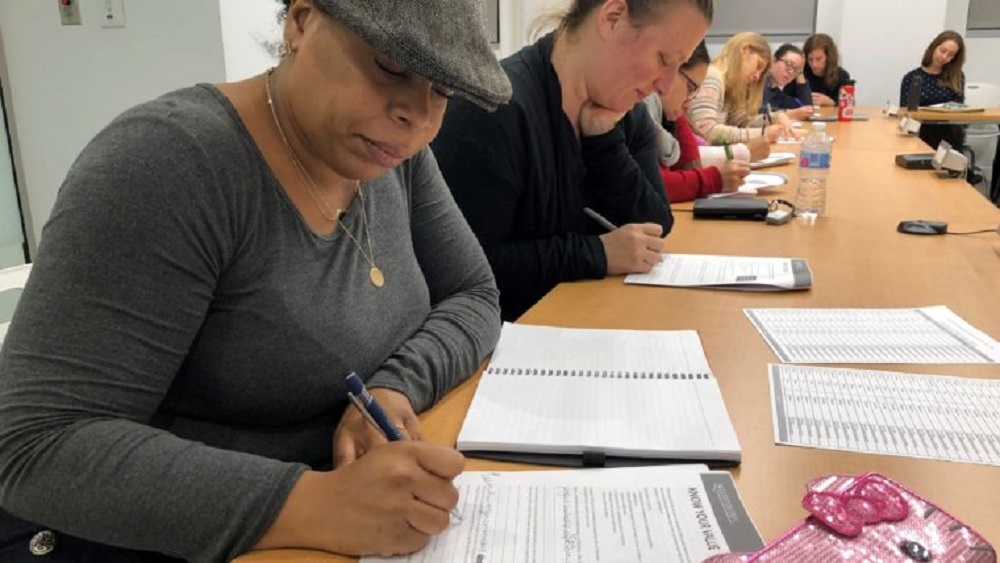
“I get cringy when I talk about numbers, and I don’t want to anymore,” said 40-year-old Janelle Harris, a freelance journalist who attended a salary negotiating workshop in D.C. last year. “I want to feel confident when I speak to clients. I want to feel confident when numbers are on the table.”
Workshops were held in major cities all over the country and helped jump-start the AAUW program. Harris and other attendees learned what to do before heading into a salary negotiation, how to create a strategy and how to approach the conversation. Part of the training included participants being asked to answer questions about the gender pay gap and how it affects their lives.
“I live it, first of all. If you are a black woman, you already know that these disparities exist,” said Harris, who touched on the mental toll the wage gap can have on women, especially women of color. “You know you’re working twice as hard to get much less than what’s being given because of privilege and preferences that are out there.”
The Gender Pay Gap Is Shrinking … Slightly
The AAUW salary negotiation program is a free course available online. The idea stemmed from an AAUW study last year that found the average gender pay gap had improved slightly from 77 cents on the dollar to 80 cents. However, that number is still much greater for women of color. African American women are paid just 61 cents for every dollar made by a man. Latina women just 53 cents. AAUW officials say this adds up to women losing out on more than $500 billion in wages every year.
In the Washington region, Virginia has the highest gender pay ratio at 79 percent. D.C. is at 89 percent, one of the lowest in the nation. Maryland’s gender pay ratio is 86 percent, slightly better than the national average.
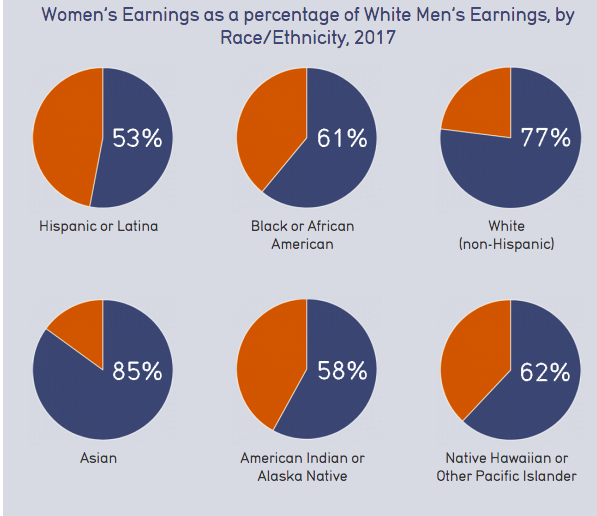
Studies show that the gender pay gap is bigger for women of color.American Association of University Women
“This is an economic security issue for families when more mothers are serving as the sole or primary breadwinners of their families,” said Kim Churches, CEO of AAUW. “This means it’s hurting women in retirement and women live longer than men. So, we’re receiving less in our Social Security, and pensions, and retirement plans.”
That’s why, Churches said, AAUW is on a mission to teach women better salary negotiation skills. The training is part of a multi-pronged approach to close the gender wage gap. Among other things, AAUW is working with federal, state and local governments on implementing stricter equal pay laws and the group is making strides to get companies to remove questions about salary history from job applications.
“In fact, men are more likely to negotiate than women 4 to 1. And so, when we empower women and teach them not just the confidence building skills, but also the facts and their place in the market, it’ll help them continue to thrive,” Churches said.
The Role Of A Woman’s Choice In The Gender Pay Gap
Churches said one of the major causes of the gender pay gap is discrimination against women in the workforce, women of color and mothers. But some critics, like Rachel Greszler from the conservative Heritage Foundation, say the gender pay gap is often created and exacerbated by the workplace choices women make, particularly after becoming mothers.
“I think they, inevitably, after having a child are in general going to have a stronger desire to cut back a little bit from work, maybe not push ahead as much in their career and will desire to have a little more time at home,” she said.
Conversely, Greszler said, men are more likely to work more after becoming fathers.
“Their natural sense is to try to provide for the family and they would act that out in terms of trying to earn a higher wage, going after that promotion, maybe looking at different career or different place of employment where they could get that higher wage,” Greszler said.
While she does think the gender pay gap exists, Greszler said it is not as egregious as some women’s groups like AAUW make it out to be. The data she’s seen actually shows a wage gap closer to 5 percent – all or most of which can be attributed to women’s workplace choices, she said.
Greszler is also against a push for more equal pay legislation, “that would kind of create one-size-fits-all jobs, [and] would actually hurt the women that they’re trying to help by prohibiting more flexible arrangements.”
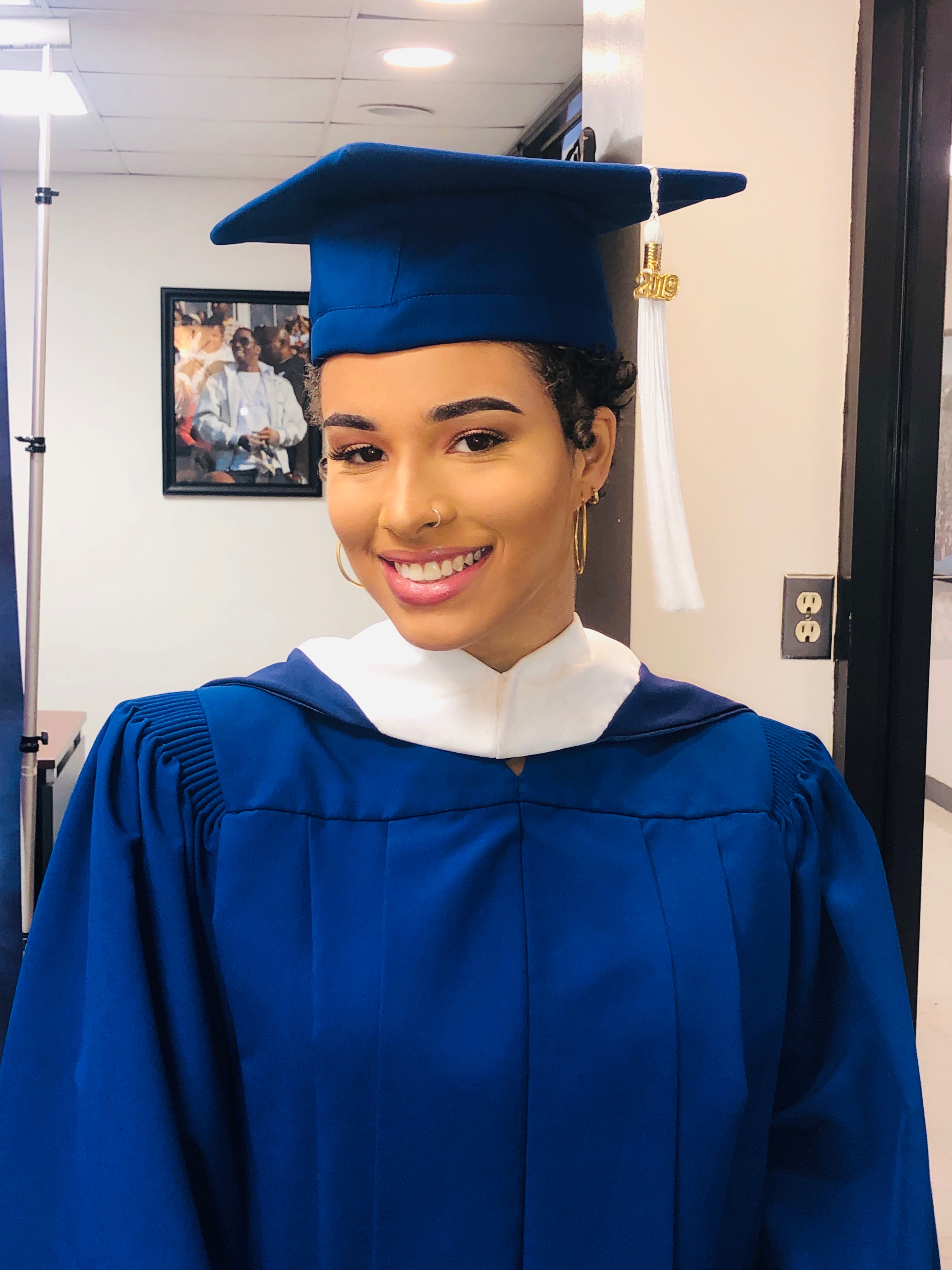
Sommer Hill, 21, in her cap and gown. She’ll graduate from Howard University in May.Sommer Hill / Instagram
Howard University senior Sommer Hill says she believes there will one day be wage parity among men and women. But she remains skeptical about AAUW’s timeline.
“In my lifetime, I do hope to see that change. And I do believe that it’s possible. 2030? I don’t know about that.”
This story first appeared on WAMU.