Jacob Fenston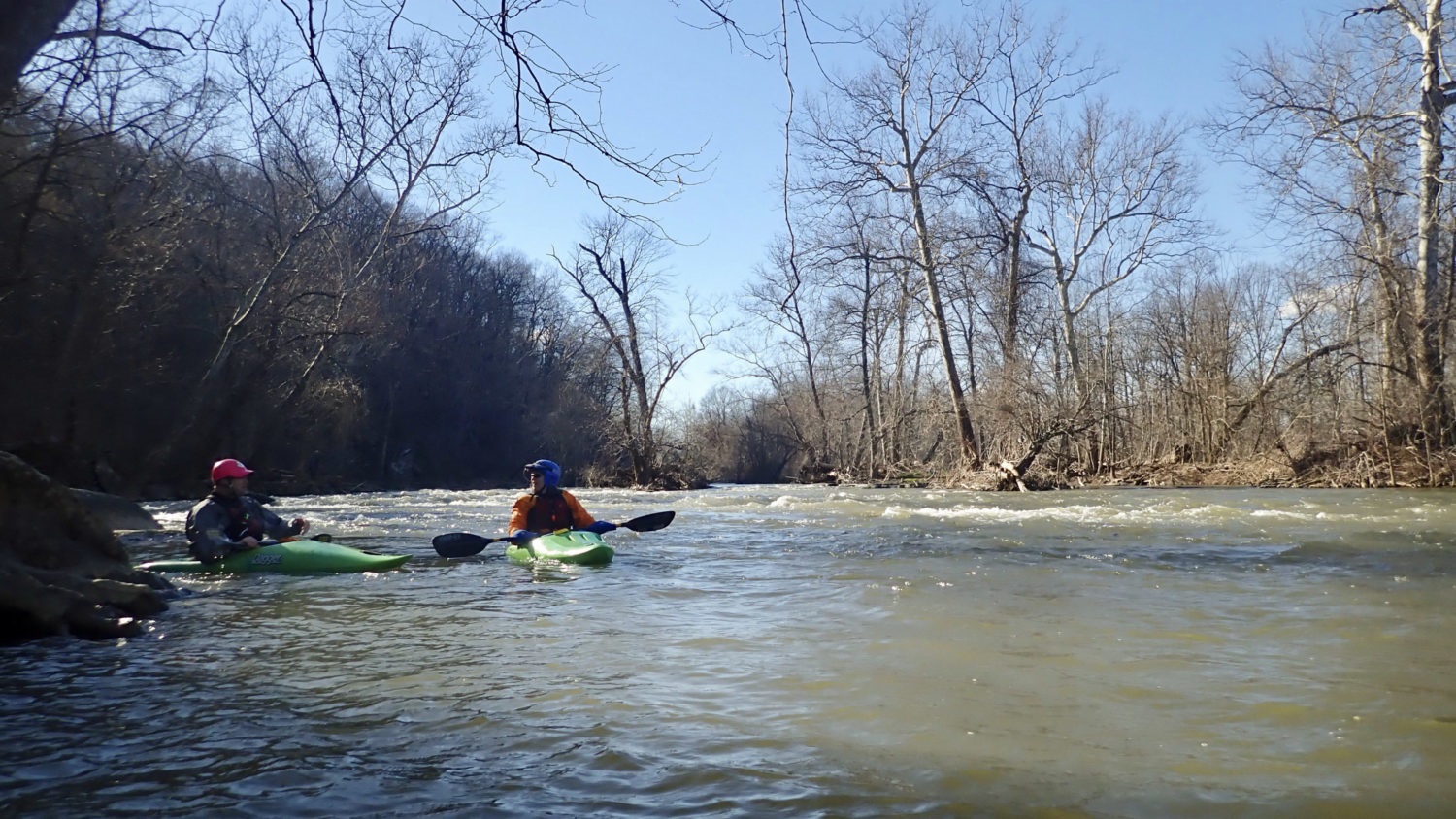
The U.S. Coast Guard is relaxing restrictions on access to the Potomac River along the Trump National Golf Club in Loudoun County. Under new rules published on Thursday, kayers, canoers and other boaters will be able to access the river on the Virginia side directly upstream and downstream of the golf course and have unimpeded access on the Maryland side, even when the president is golfing.
“My initial reaction was somewhere between disbelief and absolute excitement,” says Barbara Brown, chair of the Canoe Cruisers Association. The local paddling group filed a lawsuit against the Coast Guard in September last year over the river restrictions. “The Coast Guard basically rescinded the original directive and the new directive took into account all of the issues that we had raised,” Brown says.
The issue of access to the Potomac came to a head in March 2017. On five occasions that spring and summer, the Secret Service asked the Coast Guard, on short notice, to close the river along the golf course from shore to shore, for the security of “high-ranking United States government officials at the golf club.” These unannounced closures outraged boaters, who crowd that section of the river during warm months.
Then in July 2017, the Coast Guard created a permanent security zone, prompting further outcry. The security zone allowed officials to close a two-mile section of the river whenever the president or other dignitaries were present.
Kids In Canoes, Men With Guns
“At one point we had probably about 100 of our summer camp kids out there in a canoe, or sailing or kayaking who were denied access,” says Steven McKone, who teaches kayaking with Calleva, a non-profit based directly across the river from the golf club. “They turned our whole camp back without us being able to go and experience the river.”
McKone says it happened three times last summer, and there was no way to plan for it because the closures weren’t announced ahead of time.
“We’re trying to get kids to enjoy nature and to see they can come out here and escape the city and all that stuff — to be greeted by three guys with guns in a boat is not a great thing,” McKone says.
In the Canoe Cruisers lawsuit, the paddlers argued that the initial security zone rule was improperly implemented and that the Coast Guard didn’t take into account public input. Last week, the government responded to the lawsuit, defending the security zone and asking for the case to be dismissed.
“This security was and currently is necessary to prevent waterside threats and incidents for events held at Trump National Golf Club when high-ranking U.S. officials are at the club,” wrote Captain Joseph Loring, the commander overseeing the Coast Guard’s National Capital Region.
There was a glimmer of hope for boaters in the Coast Guard’s response, though. It noted that the canoers’ grievances would be “rendered moot in the near future” due to a new rule that would supercede the original security zone rule, incorporating the concerns and comments the Coast Guard had received.
The agency received 636 comments about the security restrictions, and according to Canoe Cruisers, all of those comments expressed concern over the restrictions.
“Through the review of the comments, the Coast Guard learned more about how people use this busy stretch of the Potomac River,” the agency notes in the new rule published Thursday. In the federal register, the Coast Guard responds point-by-point to each concern raised. For example: “One commenter recommended against law enforcement agencies displaying firearms as to not alarm the many children that operate in this part of the river. The Coast Guard appreciates this comment’s concern and will operate as agency policy and security needs dictate.”
‘A Reasonable Compromise’
“The most important change is that they shrunk the security zone,” says Barbara Brown with Canoe Cruisers. The new security zone is shorter — allowing access to important recreational areas on the Virginia side both upstream and downstream of the golf course. Just upstream of the golf club, Algonkian Regional Park — a popular spot to launch boats — is now outside the security zone. Downstream, kayakers will now be able to access the George Washington Canal, just east of the Trump club. The security zone is also narrower, allowing boaters to use the half of the river on the Maryland side unrestricted.
The new rule also provides for better notification of when security restrictions are in place. Nitin Shaw, an attorney with Democracy Forward who represented the canoers, says the Coast Guard initially used a marine VHF radio channel to notify the public.
“Nobody who’s out on the river has one of these radios so it was a totally useless method of notice,” Shaw says. “The Coast Guard has acknowledged that that was a mistake.” Now the agency will post closures online, and provide a dial-in phone line, where callers can hear a recording if the restrictions are in place. “All in all this was a tremendous victory,” says Shaw.
The new rules go into effect immediately.
“I think the lawsuit was absolutely crucial,” says Brown. Now canoers and high-ranking golfers will be able to co-exist peacefully. Trump has played golf or watched golf at the Virginia club 43 times since taking office, according to the website trumpgolfcount.com, which tracks the president’s golf outings.
“This is a reasonable compromise,” says Caroline Taylor, executive director of Montgomery Countryside Alliance, a nonprofit based in the county’s agricultural reserve, which abuts the river across from the Trump property. She objected to the original rule restricting Potomac access on principal. “It was an abridgement of the people’s use of ‘the nation’s river,’” Taylor says.
She also has an idea for how to further enhance security at the golf course, without curtailing river access.
“The security would be better maintained at the Trump National if they would re-establish a perimeter of healthy forest along the river,” says Taylor. After Donald Trump purchased the course in 2009, he clearcut nearly 500 trees lining the shore in order to improve the view.