Matt Blitz
The inaugural Slime Expo DC smells like an overly frosted, rainbow-colored birthday cake. The massive crowd at the sold-out event in Springfield, Virginia is overwhelmingly made up of pre-teen girls wearing t-shirts that say things like “Peace, Love, & Slime” and “Slime Queen.”
“I love slime,” says 9-year-old Avery Wright of Fredericksburg, Virginia. “It’s fun to touch and play with. Playing with it helps relieve my stress from homework.”
Slime entered the public lexicon in the late 1980s, thanks to a raff of Nickelodeon shows that made dumping the green, goopy substance its centerpiece. For many who grew up in the 1990s, the affable Double Dare host Marc Summers was the substance’s merry prankster, tricking kids and celebs alike into getting “slimed,” and the tradition of covering folks with the goo continues to this day. Legend has it that slime was first made out of moldy cafeteria leftovers before morphing into a much-more edible concoction of vanilla pudding, applesauce, and green food coloring.
Today’s slime is different. It feels like putty mixed with brightly-colored Play-Doh, sort of like the 90s slime knock-off Gak. Modern slime also looks and smells like a sweet dessert. It’s meant to be pulled, stretched, balled up, and kneaded. It serves as a distraction for the idle hands of Gen Z while providing satisfying sounds for the youth of the ASMR age.
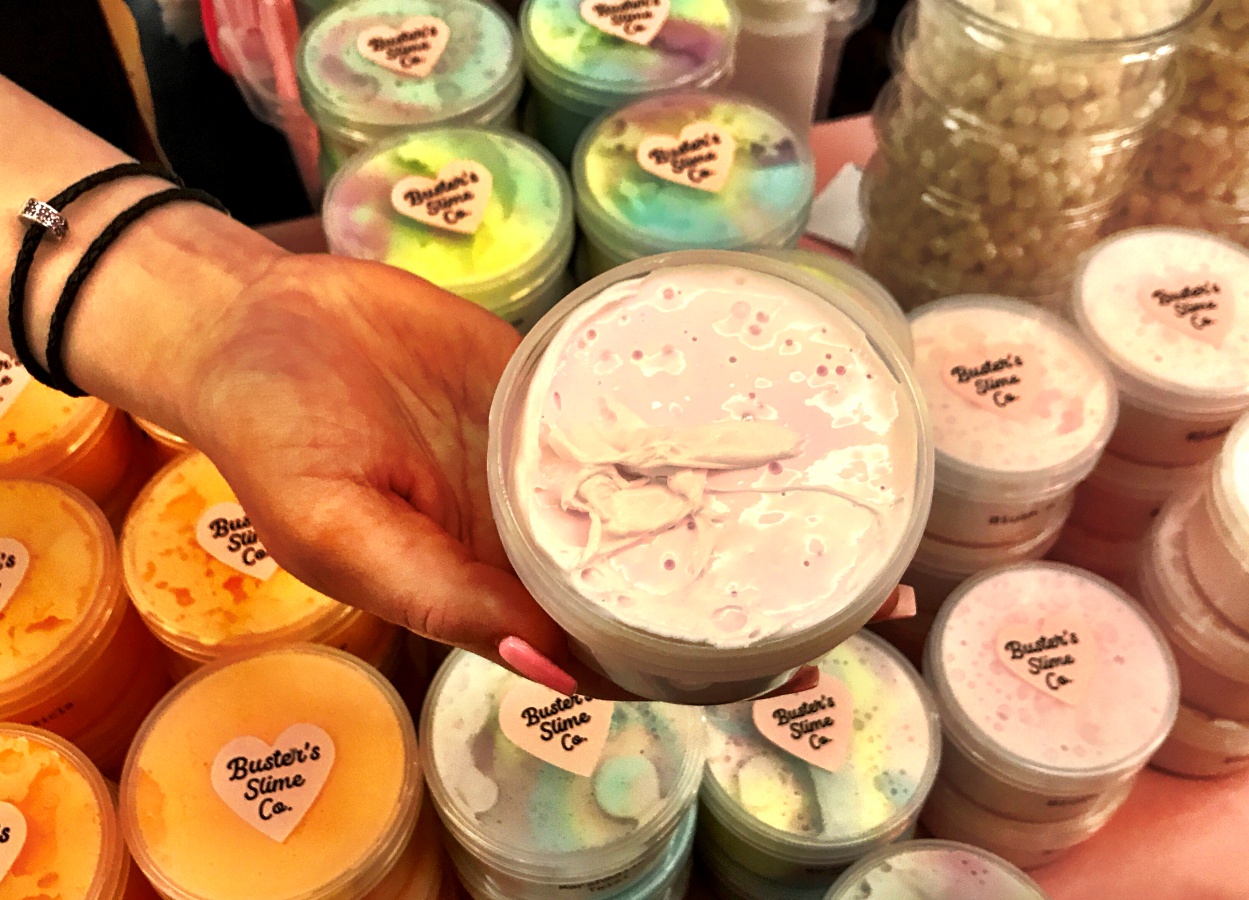
It’s also a very popular DIY project—many kids make their own slime out of ingredients like glue, food coloring, fragrance oils, and borax as an activator. (Other popular household ingredients include lotion, clay, shampoo, eye-contact solution, or laundry detergent.)
At the pinnacle of the slime craze is a group of self-made, mostly female, young entrepreneurs. There’s a huge community of Youtubers and Instagrammers, so-called “slimers,” who have gained a following for their DIY slime.That following has translated into money (sometimes lots of it), thanks to Etsy shops selling special concoctions of slime.
The expo hall is filled wall to wall with young enthusiasts (and their parents) meeting, greeting, and buying from these slime celebs. Young girls are smiling ear to ear as they take pictures with slightly older girls who have turned this hands-on hobby into serious business.
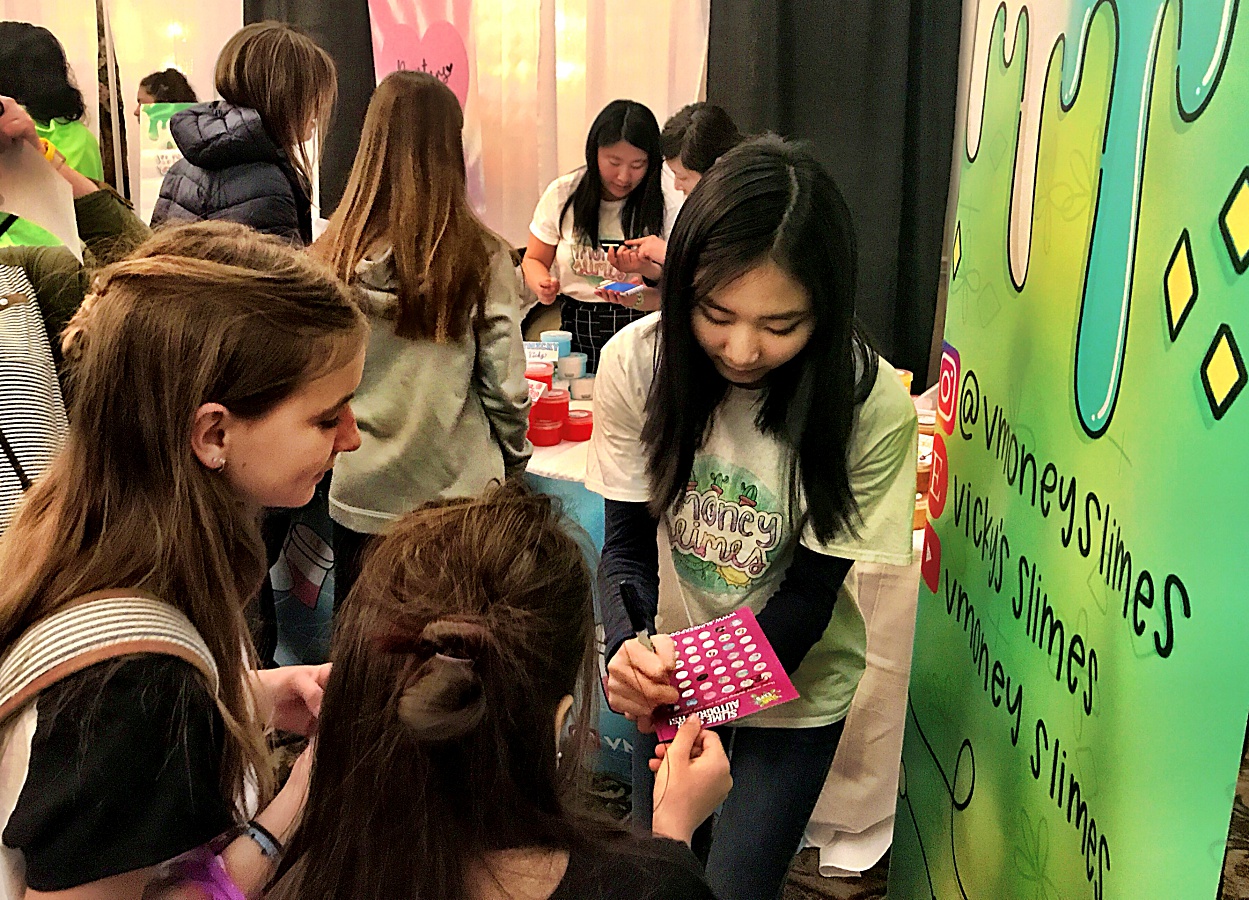
Fifteen-year-old Vicky Jin, of Vmoney Slimes, started making her own slime about two years ago. Her friends loved playing with it, so she started an Etsy shop (with her parents’ permission, of course). “It just grew. It was crazy. Totally insane,” says Jin. Today, she has a half million followers on Instagram and says she makes thousands (she wouldn’t divulge exact profits) selling her slimes. Wide-eyed girls wanting a photo or autograph with the North Carolina-based Jin interrupt us several times during our conversation.
“I make the slimes related to my personality,” she says. “They are all different aspects of what I like and who I am.” For example, she has a slime that’s called “Chocolate Lactaid” because Jin is lactose intolerant. And, yes, it smells like chocolate milk.
While many of the convention’s well-known slimers are from out of town, there are some locals as well. D.C.-based 12-year-old Maria Raquel Thomas, proprietor of Ria’s Slime Shop, may be the area’s most well-known slimer. Featured in various other media outlets, including on ABC 7’s Good Morning Washington, she’s known for her foam-beaded and borax-free slimes. Thomas says that slime is popular because it’s the “Play-doh for our generation” and “calms us, relaxes [us], and is a stress-reliever.” She says that she makes hers out of glue, lotion, and an activator that’s borax-free. When asked what she uses as an activator, Thomas smiles. “I won’t tell. It’s a secret.” Before I can ask another question, her presence is requested for photos and autographs.
Most parents seem to be supportive of their slimers, albeit a bit perplexed. Mitchell Oatman’s two kids, Alexis and Ethan, run a slime shop together. So what does he think about slime? He chuckles. “It’s interesting,” says Oatman, who described himself as “confused a little.” He said he was skeptical at first about his kids getting into the business of selling slime. But after doing research and watching Youtube videos of other slimers, he decided to help them set up the e-commerce side of it.
He says business is brisk, even if they are not the biggest slimers on the block. “During the summers, which is the peak period, they are doing a couple thousand [dollars] a week in sales,” says Oatman. “It’s not bad. It’s definitely not playing around.”
Despite the perceived innocence of slime and the feel-good nature of young entrepreneurship, there are concerns. Borax, the activator in most slimes, is toxic and handling it can result in side effects like irritation and skin rashes, and, in the long term, hormone disruption. Then, there’s the temptation to eat the slime, many of which look and smell like something deliciously edible. But, of course, they’re not. Several state poison control centers have warned about this, but also caution people not to overreact. As the Missouri Poison Control Center states, “Slime in the mouth? Not the end of the world, but probably not a good idea.”
Back at the Slime Expo, there are workshops, demos, and slime-playing. Kids are mixing, kneading, stretching, and pulling slime. It’s gooey, squishy, and noisy. It’s also very hands-on. “It’s definitely something different,” says Avery’ Wright’s dad, Tim, as he watches his daughter make her own slime from afar. “It beats her being on the phone, playing games, that’s for sure.”