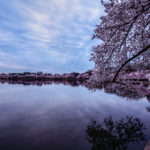
The famed cherry blossoms’ peak bloom is just a couple of days away, and everyone knows what that means: a camera-wielding rabble is about to descend upon the Tidal Basin.
The Instagram photos might look like the picture of serenity, but rest assured, there was a line 20 people deep to stand on that perfectly blossom-framed patch of dirt.
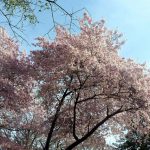
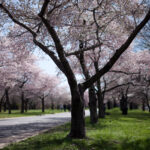
It doesn’t have to be that way. Many people don’t realize it, but there’s another huge collection of flowering cherry trees right under the tourists’ noses. Just a few miles away in Northeast, the U.S. National Arboretum is home to more than two dozen varieties. There’s less of a hubbub and you can find trees in bloom for a much longer period than at the Tidal Basin, which hits peak prettiness for anywhere from four to 10 days.
Visitors to the Arboretum will get a wider variety of blossom colors, says Richard Olsen, the director the Arboretum and an expert on tree breeding. “We have everything from white to dark red to deep pink flowers.”
The plants themselves can be wiry or shrub-like, or they can be tall and upright. A special highlight in the collection, Olsen says, are the trees called Weeping Cherrys. “It’s almost like a weeping willow,” he explains. “You have layer upon layer of these long, trailing branches that form a curtain of flowers around the tree. It’s just magnificent.”
All that variety has an added bonus: a longer peak bloom season compared to the iconic Tidal Basin cherrys. “The main reason our peak bloom lasts longer is because we have such a great diversity in the number of flowering cherry species,” Olsen says. The bulk of the blossoms at the Tidal Basin are from Yoshino trees, and the Arboretum has several different varieties of Yoshino.
What’s more, a decades-long breeding program at the Arboretum has produced hybrid trees with all manner of blooming timing. For example, scientists have created early-blooming hybrids by crossing several species with the Taiwanese Bell Flower Cherry, a tree that flowers exceptionally early.
Those early bloomers are Instagram-ready today, Olsen says. “Right now it’s gorgeous. We’re at peak bloom for some of the early stuff.”
It’s hard to prognosticate exactly how long it will last, but there are flowering trees that bloom throughout the entire season (which typically ends in late spring or early summer). That’s the big difference from the Tidal Basin: all of its trees bloom in a short span, while the Arboretum has trees in varying stages of bloom and foliage over a much longer period.
The best way to get that coveted snap is to drive, bike, or walk the Arboretum’s three-mile self-guided flowering cherry tree tour, according to Tom McGuire, executive director of Friends of the National Arboretum. “It’s not as concentrated and overwhelming as the Tidal Basin,” he says. Brochures are available at the Visitor’s Center, or you can find the tour on the Arboretum’s app. (There’s also a Tinder-like web app that directs users to the nearest blossoms across the city.)
Popular photo ops include the Weeping Higan Cherry near the National Herb Garden (tour stop #1) and the Dream Catcher hybrid tree near the R Street entrance (tour stop #4). But the beauty of experiencing the entire tour is that you can find the trees that most inspire you, McGuire says. “With Instagram you see the same thing over and over, and this is a chance for people to be creative.”
Over the coming weeks, the next wave of blossoms will burst to life, and special events at the Arboretum will celebrate the season. On Saturday, April 13, the Washington Ballet will perform brief dances celebrating spring every half hour from 11 a.m. to 2 p.m.. Then on Sunday, April 14, a 5K fun run will take place along a blossom-lined route. A calendar of events is available here.