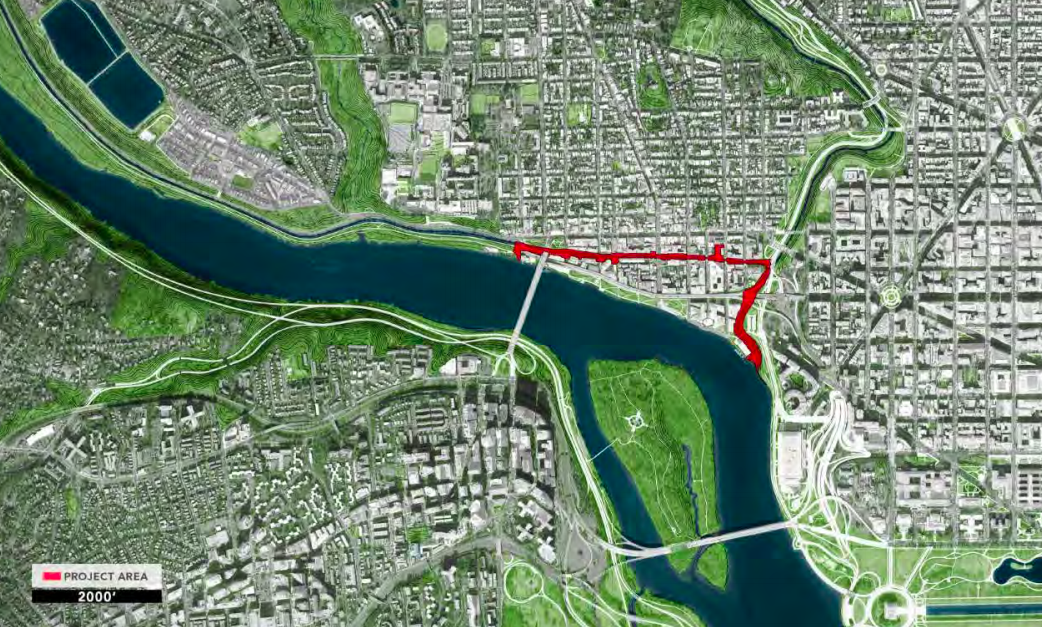
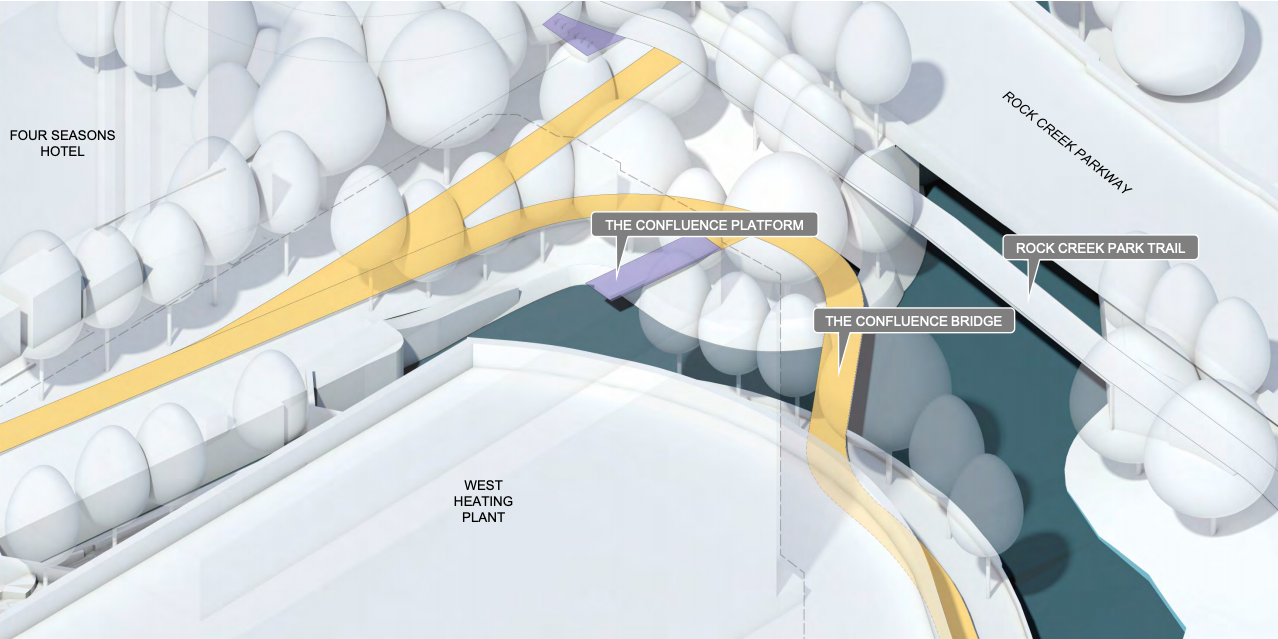
Imagine jogging down the Rock Creek Park Trail and after the Pennsylvania Avenue Bridge, instead of a thicket of trees obscuring your view of the C&O Canal, there is a vista of the locks from a new platform over the confluence of the canal and creek.
That is just one element of the vision for the one-mile of C&O Canal and towpath in Georgetown presented by the National Park Service, Georgetown Heritage, and James Corner Field Operations at a meeting on Thursday.
“The towpath, in addition to being a way to move [along the canal], is also an organizing device, linking a series of key places where you might want to stay and linger and learn,” said Sarah Astheimer, a principal at James Corner Field Operations, which is best known for its work on New York’s High Line.
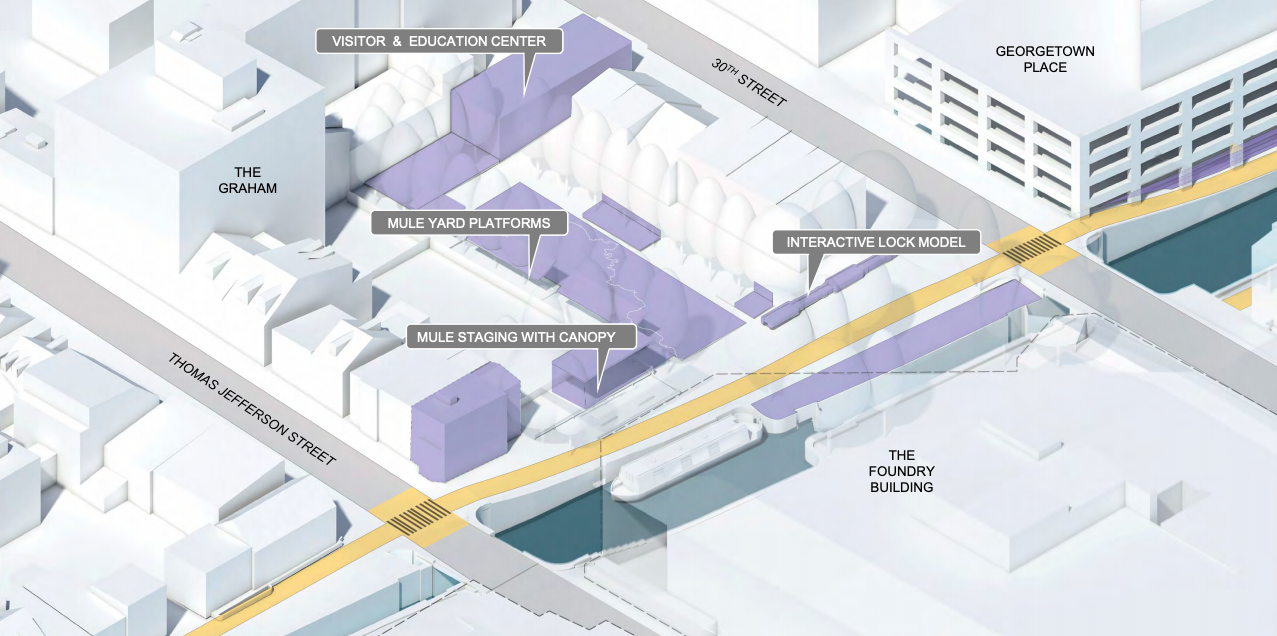
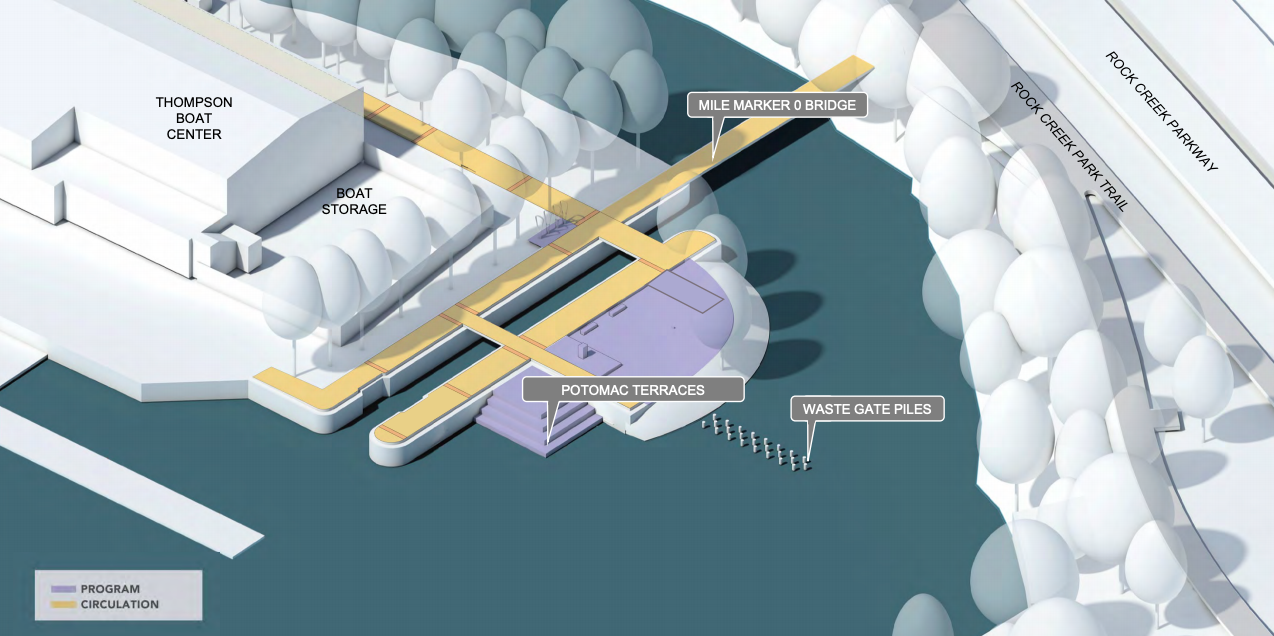
The plan—which makes space for both mules and “gongoozling” (the art of canal gazing)—focuses on five sections of the canal that run through Georgetown: mile marker zero at the Potomac River, the confluence of the canal and Rock Creek, locks two and three, a “market plaza” area between Wisconsin Avenue and Potomac Street NW, and the derelict aqueduct abutment just west of the Whitehurst Freeway. James Corner Field Operations presented two design alternatives, each featuring different elements, for the project.
In addition to the eye-catching view of the locks, the proposals included terraces and tide lock nets to offer seating above the water (something one attendee called a “disaster” in comments posted anonymously after the presentation) at marker zero, a gongoozling platform in the market plaza area, and education spaces and a “mule yard” at the area around locks two and three. The historic canal boats (and the mules that tow them) are due to return by the summer of 2020.
Further west, the team envisions reactivating the old stone yard east of the Key Bridge and the aqueduct abutment to the west to serve as connections between the canal where it passes through Georgetown and the trails that continue west. “[They are a] place where you can get closer to the water and a gateway to the recreational opportunities afforded by the larger C&O Canal park,” said Astheimer.
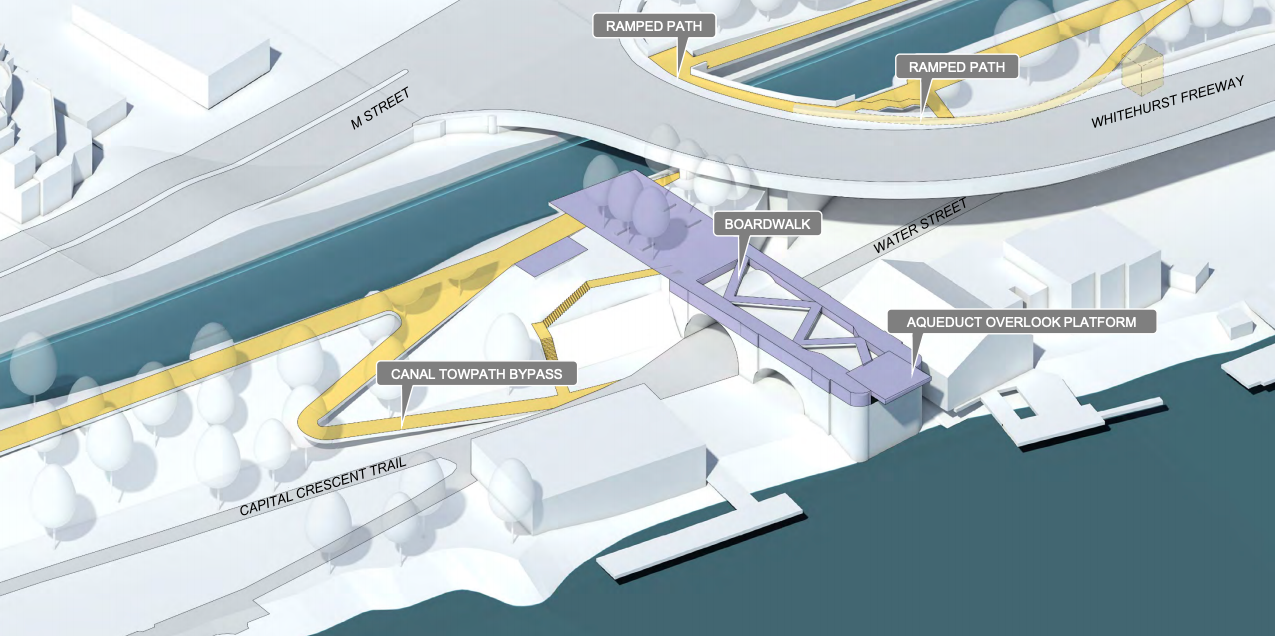
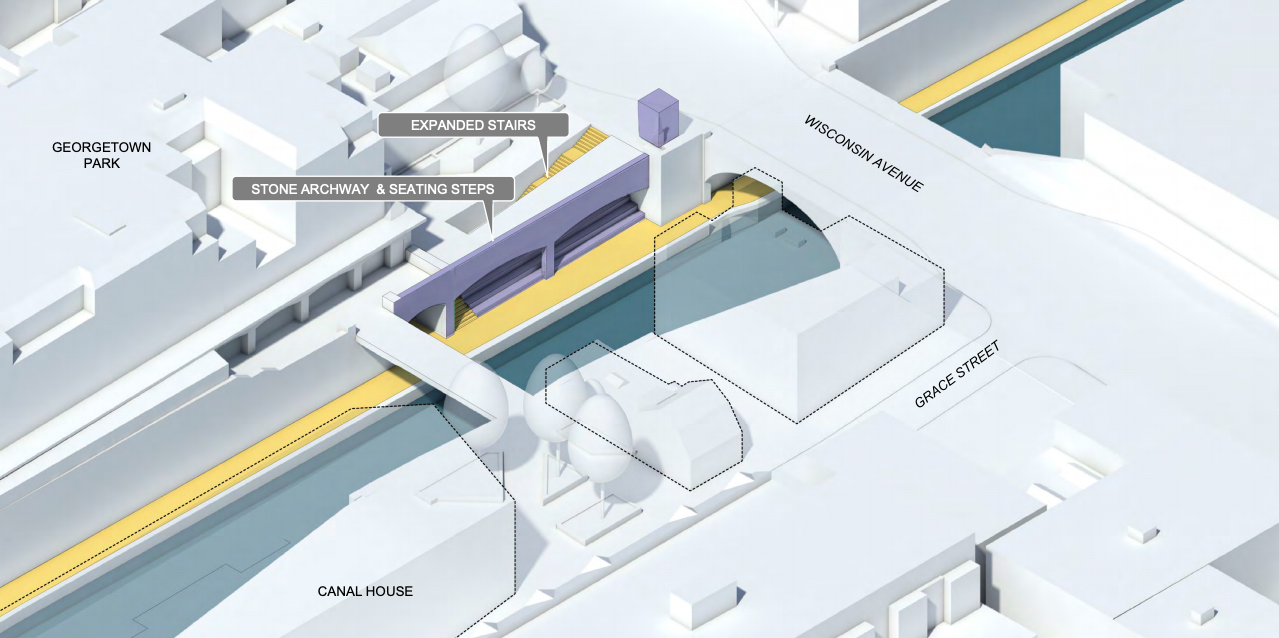
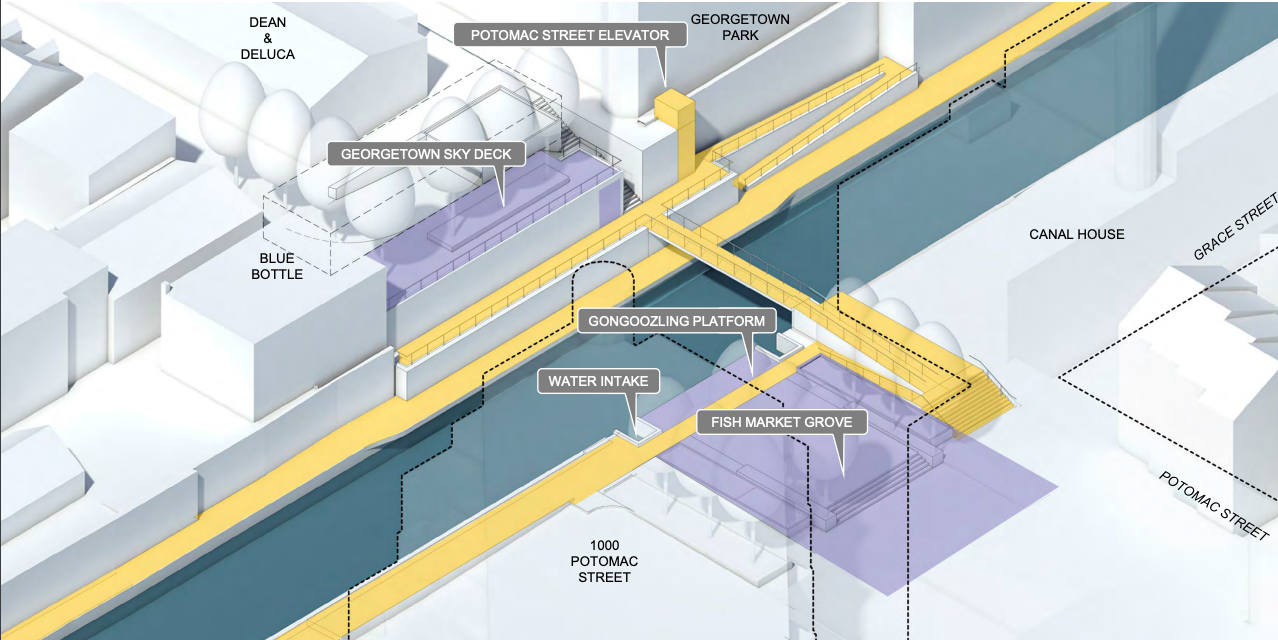
Work on the stretch of the C&O Canal in Georgetown is part of a larger effort to restore the historic waterway, which stretches 185-miles west to Cumberland, Maryland. Work on locks 3 and 4 is nearing completion, and the Park Service plans to refill the canal with water soon, C&O Canal superintendent Kevin Brandt said at the meeting.
The Park Service hopes to finalize a preferred design for the Georgetown section this spring (they are taking comments on the proposed elements through May 11) and complete the needed environmental assessment by fall. At that point, however, funding must be secured before they are willing to commit to a construction timeline.
“This is going to take the entire community of users, from joggers to gongoozlers,” said Brandt on the funding push ahead.
Funding will likely include a combination of federal dollars (though the improvements will have to compete with projects at other Park Service units around the country) and private donations raised by Georgetown Heritage. The group is a non-profit set up to improve the canal and towpath, though it plans to expand to other parts of neighborhood in the future, explained director of public programs and partnerships Maggie Downing at the meeting.
Neither Downing nor Brandt would provide a cost estimate for the improvements, though when pushed Brandt indicated they would likely be in the tens of millions of dollars. The replacement of locks 3 and 4, for example, cost roughly $6.5 million.
Once funds are secured, the stakeholders will evaluate the elements of the project and split construction into phases, with the most sought-after pieces coming first, said Downing.
Until then, the towpath will remain the same connective thread through Georgetown as it has for more than 150 years.