 Jenny Gathright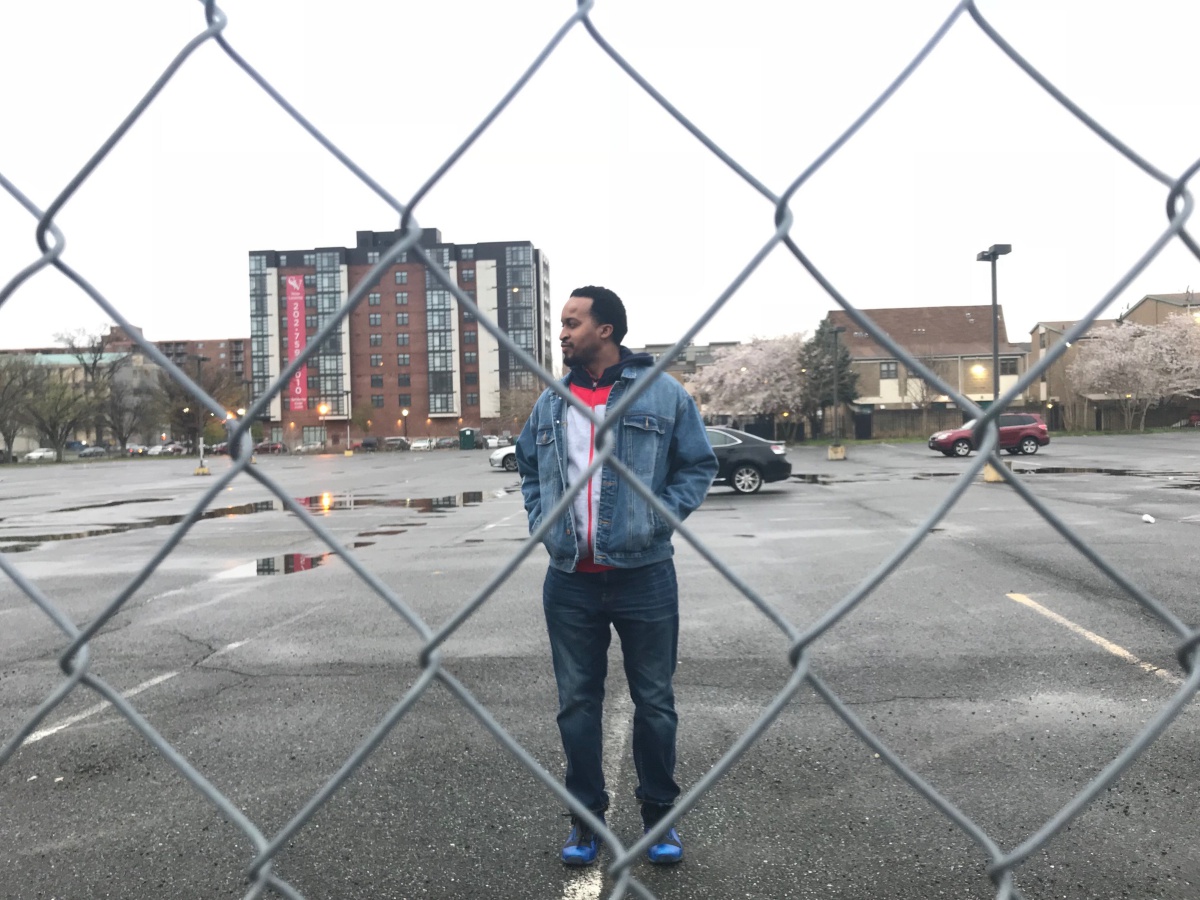
Tracy Braxton left D.C. for North Carolina in 2007. When she came back to visit, she stopped her car at North Capitol and K Street.
She remembered the supermarket she used to run around as a little girl. She imagined her mother standing on the porch of the townhouse where they lived. But Braxton was looking at a parking lot.
Temple Courts, the subsidized housing complex where she grew up, was demolished in 2008. It sat in a neighborhood the city called Northwest One, and it was slated for redevelopment as part of a project called the New Communities Initiative.
Now, almost 11 years later, that parking lot remains. Construction on the final portion of its promised replacement, a mixed-income apartment complex with 211 units reserved for former Temple Courts residents who meet certain requirements, will not begin until the end of this year at the earliest.
What happened with Northwest One speaks to something larger. The city has grown increasingly reliant on public-private partnerships in the face of declining federal investment in traditional public housing, but some of its most ambitious efforts to rebuild affordable housing have been delayed. Simultaneously, black Washingtonians keep having to move: A recent study found that 20,000 black residents were displaced from their D.C. neighborhoods between 2000 and 2013.
Closing Temple Courts
When Braxton’s family moved to Temple Courts in the early 1970s, she was a little girl, and the complex was brand new. But by the time she was a teenager, she often had to walk the 10 flights of stairs up to her family’s apartment because the elevators were always broken. The hallway lights were regularly out.
“As kids growing up, half the time we thought it was fun,” Braxton said. “We played games throughout the hallways … We made a way to get through it.”
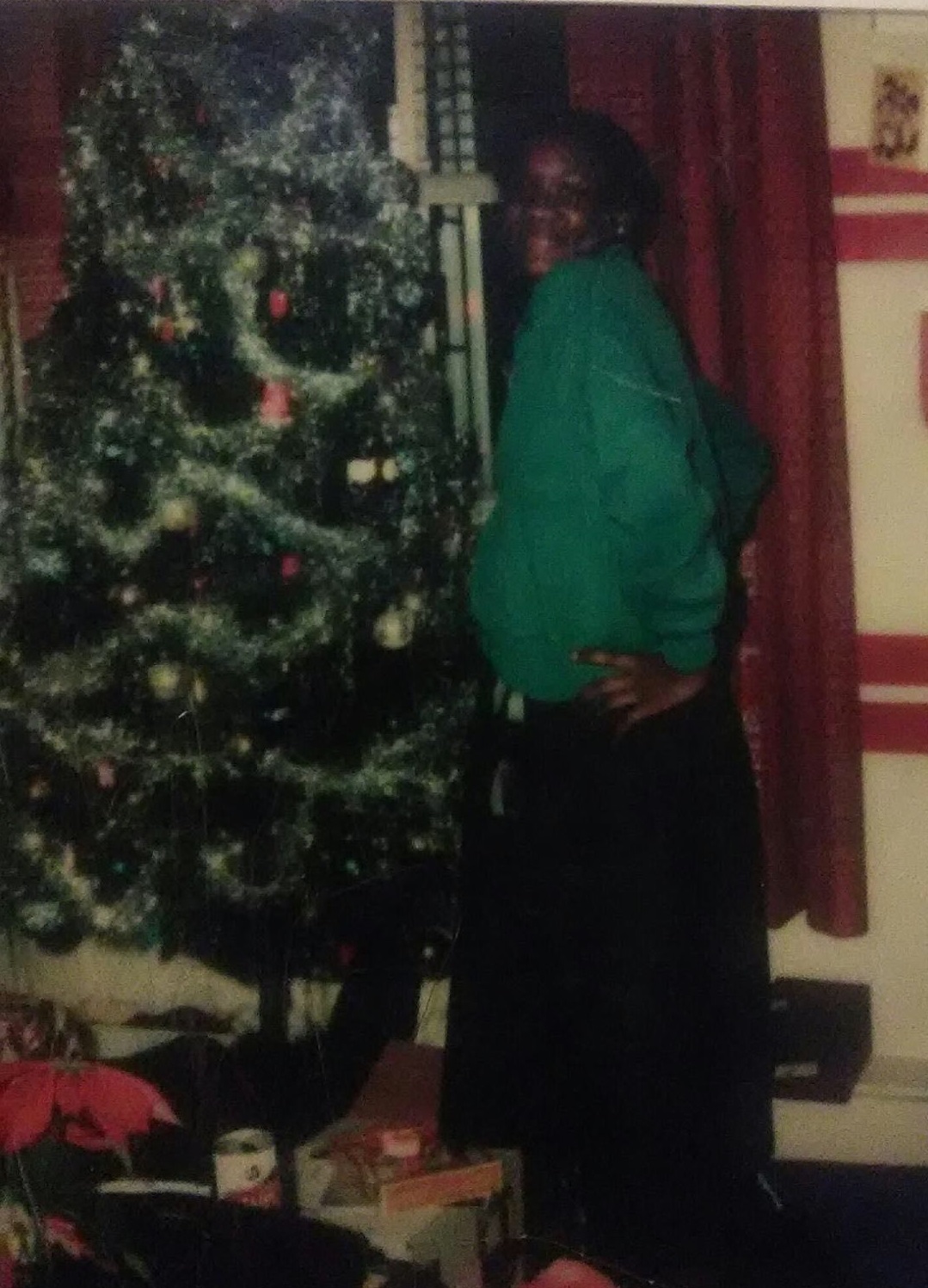
Tracy Braxton, celebrating Christmas at her family’s Temple Courts apartmentCourtesy of Tracy Braxton
Nathan Brown, who was a teenager at Temple Courts in the 2000s, also says he saw conditions decline when he lived there. He remembers trash chutes in the building catching on fire and rats running through the hallways. His best friend, Santino Henson, was killed near Temple Courts in 2003.
“The police was telling us not to come outside in our own neighborhood, a neighborhood where once upon a time I played football outside, played basketball outside every day,” Brown said. “I felt like more could have been done. It’s inhumane to leave people like that, suffering in a neighborhood which was once a paradise.”
Mayor Adrian Fenty gave Temple Courts residents a choice in 2007, according to reporting in the Washington Post. Stay, and the city would try to exterminate the rats, or take vouchers and accept the city’s promise to rebuild new apartments for them one day. There was no official vote, but the city decided the majority of residents were in favor of leaving.
Temple Courts was demolished in December 2008.
Some former residents still say leaving was the best choice. Others, like Braxton, say it was something “no one wanted.”
Angie Rodgers, who became director of the New Communities Initiative in 2015, insists people wanted to go.
“I think the story does get told in a way where it’s like something was done without the input of residents at all,” Rodgers said. “I want to be clear that residents have been part of the decision-making to take vouchers to get what they hoped would be better quality housing than what they had at Temple Courts.”
After a workshop held last month by Housing Opportunities Unlimited, a firm the New Communities Initiative contracted to assist former Temple Courts residents with their transition, Kathy Boyd spoke about how much of a community Temple Courts was.
“The news media portrayed us — portrayed this whole area — as being horrible: ‘Oh, it was drug-infested it was this and that,” Boyd said.
“It was drug infested all around,” Karen Green interrupted.
“Yes it was, but we had a good time,” Boyd said. “Every Fourth of July, everybody from miles around would come to our parking lot and party, bands, this and that.”
Braxton also emphasized how close people were.
“Everybody’s moms came together as a whole to keep us safe,” she said. “No one let anyone’s child just stray.”
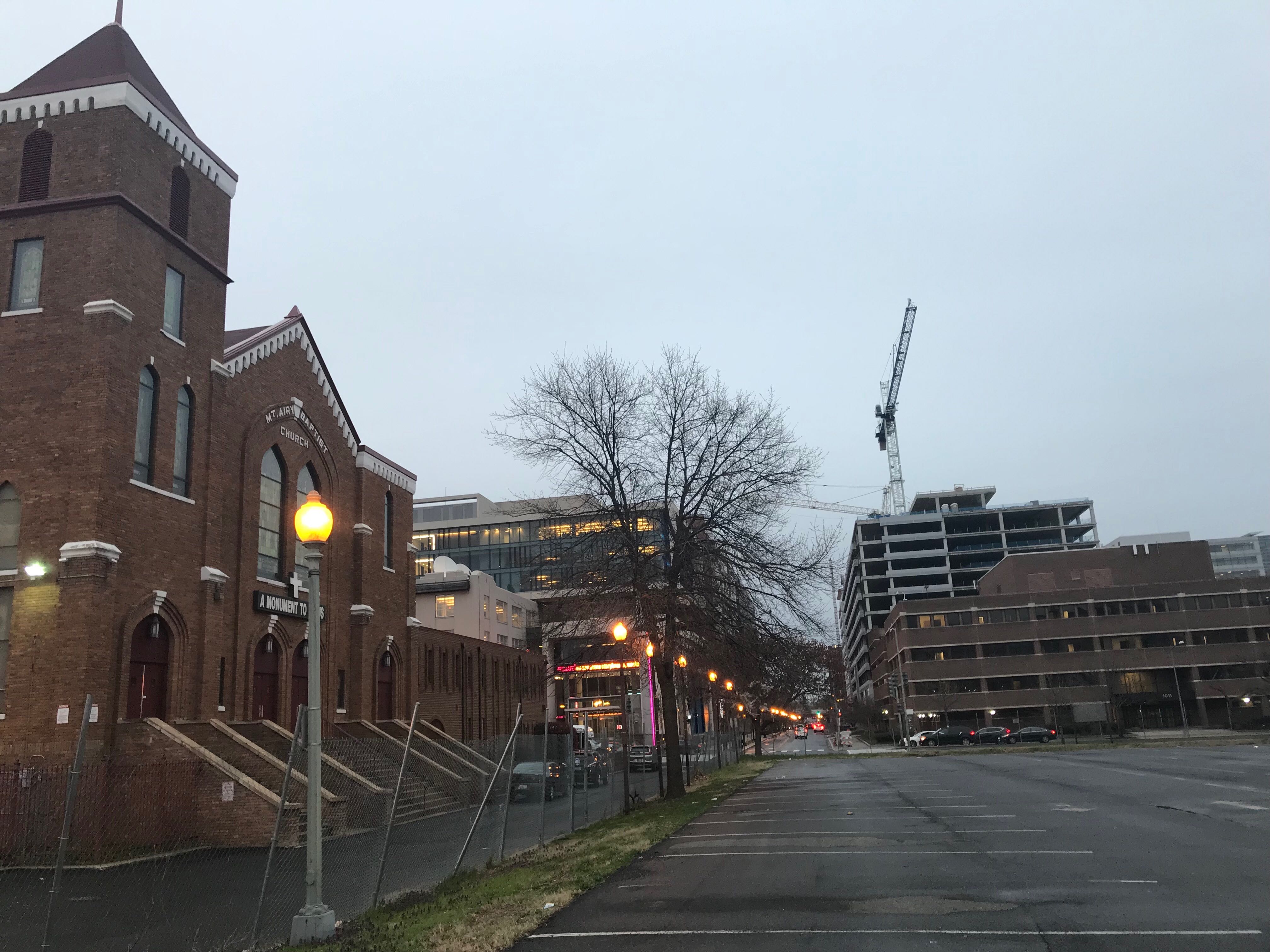
NPR’s headquarters opened across the street from the former Temple Courts site in 2013.Jenny Gathright / WAMU
‘The Voucher Conversation’
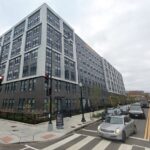
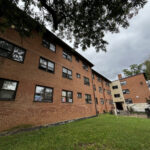
After Temple Courts was knocked down, everyone took vouchers and left. Many, like Boyd and Brown, made it back to the neighborhood, to mixed-income housing built a few years later as part of the New Communities Initiative (NCI). Seventy-eight replacement units were constructed in two phases at The Severna and The Severna on K Street, which opened in 2011 and 2014. Fifty-nine replacement units also opened up in a building on nearby M Street Northeast in 2014.
Others have not.
The Office of the Deputy Mayor for Planning and Economic Development, which oversees New Communities, said it has conducted surveys of residents for the past two to three years. The agency would not make the results public, and said former residents of the Northwest One neighborhood were “relatively stable in their housing” in the fiscal year 2018.
Rodgers told WAMU that in some of the surveyed communities, more residents than expected say they have faced the threat of eviction. She said she wants to learn from Northwest One, where hundreds of people were converted from public housing residents to Section 8 voucher holders.
“What we know from a lot of national studies about what happens with voucher holders is that they don’t often end up in better quality housing,” Rodgers said. “So I think [the surveys] can help us get a handle on the extent to which that happened in the District.”
Residents of Barry Farm, another public housing complex slated for redevelopment under NCI, have almost all left their homes. But the conversations at Park Morton and Lincoln Heights, two other NCI projects, are still ongoing.
“In terms of our development potential, most of it is in front of us,” Rodgers said. “I think the voucher conversation versus other housing options is going to be a really important one.”
The “voucher conversation” is happening elsewhere, too. Last year, D.C.’s Housing Authority audited the 8,000 units in its portfolio and found nearly a third needed urgent attention. DCHA has since asked the federal government to approve 2,500 vouchers for families living in the most environmentally hazardous units.
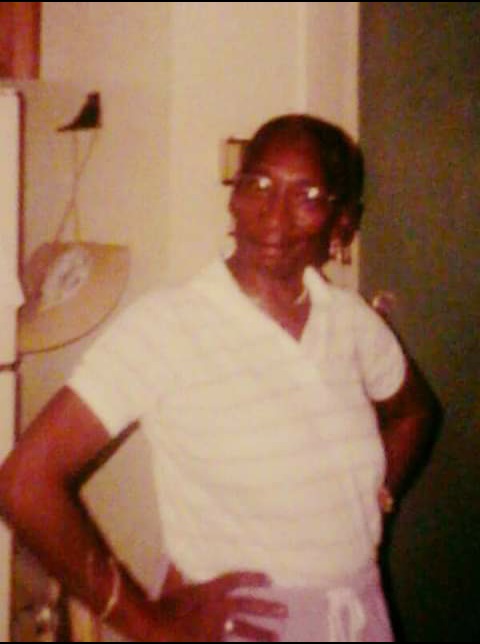
Tracy Braxton’s mother, Gertrude Braxton, lived at Temple Courts until her death in 2000.Courtesy of Tracy Braxton
Brown, who has worked with the Washington Interfaith Network to organize fellow Temple Courts residents, said some still have doubts about whether they will actually be able to return.
“They need to see,” Brown said. “That’s the biggest problem. [The Deputy Mayor’s Office for Planning and Economic Development] should be more present.”
New Communities has said that Northwest One residents have a “right to return” to a new NCI unit if they lived at Temple Courts or Golden Rule, another property in the neighborhood, “when they were demolished.”
But families look different now than they did in 2008. Some children are now adults, with children of their own. Some former residents have died. Brown said the list of returnees has not been determined.
Tracy Braxton left Temple Courts before it was demolished, but if she can, she wants to move into the new building, in the neighborhood that raised her.
“It’s a part of my heart,” Braxton said. “If it’s meant for me to come back, I will be back. And I would love to be back. I really would.”
This story originally appeared on WAMU.