 Jordan Pascale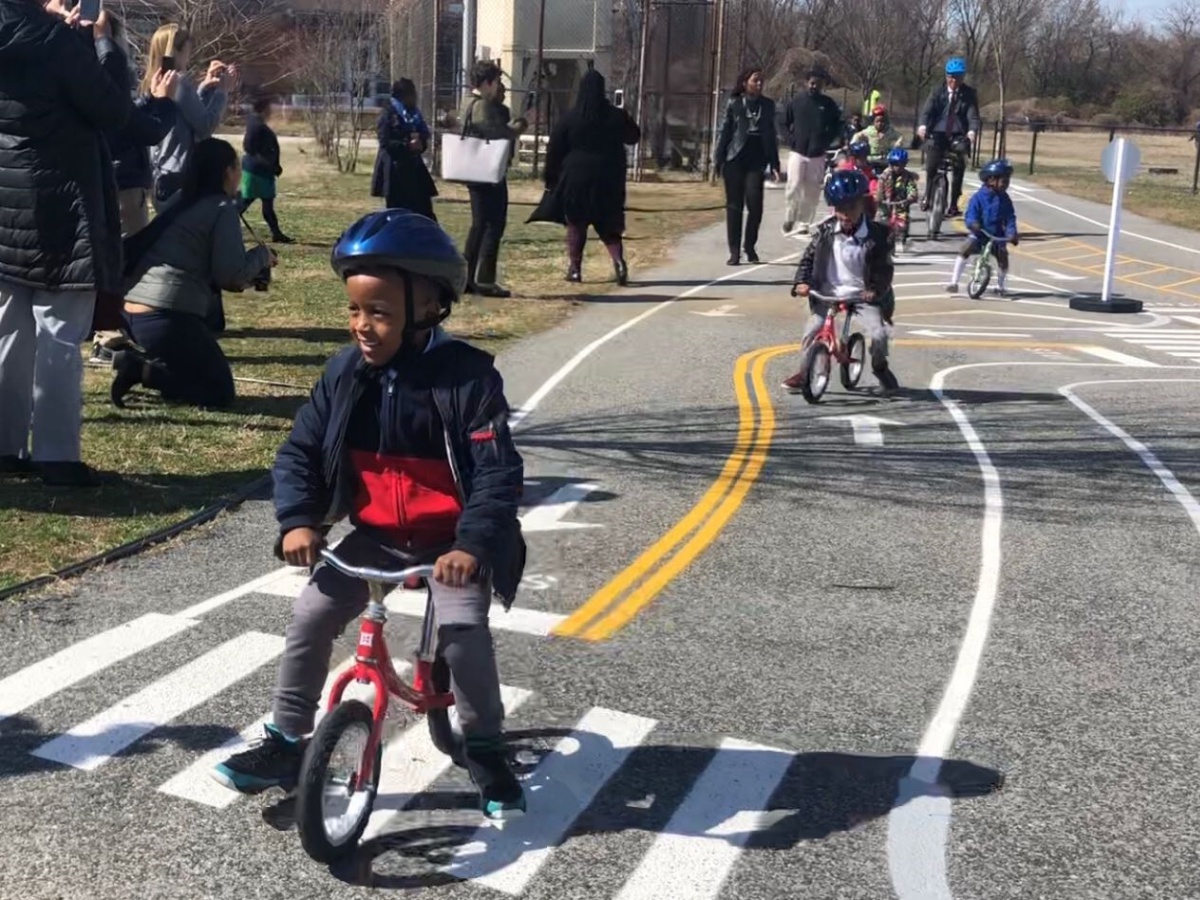
The playground at Neval Thomas Elementary in Northeast D.C. looks like a lot of schools’. It has slides and monkey bars, but look at the asphalt around it, and you’ll see a new paint job that’s fun and functional.
It’s full of traffic markings like roundabouts, bike lanes, speed bumps, and crosswalks. Last month, school officials cut the ribbon on what they call a “traffic garden.” The new addition to the playground mimics the complicated streets of the District.
“It is the city in miniature,” says Ellen Drogin Rodgers, a George Mason University professor who helped coordinate the project. “And I’m sure during free play and recess time, when there are lots of kids out here, it will simulate the traffic of the city pretty well.”
Education and transportation officials say traffic gardens are one creative way to teach the next generation of pedestrians and cyclists. They hope it will have short and long-term effects on reducing D.C. traffic deaths, which have been on the rise three years in a row.
Drogin Rodgers wrote the curriculum for different grade levels. Preschoolers learn traffic safety basics. In second grade, DCPS teaches students how to ride bikes here.
District Department of Transportation Director Jeff Marootian says they wanted it to be as realistic as possible so kids would have an idea of what they’ll face when they walk or bike to school or the park.
An old idea back en vogue
The traffic garden idea started in Europe, but spread quickly with nearly 3,500 installations worldwide in the 1980s. The idea fell out of fashion in the decades since, but now it’s starting to come back. They’re also referred to as safety towns, safety cities, or traffic parks.
Two D.C. schools, Thomas and Aiton Elementary, have them. There’s one in McLean, Va., and more planned across the region.
Fionnuala Quinn is a civil engineer who runs Discover Traffic Gardens, a business that works with kids to lay out the parks. She grew up in Ireland and learned on a similar park. Now she’s bringing it to the U.S.
“We walk kids through the whole process … how do you plan, design, build, get approvals,” Quinn said.
It’s a civics lesson, too. Kids wrote letters to the mayor and applied for faux building permits. They also learned the roles of architects, engineers, and construction workers.
Learning how kids learn best
Now that Thomas Elementary’s traffic garden is built, George Mason University professors will observe kids to see how they learn best.
Carley Fisher-Maltese is one of those professors. She says some kids learn just by reading, but a lot will learn more by doing.
“Our more kinesthetic learners, (will learn) out here with actually getting to put it into practice,” Fisher-Maltese said.
Kids ride balance bikes in the traffic gardens and learn concepts like who has the right of way, how to stop, and watch out for others.
“I know with my own young children, they don’t quite understand the safety,” Fisher-Maltese said. “But since there’s no traffic, this gives them an opportunity to practice and make mistakes safely.”
Gardens are one tool for safety
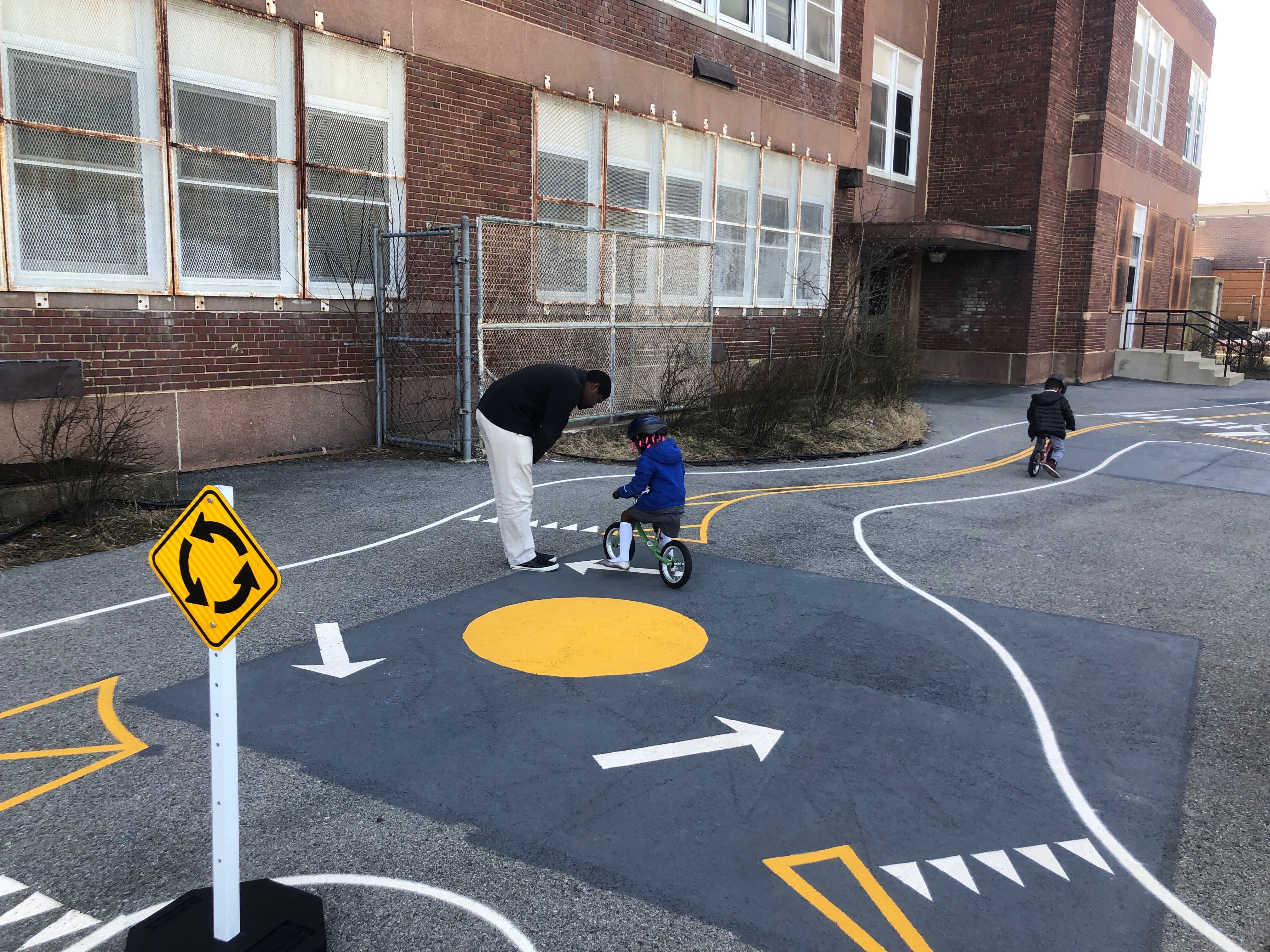
A child navigates a roundabout on the Thomas Elementary traffic garden.
A $150,000 grant from the District Department of Transportation funded the two newly-installed traffic gardens and the accompanying curriculum.
It’s one way the District hopes to combat the rising the number of traffic fatalities, says DDOT Director Jeff Marootian.
Many jurisdictions in the region have committed to eliminating traffic deaths and serious injuries in the coming years. The effort is known as Vision Zero.
“Projects like these are important because we knew that children are among the most vulnerable users of the roadway,” Marootian said.
Children are less likely to be seen by drivers and are seriously injured more easily by vehicles than a larger adult.
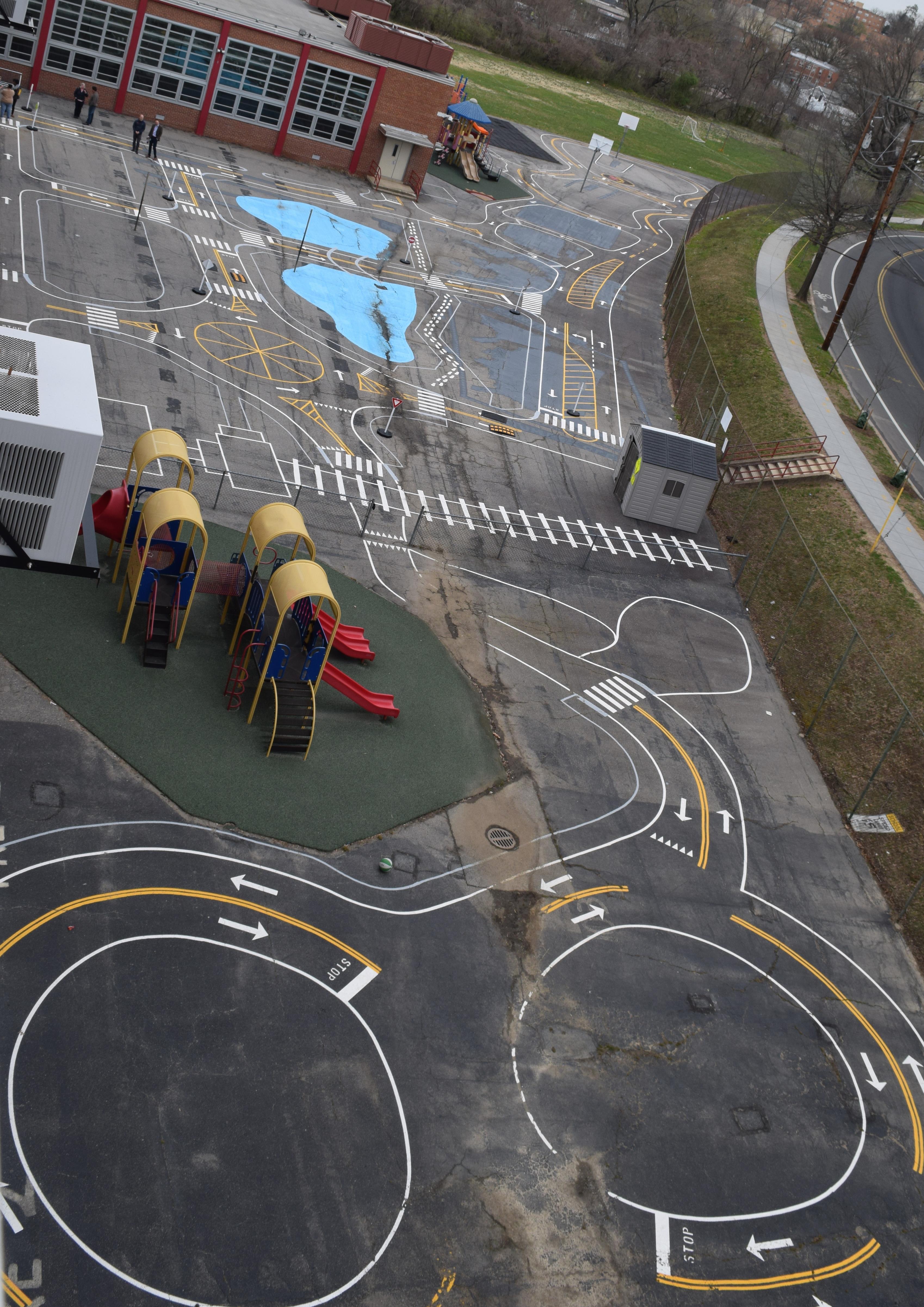
An aerial view of the new traffic garden at Aiton Elementary in Northeast D.C. Photo courtesy of Torti Gallas + Partners, a firm that helped design the traffic garden.Torti Gallas + Partners
Nationwide, kids under 18 made up the highest percentage of pedestrian traffic deaths.
District officials hope more people will walk and bike in the future to take the strain off roads. But people will only do that if they feel safe, Marootian said.
The bulk of the Vision Zero effort goes toward creating better infrastructure, like more protected bike lanes and roads with slower speeds.
But Greg Billing, director of the Washington Area Bicyclist Association, says education is a key component of Vision Zero. He’s wanted traffic gardens in the area for years.
“We can all remember learning the traffic rules at driver’s ed,” Billing said. “But you’re 16 … you’re using the transportation system from day one.”
Supporters of the project say the traffic garden lessons will evolve over time.
Kids will already be more familiar with traffic safety and learn how to be a responsible road user before they jump on their first bike or get the keys to their first car.
This story originally appeared on WAMU.