 Jenny Gathright
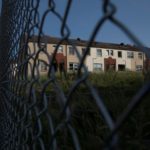
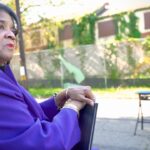
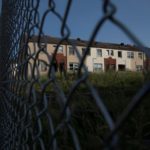
Paulette Matthews, the Vice President of the Barry Farm Tenants and Allies Association, regularly attends the D.C. Housing Authority Board of Commissioners meeting, asking for an update on Barry Farm, a public housing development in Southeast that is slated for redevelopment.
On Wednesday, Matthews got an incremental update: Housing Authority Executive Director Tyrone Garrett said he would be meeting with Preservation of Affordable Housing, the nonprofit managing the redevelopment of Barry Farm, on Friday.
Garrett also promised to schedule a meeting to update Barry Farm Tenants and Allies and the Barry Farm Resident Council on plans for the development as early as Monday.
“That still didn’t give me any information,” Matthews said. “To hear him say we’re going to meet with [Preservation of Affordable Housing] again. He should have a meeting with residents … even just to find out what’s going on with them in their new locations. Because it’s definitely a change, and it’s stressful.”
The redevelopment of Barry Farm was delayed a year ago when the D.C. Court of Appeals sided with the Barry Farm Tenants and Allies Association and sent the project back to the Zoning Commission. Part of the Court’s decision said the commission falsely concluded that the relocation process proposed for Barry Farm residents wouldn’t cause hardship or dislocation.
Since that decision, an updated redevelopment plan for Barry Farms has not been unveiled. But Detrice Belt, President of Barry Farms Tenants and Allies Association, told WAMU five families still live there, and the plan is to relocate them to another Housing Authority property at Parkway Overlook. Belt also said demolition is still occurring at the property.
On Tuesday, BFTAA filed an application with the Historic Preservation Office of Washington, D.C. to designate the site of the Barry Farm Dwellings as a historic landmark. Barry Farm was founded as a community for formerly enslaved and free-born African Americans after the Civil War.
“This is more than a cosmetic request,” Belt testified before the Housing Authority. “The design of Barry Farm was innovative and intentional … these design elements nurtured the community that produced Emily Edmonson, Frederick Douglass Jr., The Junk Yard Band and many others. We want to protect and continue that legacy in Ward 8 — at the original footprint.”
And Belt said the request to be designated as a historic landmark is not just asking for a plaque denoting that Barry Farm was there.
“We would like to restore and preserve some of those townhomes,” Belt said.
D.C.’s New Communities Initiative has been working for more than a decade to redevelop the Barry Farm neighborhoods into a mixed-income community. And Barry Farms is not the only New Communities project to be tied up in litigation: Four homeowners living near the Park Morton housing complex have challenged the zoning commission in the Court of Appeals because they object to the fact that the proposed Park Morton redevelopment would significantly reduce the size of a neighborhood park.
“Even though one litigant’s motivations are different from another litigant’s, it still means that projects that are promising to deliver two-thirds affordability on public land aren’t moving forward, and we’ve all got to take responsibility for that,” said New Communities Initiative Director Angie Rodgers in an interview with WAMU last month.
“We can’t say on the one hand the District isn’t doing enough but then on the other hand … delay the very projects that are promising to do the most affordable housing.”
Jenny Gathright is a reporter in WAMU’s newsroom. This story was originally published at WAMU.